(UNITED STATES) Foreign professionals and their employers continue to rely on the H-1B visa and L-1 visa to fill skills gaps across the ?? economy, while planning long-term moves toward permanent residency and, later, U.S. citizenship. Here’s how these pathways work, what USCIS requires at each stage, and what workers and companies can expect from the first job offer through the oath ceremony.
H-1B and L-1 Policy Basics

The H-1B visa lets U.S. companies hire workers in “specialty occupations,” meaning jobs that usually require at least a bachelor’s degree in a specific field. Each year there’s a limited number of new H-1B visas: 85,000 total, including 20,000 reserved for people with U.S. master’s degrees or higher. When employers submit more registrations than the cap allows, USCIS runs a random lottery.
According to analysis by VisaVerge.com, this cap and lottery shape hiring timelines for many tech, healthcare, and research roles each spring.
The L-1 visa allows multinational companies to transfer staff from overseas offices to the United States. There are two types:
- L-1A: for managers and executives
- L-1B: for employees with specialized knowledge
To qualify, the company must have a qualifying relationship between the foreign and U.S. entities, and the employee must have worked abroad for the company for at least one continuous year in the past three years. Unlike the H-1B, the L-1 visa is not subject to an annual cap; it focuses on corporate ties and the worker’s role.
| India | China | ROW | |
|---|---|---|---|
| EB-1 | Feb 01, 2023 | Aug 01, 2023 ▲31d | Current |
| EB-2 | Nov 01, 2013 | Oct 01, 2021 | Apr 01, 2025 ▲90d |
| EB-3 | Jan 22, 2014 ▲21d | Jan 22, 2022 ▲14d | Jun 15, 2024 ▲31d |
| F-1 | Jan 22, 2021 ▲366d | Jan 22, 2021 ▲366d | Jan 22, 2021 ▲366d |
| F-2A | Oct 22, 2026 ▲30d | Oct 22, 2026 ▲30d | Oct 22, 2026 ▲30d |
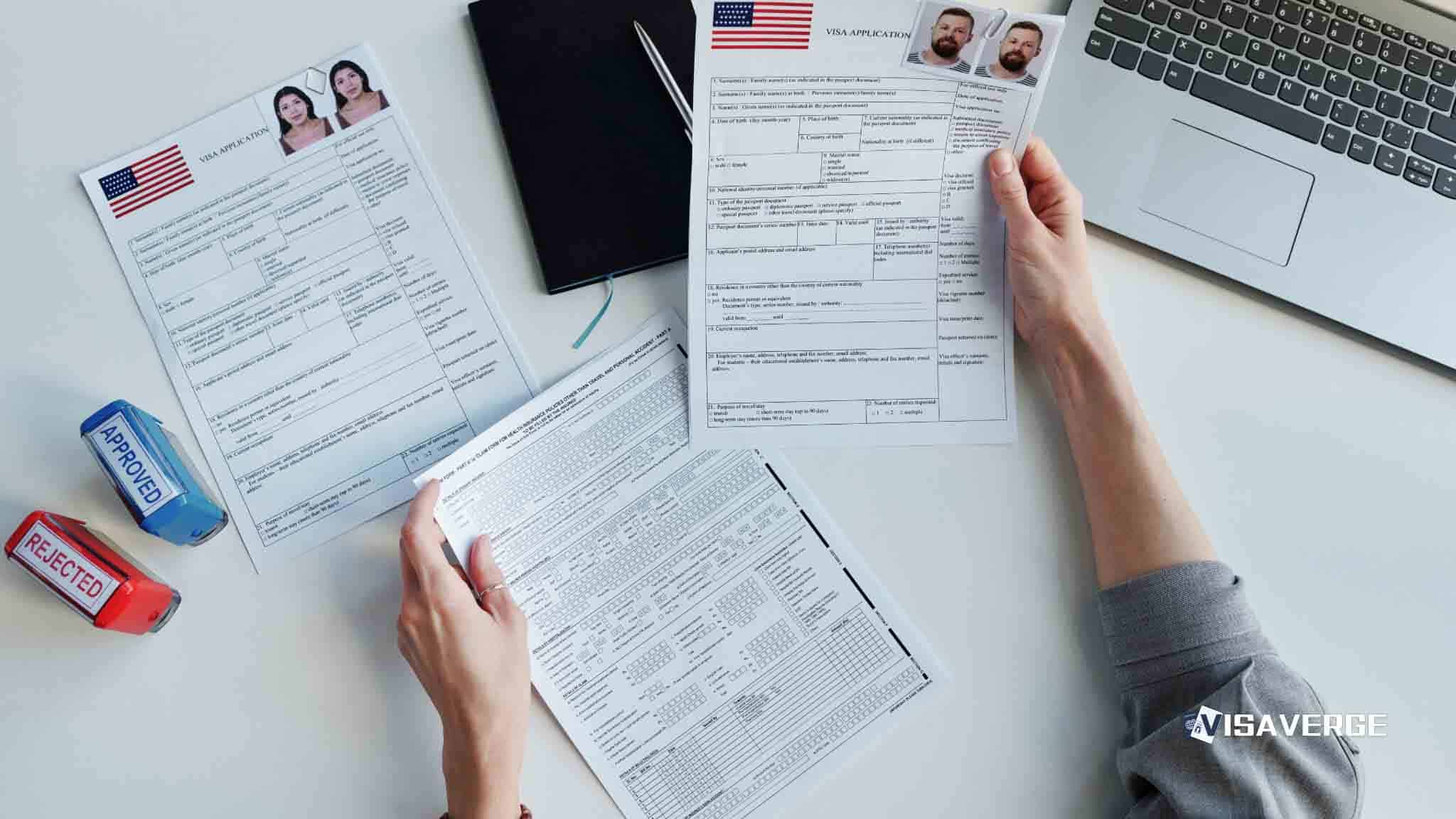
USCIS handles petitions for both visas. For each, the employer files a petition using Form I-129. If approved:
- Workers outside the U.S. apply for a visa at a U.S. consulate.
- Workers already in the U.S. in valid status may begin or continue work after USCIS approval, subject to date and status rules.
From Work Visa to Green Card
Many H-1B and L-1 workers later seek a green card (lawful permanent residence) via the employment-based system. Though procedures vary by category, the common structure is:
- Employer files an immigrant petition.
- Worker waits for an immigrant visa number to become available.
- Worker completes the final step via adjustment of status in the U.S. or an immigrant visa interview abroad.
Typical H-1B pipeline (spring timeline)
- Employer creates an online registration during the USCIS window (usually in March).
- If selected, employer submits a Labor Condition Application (LCA) to the U.S. Department of Labor to certify wages and working conditions.
- Employer files Form I-129 with USCIS, documenting that the job is a specialty occupation and the worker’s qualifications.
- USCIS reviews the petition, may issue a Request for Evidence (RFE), then approves or denies.
- If the worker is abroad, they complete consular processing and a visa interview before travel and starting work.
L-1 transfer process
- Company files Form I-129 for L-1A or L-1B classification.
- Worker must show the managerial/executive or specialized knowledge role and the required one-year employment abroad within the last three years.
- USCIS reviews and can approve, deny, or issue an RFE.
Both visas are temporary but extendable. Initial stays are commonly up to three years, with extensions possible within statutory limits. Key portability notes:
- H-1B workers can switch employers if the new employer files and USCIS receives a new Form I-129.
- L-1 employees can move within the same corporate group consistent with the approved role.
Employment-based green card categories
Employers generally file Form I-140 in one of these categories:
- EB-1: priority workers (some multinational managers/executives, outstanding professors/researchers, persons of extraordinary ability)
- EB-2: professionals with advanced degrees or persons of exceptional ability
- EB-3: skilled workers and professionals
After Form I-140 approval, the worker waits for a visa number based on category and country of chargeability. When a number is available:
- Workers in the U.S. file Form I-485 (Adjustment of Status).
- Workers abroad go through consular processing for an immigrant visa.
The final steps include biometrics, an interview, and a decision by USCIS or the consulate.
Citizenship Timeline and Practical Steps
Once approved for a green card, you become a lawful permanent resident. The physical green card needs renewal periodically, although the status itself does not “expire” in the same way.
The typical timeline to apply for naturalization:
- Most green card holders can apply after five years of permanent residence.
- If married to a U.S. citizen and meeting other rules, the wait can be three years.
Naturalization checklist:
- Maintain continuous residence and meet physical presence requirements.
- Demonstrate good moral character.
- Be able to read, write, and speak basic English.
- Pass a civics test on U.S. history and government.
- Take the Oath of Allegiance.
Process overview:
- File Form N-400 (Application for Naturalization).
- Attend biometrics appointment.
- Complete interview and testing.
- If approved, attend the oath ceremony.
People with disabilities may qualify for exceptions; USCIS guidance explains eligibility and procedures.
Practical Examples and Employer/Worker Tips
Real-life scenarios illustrate how timelines play out:
- A software engineer on an H-1B might win the lottery in March, start in October, and later shift to an EB-2 green card via Form I-140. If a visa number isn’t available, she may wait months before filing Form I-485.
- A global firm may bring a regional manager to the U.S. on L-1A, then sponsor him for EB-1 as a multinational manager.
- Families coordinate schooling, leases, healthcare, and careers around USCIS notices and approvals.
Employer and HR best practices:
- Submit the LCA before the H-1B petition and collect necessary degree evaluations.
- Meet prevailing wage rules to avoid delays.
- For L-1 petitions, keep corporate documents ready (proof of qualifying relationship between U.S. and foreign entities).
- On green cards, track priority dates and file as soon as a visa number opens.
Worker record-keeping:
- Save degree records, job offer letters, employment verification, and travel logs.
- Keep addresses current with USCIS and file timely petitions to preserve status.
Dependents:
- Spouses and children generally receive matching dependent status: H-4 for H-1B families and L-2 for L-1 families. Their paperwork typically moves in parallel with the principal worker.
Important takeaway: Each step relies on timely filings and meeting current rules. USCIS reviews cases individually, so thorough documentation and proactive planning significantly reduce delays.
Key Forms and Official Resources
Always use official forms and check USCIS for current policy and filing windows. Useful links:
Form I-129(Petition for a Nonimmigrant Worker): https://www.uscis.gov/i-129- Labor Condition Application (for H-1B employers): https://www.dol.gov/agencies/eta/foreign-labor/programs/h-1b
Form I-140(Immigrant Petition for Alien Workers): https://www.uscis.gov/i-140Form I-485(Application to Register Permanent Residence or Adjust Status): https://www.uscis.gov/i-485Form N-400(Application for Naturalization): https://www.uscis.gov/n-400
For official H-1B guidance and updates, see: https://www.uscis.gov/working-in-the-united-states/temporary-workers/h-1b-specialty-occupations
Quick Summary: Pathway at a Glance
- Temporary stage: H-1B or L-1 to work in the U.S., typically up to three years at a time with possible extensions.
- Permanent stage: Employer-sponsored green card via Form I-140, then Form I-485 (in the U.S.) or consular processing once a visa number is available.
- Citizenship stage: After three to five years as a green card holder, apply using Form N-400, complete biometrics, interview, testing, and take the Oath of Allegiance.
VisaVerge.com reports continued strong demand for H-1B visas, keeping the lottery central to hiring for specialized roles, while L-1 visas remain important for cross-border leadership and intra-company transfers. Together, these programs form a bridge from short-term employment to long-term residence and eventual U.S. citizenship.
Frequently Asked Questions
This Article in a Nutshell
H-1B and L-1 visas are primary channels for foreign professionals to work in the United States and often serve as pathways to permanent residence and citizenship. The H-1B targets specialty occupations, requires employer sponsorship, and is limited to 85,000 new visas annually with a 20,000-exemption for U.S. master’s holders; when demand exceeds supply, USCIS conducts a lottery. The L-1 facilitates intra-company transfers for managers/executives (L-1A) and specialized-knowledge staff (L-1B) after at least one continuous year of prior employment abroad and is not capped annually. Employers file Form I-129 to petition for either visa. Many recipients pursue employment-based green cards by an employer filing Form I-140; once a visa number is available they complete adjustment of status (Form I-485) or consular processing. After obtaining a green card, most can apply for naturalization after five years, or three years if married to a U.S. citizen. Practical steps include timely filings (LCA, I-129, I-140), careful record-keeping of credentials and travel, and monitoring priority dates. Dependents typically receive H-4 or L-2 status. USCIS reviews cases individually; thorough documentation and proactive planning reduce delays.