- New policies restrict Adjustment of Status for temporary visa holders, requiring most to apply abroad via Consular Processing.
- Significant visa retrogression affects India as EB-2 and EB-5 categories are exhausted until October twenty twenty-six.
- A strict rule eliminates signature error corrections starting July tenth, leading to immediate rejections for invalid ink signatures.
(UNITED STATES) — U.S. Citizenship and Immigration Services has announced three major changes to Green Card application procedures taking effect in July 2026: a restrictive new policy on Adjustment of Status, visa retrogression for employment-based categories, and a strict signature rule eliminating the opportunity to correct errors.
The changes affect multiple pathways to permanent residence and come amid a broader policy shift prioritizing Consular Processing over in-country applications. Applicants filing Form I-485, Application to Register Permanent Residence or Adjust Status, face new constraints that alter long-standing procedures.
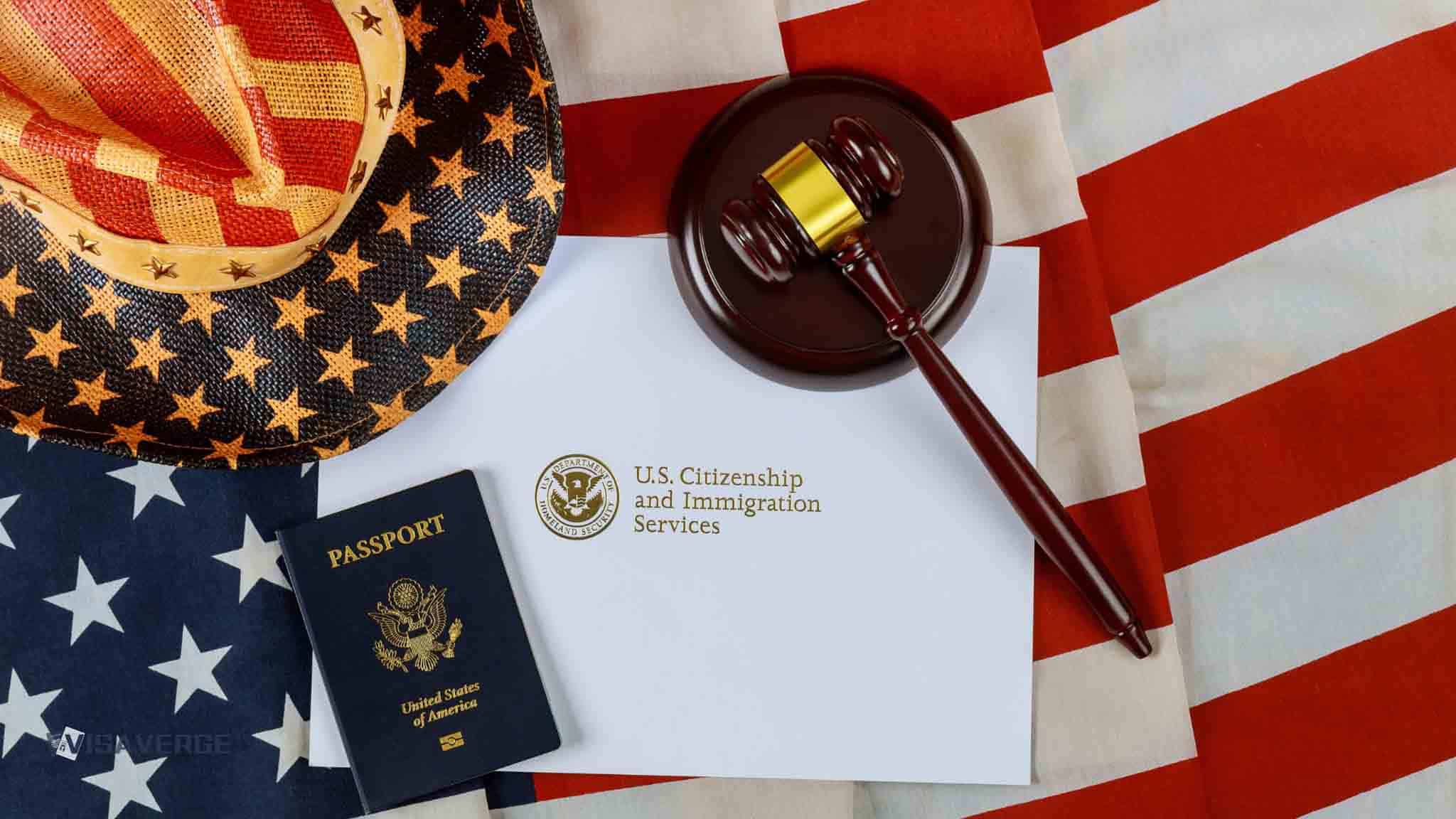
Policy Shift: Adjustment of Status Restricted
A policy memorandum issued on May 22, 2026, reclassifies Adjustment of Status as an “extraordinary form of relief” rather than a standard procedural option. Under the new guidance, temporary visitors including students on F-1 visas, tourists on B-1/B-2 visas, and temporary workers on H-1B and L-1 visas must return to their home countries to apply for permanent residence through Consular Processing at a U.S. embassy or consulate.
Free toolCSPA Age-Out Calculator OnlineUSCIS Spokesman Zach Kahler stated on May 22, 2026: “From now on, an alien who is in the U.S. temporarily and wants a Green Card must return to their home country to apply, except in extraordinary circumstances. This policy allows our immigration system to function as the law intended instead of incentivizing loopholes. Their visit should not function as the first step in the Green Card process.”
The policy reverses years of practice in which nonimmigrants lawfully present in the United States could transition to permanent residence without departing. Applicants who believe they qualify under “extraordinary circumstances” should consult with an immigration attorney before filing Form I-485. USCIS has not published criteria defining what qualifies as extraordinary.
| India | China | ROW | |
|---|---|---|---|
| EB-1 | Feb 01, 2023 ▲109d | Jul 01, 2023 | Current |
| EB-2 | Nov 01, 2013 | Oct 01, 2021 ▲30d | Jan 01, 2025 |
| EB-3 | Jan 01, 2014 | Jan 08, 2022 ▲7d | May 15, 2024 ▼109d |
| F-1 | Jan 22, 2020 | Jan 22, 2020 | Jan 22, 2020 |
| F-2A | Sep 22, 2026 ▲31d | Sep 22, 2026 ▲31d | Sep 22, 2026 ▲31d |
July 2026 Visa Bulletin & Filing Charts
The Department of State and USCIS confirmed July 2026 filing rules on June 16, 2026. USCIS will use the Final Action Dates chart for all employment-based applications. Family-sponsored applicants may continue using the Dates for Filing chart.
Visa retrogression has hit Indian nationals particularly hard. On June 23, 2026, officials announced that visas for the Employment-Based Second Preference (EB-2) and EB-5 Unreserved categories for India have been exhausted for the remainder of the fiscal year. EB-2 India is unavailable until October 2026, when the new fiscal year begins.
Other category movements in the July 2026 Visa Bulletin include slight retrogression for EB-1 India, moderate advancement for EB-3 China, and the F2A category (spouses and children of lawful permanent residents) remaining current for all countries.
| Category | July 2026 Status | Notes |
|---|---|---|
| EB-2 India | Unavailable | No visas until October 2026 |
| EB-1 India | Retrogressed | Slight backward movement |
| EB-3 China | Advanced | Moderate forward movement |
| EB-5 Unreserved (India) | Unavailable | Exhausted for fiscal year |
| F2A (All countries) | Current | Spouses and children of LPRs |
⏱️ Visa Bulletin: Employment-based applicants must use the Final Action Dates chart for July 2026. Family-sponsored applicants use the Dates for Filing chart. Check the bulletin at travel.state.gov.
New Mandatory Signature Rule (Effective July 10, 2026)
A separate federal rule taking effect July 10, 2026, eliminates the ability to correct signature errors on immigration forms after acceptance. Previously, USCIS allowed applicants to “cure” signature defects by submitting corrected copies. Under the new rule, applications with invalid signatures will be denied or rejected immediately without opportunity to fix the error.
The rule applies to forms including Form I-485, Form I-765, Application for Employment Authorization, and Form I-131, Application for Travel Document. An invalid signature includes using a digital signature where a “wet ink” original is required, or failing to sign a required field entirely.
⚠️ Common Mistake: After July 10, 2026, signature errors on Form I-485 and related forms result in immediate rejection with no cure period. Sign every required field in ink unless the form instructions specifically permit electronic signatures.
Applicants who determine they remain eligible to file Form I-485 should follow these steps:
- Download the current form version from uscis.gov/forms
- Verify the correct filing fee: $1,225 as of June 2026, including biometrics
- Sign every required field in wet ink unless electronic signatures are explicitly permitted
- Include all required supporting documents in one package
- Mail to the correct lockbox address listed in the form instructions for your state
- Create a USCIS online account at my.uscis.gov to track case status
| Detail | Information |
|---|---|
| Form Number | I-485 |
| Purpose | Adjustment of Status |
| Filing Fee (as of June 2026) | $1,225 (includes $85 biometrics) |
| Where to File | Lockbox address per form instructions |
| Processing Time | 8-14 months (varies by service center) |
| Document | Required | Notes |
|---|---|---|
| Form I-485 | Yes | Current version from uscis.gov |
| Filing fee | Yes | $1,225 (includes biometrics) |
| Birth certificate | Yes | With certified English translation if needed |
| Passport copy | Yes | All pages with entry stamps |
| Medical exam (Form I-693) | Yes | Signed by designated civil surgeon |
| Affidavit of Support (Form I-864) | If applicable | Family-sponsored cases |
| Two passport-style photos | Yes | Per form instructions |
💰 Current Fee: Form I-485 costs $1,225 as of June 2026, including the $85 biometric services fee. Fee waivers (Form I-912, Request for Fee Waiver) are available for eligible applicants but generally not for employment-based cases.
Impact on Affected Individuals
The shift toward Consular Processing carries significant consequences. Applicants forced to leave the United States to apply at a consulate face family separation and the risk of triggering unlawful presence bars. Under Section 212(a)(9)(B) of the Immigration and Nationality Act, individuals who accrue more than 180 days of unlawful presence before departing face a three-year reentry bar; one year or more triggers a ten-year bar.
Temporary Protected Status holders face a separate deadline. Following the Supreme Court ruling in Mullin v. Doe on June 25, 2026, DHS has authority to end TPS for approximately 350,000 Haitians and 4,000 Syrians. Work authorizations for many of these individuals expire on July 1, 2026.
A court order on June 11, 2026, provided partial relief for applicants from 39 countries. The order forced USCIS to resume processing Green Card applications paused under 2025 presidential proclamations. Nationals of these countries may now have applications adjudicated, though they remain subject to the new Adjustment of Status restrictions and visa bulletin retrogression.
| Change | Effective Date | Impact |
|---|---|---|
| Consular Processing Priority | July 2026 | F-1, B-1/B-2, H-1B, L-1 must apply abroad |
| New Signature Rule | July 10, 2026 | No cure period for invalid signatures |
| EB-2 India Unavailable | July 1, 2026 | No visas until October 2026 |
| TPS Haiti/Syria Expiration | July 1, 2026 | ~354,000 lose work authorization |
| Processing Resumes (39 countries) | June 11, 2026 | Paused applications now adjudicated |
✅ Pro Tip: Before mailing Form I-485, verify your priority date is current under the applicable visa bulletin chart. Employment-based applicants must use the Final Action Dates chart for July 2026. Check the bulletin at travel.state.gov.
Applicants currently in the United States on nonimmigrant visas who intended to file Form I-485 should assess whether they qualify for an exception under the “extraordinary circumstances” standard. USCIS has not published criteria for what constitutes extraordinary circumstances, making consultation with a licensed immigration attorney advisable before filing.
Those with pending applications filed before the policy memorandum should monitor case status through my.uscis.gov. USCIS has not announced whether the new policy will be applied retroactively to pending cases.
Applicants in visa-retrogressed categories, particularly EB-2 India, should track the October 2026 Visa Bulletin for potential visa availability. Filing Form I-485 is not possible until a priority date becomes current under the applicable chart.
📋 Official Resources: Download forms at uscis.gov/forms. Check processing times at egov.uscis.gov/processing-times. Fees and processing times are subject to change. Always verify current information at uscis.gov.