- The European Union rejected industry appeals to suspend its biometric Entry/Exit System despite severe summer travel delays.
- Member states may temporarily pause biometric registration in renewable six-hour blocks during periods of exceptionally high pressure.
- Approximately forty million additional passengers are expected to transit through Schengen airports during the peak July and August season.
(EUROPEAN UNION) – The European Union rejected aviation industry calls to suspend its new biometric border controls, saying the Entry/Exit System will stay in place even as officials acknowledge severe delays at 20 “difficult spots” during the summer travel rush.
EU Commission Spokesperson Markus Lammert said on July 6, 2026 that the bloc already has a mechanism for local relief without shutting the system down. “When there are situations of exceptionally high pressure on a certain border crossing point, there is the possibility to suspend temporarily the registration of the biometrics. Suspension of the biometrics doesn’t need suspension of the system. This extra registration of the facial and of the fingerprint data can be suspended [for renewable six-hour periods],” Lammert said.
Industry groups had urged Brussels to go further. In an open letter dated July 1, 2026, ACI Europe, IATA and A4E said, “We have reached a critical point. Airlines face half-empty planes at gate closing time, while passengers are stuck in border control queues.”
Free toolUSCIS Receipt Number DecoderMagnus Brunner, the EU migration commissioner, answered those appeals in a formal letter on July 5, 2026. He committed the EU to “make additional efforts to help those member states that still encounter issues” but said the current rules already provide enough “built-in flexibility” to manage the summer peak.
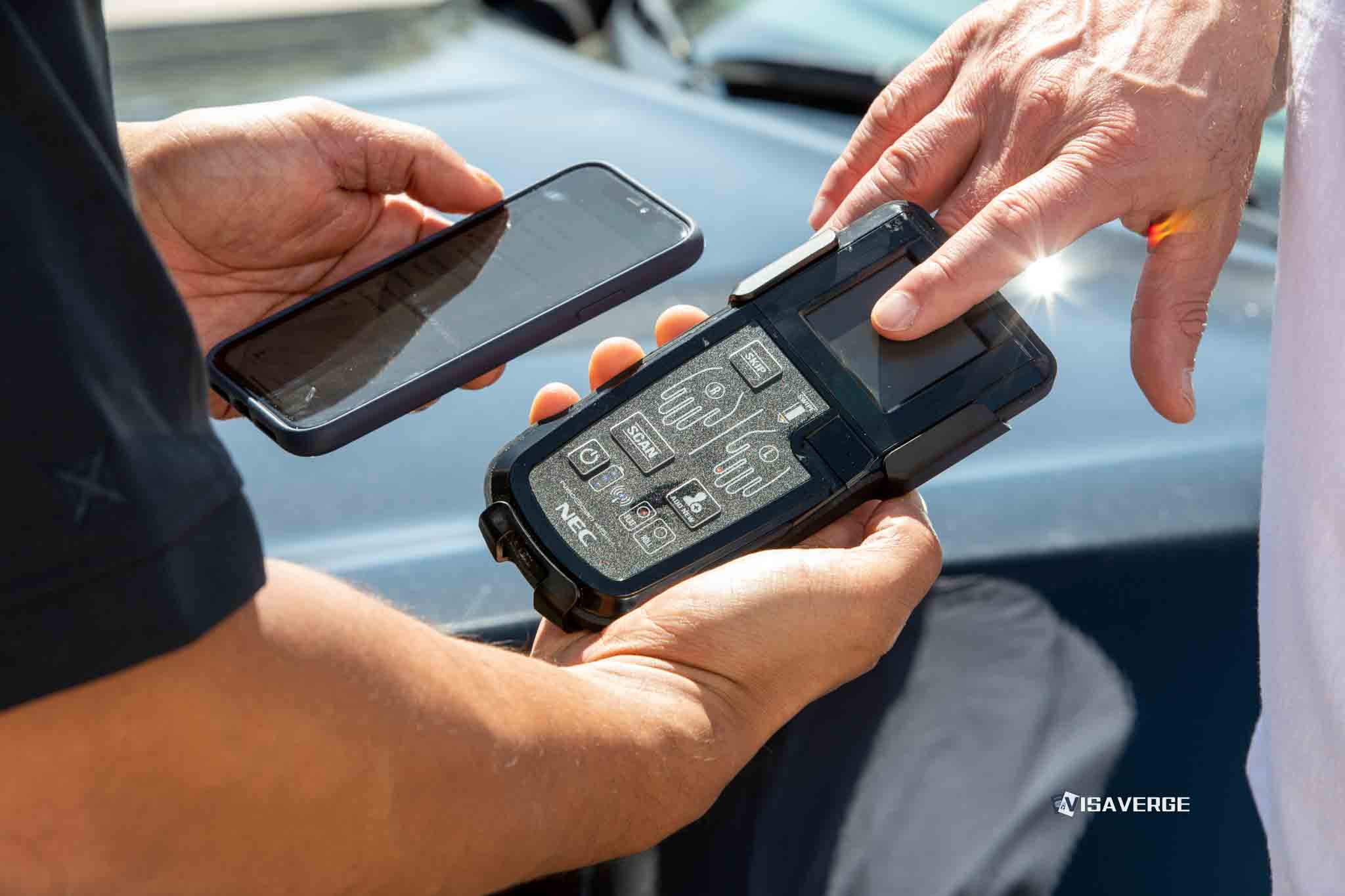
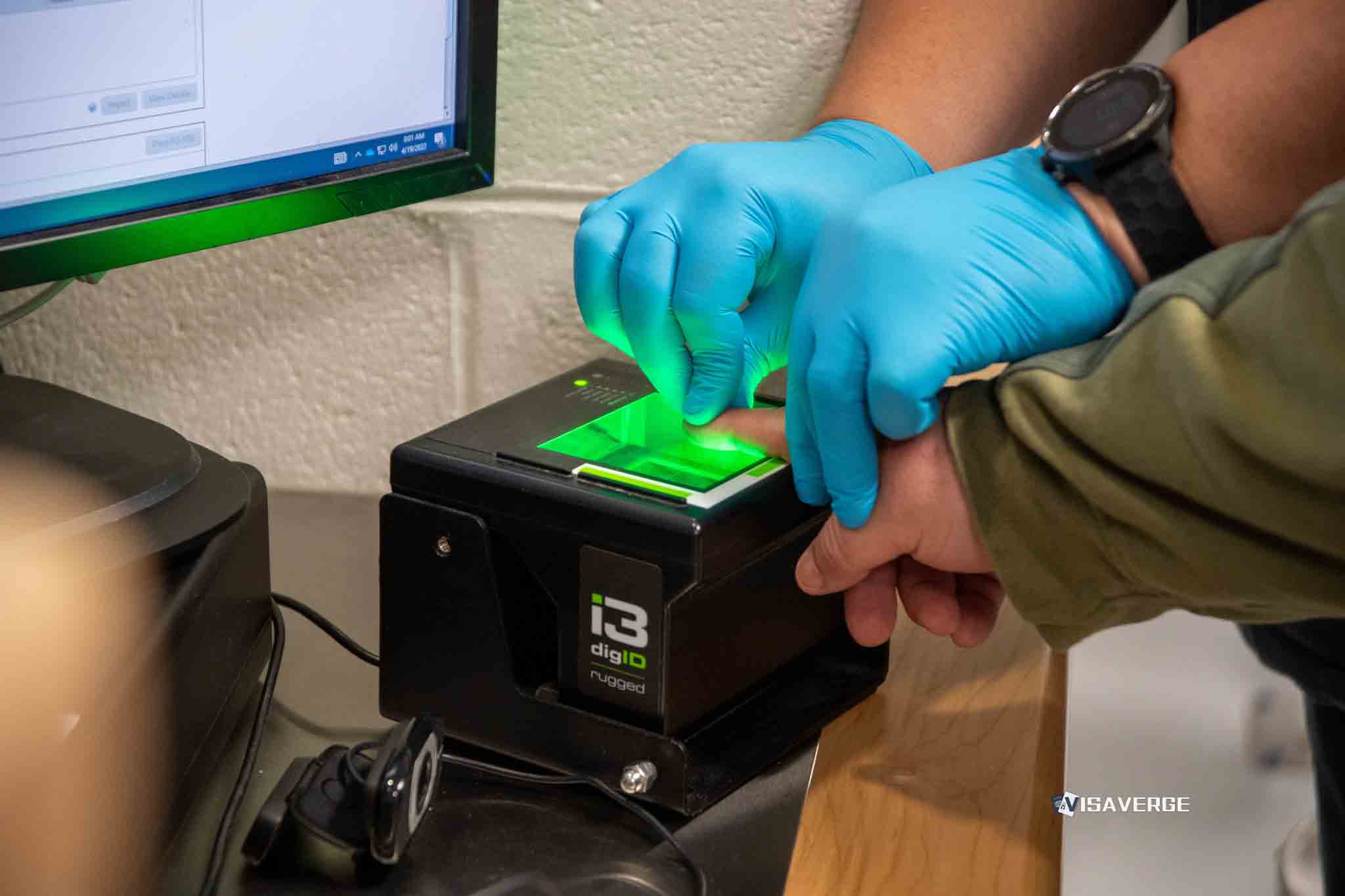
The dispute comes less than three months after the system became fully operational on April 10, 2026, following a phased rollout that began in October 2025. Under the new rules, all non-EU citizens, including travelers from the United States, UK and Canada, must provide four fingerprints and a facial scan on their first entry into the Schengen Area.
EU officials have identified 20 high-pressure crossing points, mostly major transit hubs in Portugal, Spain, Italy, Greece and Belgium, where infrastructure limits and staffing shortages have compounded technical glitches. At those locations, queues have stretched to five hours.
Officials expect the strain to intensify. About 40 million additional passengers are expected to pass through EU airports in July and August compared with the previous two months.
Brussels has argued that the system cannot be treated as optional because it is intended to replace manual passport stamps, detect overstays and combat identity fraud. That security case has remained the commission’s answer to industry complaints that the launch came before the network had been stress-tested at full summer scale.
Lammert’s remarks drew a distinction between the Entry/Exit System itself and one part of the first-time registration process. The system remains active even if a border crossing point pauses collection of facial and fingerprint data during periods of exceptional pressure, and the suspension can run in renewable six-hour blocks.
That fallback matters most at airports and other crossing points handling large numbers of first-time entrants. Initial registration takes longer than later checks, because a traveler must complete the first biometric enrollment before the system can move to subsequent verification.
Passengers have reported the longest waits at the same “difficult spots” flagged by EU officials. Those delays have led some travelers to miss onward flights, a risk that falls hardest on passengers with tight connections during the holiday season.
Airlines, however, are generally not liable when a traveler misses a flight because of Entry/Exit System queues. Border delays fall under “extraordinary circumstances” outside an airline’s control, leaving carriers to absorb operational disruption while passengers bear the immediate cost of missed departures.
That has sharpened the airline industry’s warning that congestion at border control is no longer a marginal issue. Its letter described planes leaving with empty seats because some passengers remained trapped in processing lines after check-in had closed.
First-time travelers face the longest delays because the system requires them to submit four fingerprints and a facial scan before entry. On later trips, that registration step does not repeat in the same way, making the first pass through the system the most time-consuming.
Travelers who hold both an EU and a non-EU passport have been advised to use their EU passport, which allows them to avoid Entry/Exit System processing. That advice has become more pointed since the system went live across the bloc in April.
Diplomatic friction has surfaced as well. In February 2026, the U.S. Department of Homeland Security sought exemptions for U.S. military and diplomatic personnel from the biometric scans.
The rollout has also delayed another border project. Because of instability during the Entry/Exit System launch, the EU pushed back the start of the European Travel Information and Authorization System, the pre-travel clearance for visa-exempt visitors, to 2027.
That delay reflects how central the Entry/Exit System has become to the EU’s broader border overhaul. ETIAS depends on the successful functioning of the new digital entry record, and the bloc has chosen to stabilize one system before adding another layer for travelers.
Summer traffic will test whether the six-hour suspension tool can relieve pressure without undermining the system’s security aims. Brussels has framed that option as enough flexibility for member states still struggling with staffing, infrastructure and technical performance.
Airports and airlines had sought a wider retreat from the biometrics regime during the busiest weeks of the season. The commission’s answer was narrower: keep the system running, help the hardest-hit crossing points, and use temporary pauses in biometric registration only when pressure becomes exceptional.
That leaves passengers heading into Schengen airports this summer with a clear picture of what awaits at the border. Non-EU citizens entering for the first time must expect fingerprinting and a facial scan, the 20 “difficult spots” remain under strain, and waits of five hours are already part of the first full summer under the Entry/Exit System.