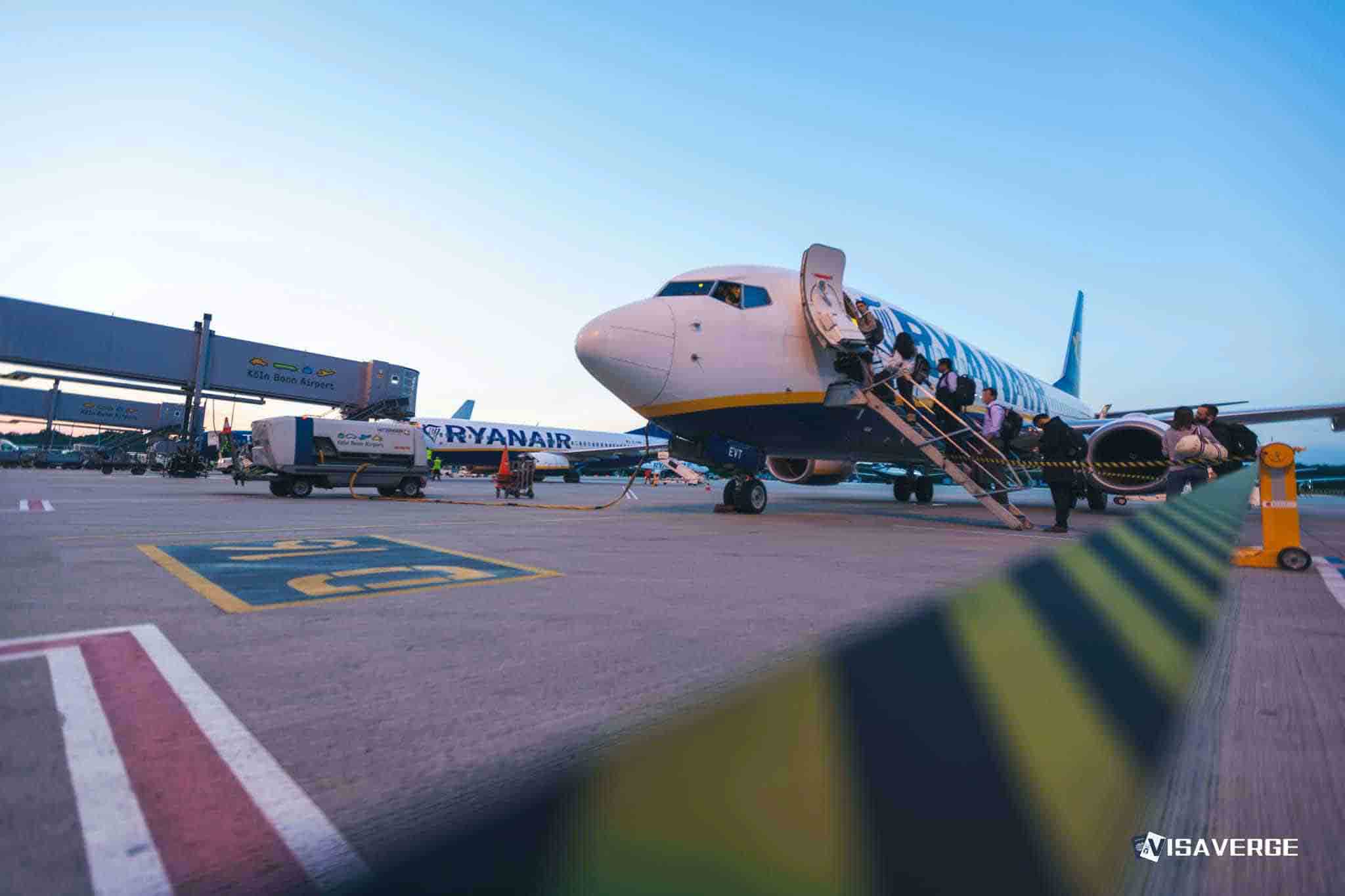
- Major airlines and airports warn of five-hour border queues due to the new EU Entry/Exit System.
- Industry groups are requesting immediate intervention or suspensions during peak summer travel periods in 2026.
- The European Commission maintains the rollout is gradual and orderly, processed over 110 million entries.
(EUROPEAN UNION) — If you are flying into the Schengen area this summer, the airlines and airports are the safer side to listen to right now. They are warning of border queues that can stretch to five hours, and that kind of delay can wreck tight connections, award itineraries, and same-day business trips.
The argument is over the EU’s new Entry/Exit System. Airlines and airport groups want checks paused during peak traffic. The European Commission says the rollout is proceeding in an orderly way, with extra flexibility available through early September 2026.
Free toolSchengen Short-Stay Visa Calculator
That split matters most at the border, not in the cabin. A long queue after landing can turn a clean connection into a missed one, even when the flight itself arrives on time. If you are connecting through a hub like Frankfurt, Amsterdam, Paris, or Madrid, the risk sits on the ground.
The warning came from ACI Europe, A4E, and IATA. Together, they speak for airports and more than 360 airlines worldwide. Their message was blunt: intervene now, before summer traffic adds pressure to already busy checkpoints.
Magnus Brunner, the EU migration chief, responded with a pledge to do more for member states still struggling with the system. In a letter dated July 3, he said the Commission would make additional efforts, while describing the rollout as carefully and gradually introduced.
Brunner also said flexibility already exists during the 2026 summer holiday period until early September 2026. That leaves member states room to adjust operations, but not much time before the peak travel rush intensifies further.
The Commission’s own figures show the scale of the new system. Since October 2025, it has processed 110 million entries and exits. More than 44,000 people were refused entry, mainly because they lacked the right travel document or visa.
A Commission official also said the system is working without problems at a large majority of the 1,500 border crossing points. That leaves a narrower but very visible problem set at the weakest checkpoints, where staffing and infrastructure are under strain.
The new Entry/Exit System replaces manual passport stamping with biometric data collection. It records personal data and biometrics for non-EU nationals entering short stay. That shift is supposed to make border records more accurate. It also adds friction in the early phases of adoption.
Here is the comparison now shaping the summer travel season.
| Issue | Airlines and airports | European Commission |
|---|---|---|
| View of the problem | Queues are reaching up to five hours during peak travel. | The rollout is gradual, and most border points are functioning normally. |
| Preferred fix | Immediate intervention and the option to suspend checks during heavy traffic. | Extra support for member states and more operational flexibility. |
| Timing | Act now, before summer demand peaks. | Use the current summer window through early September 2026. |
| Traveler impact | Risk of missed connections, missed tours, and rebooking costs. | Border controls remain in place, with uneven local performance. |
| System view | Rollout is exposing weak staffing and infrastructure. | Most issues stem from local capacity, not the system itself. |
The airline side has the easiest case to understand. A traveler who lands on time but waits hours at passport control can still miss the next flight. That is especially painful on self-transfer itineraries, where the airline does not protect the onward segment.
Award travelers face a different kind of risk. A missed connection on a redemption ticket can mean waiting for the next seat that exists in the right class, or paying cash to get home on the same day. Frequent flyers chasing status also lose value when a carefully planned itinerary turns into a forced overnight.
The timing is awkward because summer is when Europe sees its heaviest traffic. Families travel with less flexibility, and many long-haul passengers arrive on packed banked flights. A few extra minutes at the border can ripple through the whole arrival hall.
The Commission’s defense rests on scale. Processing 110 million entries and exits in less than a year is not a small operational task. The fact that more than 44,000 people were refused entry also shows the system is doing some of what it was built to do, which is verifying documents and visas more systematically.
Still, the public-facing experience is what travelers feel. A biometrics kiosk does not matter much if the queue snakes through the terminal. That is why staffing and infrastructure matter as much as software. A digital system can still stall when there are not enough officers or lanes open.
There is also a route-level difference depending on where you land. Major hubs with large staffing pools can absorb the change better. Smaller border crossings, or airports with tight staffing, face more pressure when several widebody arrivals land close together.
The industry’s request to suspend checks during heavy traffic reflects that reality. Airlines and airports are not asking for a rewrite of Schengen controls. They are asking for a pressure valve when the queues begin to threaten the rest of the travel day.
The Commission is betting that more support, not suspension, will solve the problem. That approach keeps the new Entry/Exit System intact while trying to smooth the weakest parts of the rollout. The July 7 meeting with industry representatives will show how wide the gap remains.
Choose the airline and airport warning if your itinerary has a short connection, a self-transfer, or a same-day arrival tied to a cruise, train, or tour. Those are the trips most exposed to a border delay.
Choose the Commission’s gradual-rollout view if your plans are flexible and your arrival airport has a strong record of handling passport control quickly. That does not remove the risk, but it lowers the odds that a long queue becomes a missed flight.
Book longer connection times on any itinerary that crosses the Schengen border this summer. A few extra hours on the ground can protect a fare, a redemption, and a full day of travel.
If your next trip lands in the EU before early September 2026, check the border process at your arrival airport before you ticket the onward leg. The difference between a smooth transfer and a missed connection now starts at passport control.