Federal prosecutors have now indicted Christian Castro on federal false-statement charges, adding a new criminal track to the extradition fight between Minnesota and Texas. The move follows a string of setbacks for Minnesota, including a August 26, 2026 federal ruling that denied its emergency bid to keep Castro detained and force Governor Greg Abbott to sign the extradition warrant.
- On September 3, 2026, federal prosecutors filed an indictment charging Christian Castro with federal false-statement charges.
- A federal judge in Texas denied Minnesota’s emergency request on August 26, 2026, refusing to keep Castro detained and refusing to compel Governor Greg Abbott to sign the extradition papers.
- Christian Castro was released from a Texas jail on August 27, 2026, after being held for 90 days under Texas extradition detention rules.
- Minnesota Attorney General Keith Ellison said on August 27, 2026 that the state would continue litigating and still seeks Castro’s return to face the Minnesota charges.
- Minnesota filed a federal lawsuit against Governor Abbott seeking the extradition of ICE agent Christian Castro.
- The agent faces multiple assault charges following a January twenty twenty-six shooting of a Venezuelan immigrant.
- Governor Abbott is refusing to sign the mandatory rendition warrant, citing political disputes over Medicaid fraud.
Minnesota Attorney General Keith Ellison filed a federal lawsuit Tuesday seeking to force Texas Gov. Greg Abbott to extradite ICE agent Christian Castro to face assault charges tied to a Minneapolis shooting. The filing came in the U.S. District Court for the Southern District of Texas in Brownsville, after Abbott declined to sign a rendition warrant.
The case, State of Minnesota, ex rel. Governor Tim Walz and Attorney General Keith Ellison v. Greg Abbott et al., is docketed as Case No. 1:26-cv-00906. Ellison is also asking the court to prevent the agent’s release from the Cameron County Jail while the dispute proceeds.
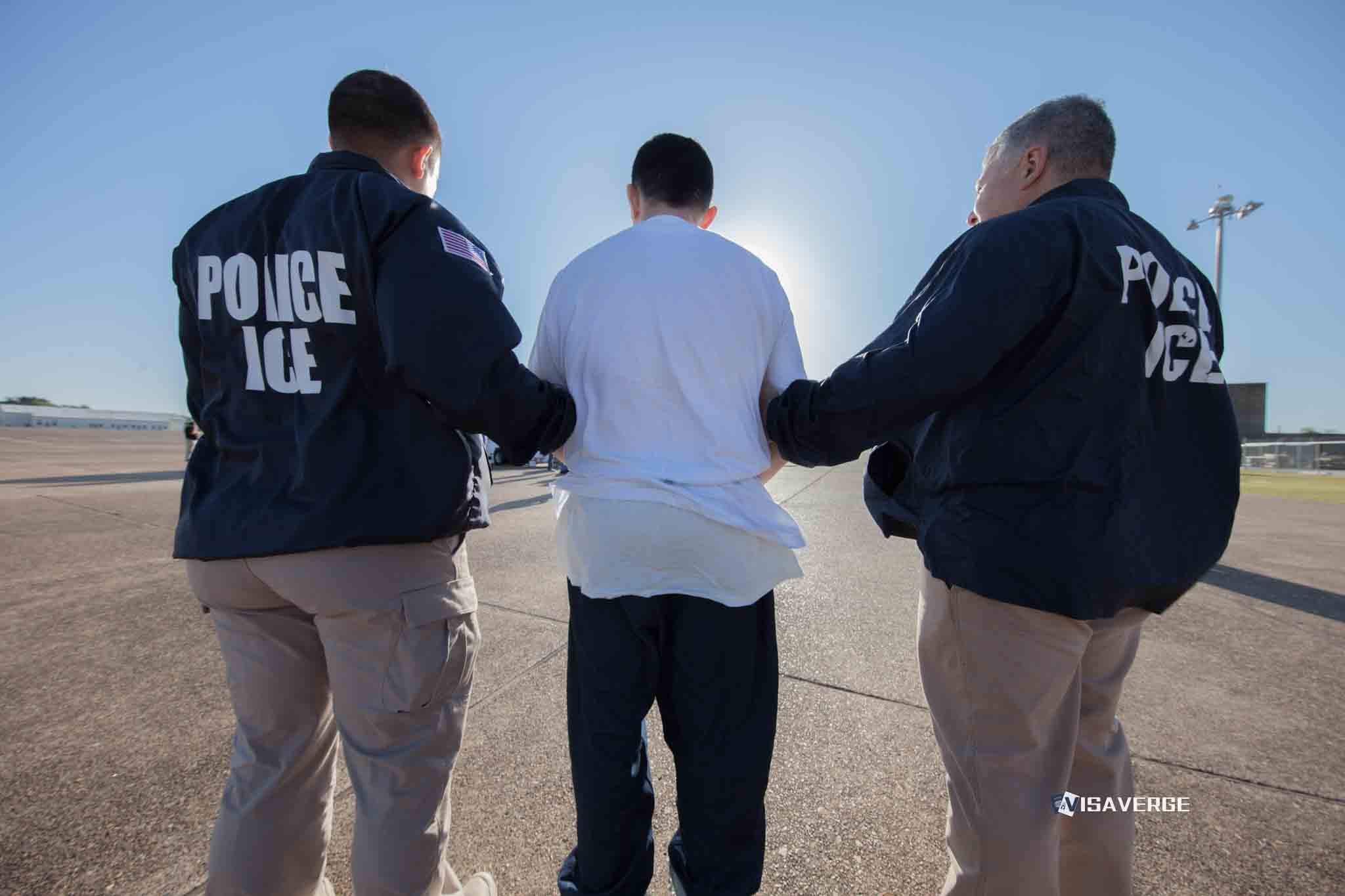
The state says interstate extradition is mandatory under the U.S. Constitution, federal law and Texas law. Abbott has said he will not sign the papers because he distrusts Gov. Tim Walz.
Ellison described the delay as deliberate.
“Governor Abbott has withheld the warrant and held up Castro’s extradition for nearly three months. This is not some accidental thing. This is a choice. He has no discretion to decline to do so.”
The filing followed a 5:00 p.m. deadline on August 17 that passed without action from the governor. The attorney general’s office filed the complaint on August 18, 2026.
The dispute turns on whether a governor can stop interstate rendition
The lawsuit asks a federal judge to compel Abbott to sign the warrant and keep the agent in custody until Minnesota officers can take him. Its legal theory rests on the Extradition Clause, the federal Extradition Act of 1793 and Texas’s Uniform Criminal Extradition Act.
The state characterizes a governor’s role as “ministerial and non-discretionary.” In that view, once the required documents arrive, the governor cannot reject the request based on a separate political dispute.
The Supreme Court addressed the issue in its 1987 decision in Puerto Rico v. Branstad. The ruling held that federal courts can enforce a governor’s extradition duty.
The custody question adds urgency. Texas law limits detention pending extradition to 90 days. Officials in the state seeking custody warn that the agent could leave the county jail before officers receive him, with concerns that he might flee to Mexico.
As of August 19, 2026, Ellison is seeking a temporary restraining order against Cameron County Sheriff Manuel Trevino. The requested order would bar the sheriff from releasing the agent until the federal court rules on the extradition dispute.
The case has moved through three stages since the shooting
| Date | Development |
|---|---|
| January 14, 2026 | The shooting occurred during an immigration operation in Minneapolis. |
| May 18, 2026 | Hennepin County officials filed criminal charges. |
| May 29, 2026 | Texas Rangers arrested Castro in Cameron County on a Minnesota warrant. |
| June 2, 2026 | Gov. Tim Walz sent a formal extradition request to Texas. |
| August 18, 2026 | The state filed the federal lawsuit after the August 17 deadline passed. |
The criminal case includes four counts of second-degree assault with a dangerous weapon and one count of falsely reporting a crime. The charges accuse the agent of conduct connected to the January incident.
The shooting occurred on January 14, 2026. Prosecutors allege that Castro fired his service weapon through the front door of an occupied Minneapolis home during a federal immigration operation.
Julio Cesar Sosa-Celis was struck in the leg. The bullet went through the door and lodged in the wall of a child’s bedroom, according to the criminal allegations. Sosa-Celis survived the shooting.
The January shooting followed a federal immigration operation
The operation, known as “Operation Metro Surge,” sent between 2,000 to 3,000 federal agents to the state beginning in late 2025. Federal officials and Abbott’s administration justified the deployment by pointing to alleged fraud in Minnesota’s Medicaid and child care programs.
Some estimates suggested that “half or more” of funding in certain programs had been lost to fraud. Those estimates formed part of the stated justification for the federal operation.
State officials called the deployment a “federal invasion” and a “protection crisis.” The broader operation also included several shootings, including the fatal shootings of U.S. citizens Renee Nicole Good and Alex Pretti earlier in 2026.
Sosa-Celis, identified as a Venezuelan immigrant, was among people state officials said had been misidentified or targeted during the operation. His injury is the factual basis for the assault charges against the agent.
The dispute has also carried an economic cost. Local leaders estimate that the operation cost Minneapolis and its residents approximately $700 million through lost wages, reduced business revenue and municipal expenses.
Abbott links the refusal to a broader dispute with state officials
Abbott dismissed the lawsuit at a press conference and tied his refusal to the fraud allegations. He demanded that state officials acknowledge responsibility and repay the federal government.
“I will not respond to them at all until they step up and do what’s right, and they acknowledge their fault in the fraud that took place, and they fully repay the United States of America for the fraud they committed.”
Hennepin County Attorney Mary Moriarty said the extradition process should not have taken this long.
“We have never heard of anything taking this long because it is an administrative process. It is not supposed to be controversial.”
The lawsuit places that disagreement before a federal court. The requested relief would address both the governor’s refusal to execute the rendition paperwork and the jail’s authority to release the agent as the 90-day detention period approaches.
A federal judge will consider the state’s request to keep the agent jailed while the extradition question is litigated. The next custody deadline could arrive as early as next week, 90 days after the May 29 arrest.
This article provides general information and is not legal advice. Consult a qualified immigration attorney about your specific case.