Judge Grants Preliminary Injunction Against HSI Over First Amendment Concerns
The order keeps federal authorities from reviewing data copied from immigration attorney Andrew Lattarulo’s phone while his case proceeds, but does not decide whether the seizure was lawful.
At a glance
- Lattarulo’s firm received a Notice of Inspection on September 8, 2025, and a Notice of Suspect Documents on September 25.
- Burroughs barred phone searches on October 3, 2025, then again barred review of the copy on October 20.
- CBP conducted 55,318 electronic-device searches in FY 2025, nearly 11 times the 2012 total.
Reviewed November 14, 2026
U.S. District Judge Allison D. Burroughs on November 12, 2026, barred federal authorities from accessing data copied from immigration attorney Andrew Lattarulo’s phone. The preliminary injunction requires the government to keep that copy unreadable until his case concludes.
Burroughs found Lattarulo likely to succeed on his claim that authorities seized the phone in retaliation for speech protected by the First Amendment. She did not decide whether the seizure violated the Fourth Amendment.
The judge declined to order the copied data destroyed. The case-specific order instead keeps the material preserved and unreviewed while litigation continues.
The order protects one copied data set and leaves its destruction undecided
The restriction applies to the copy made from Lattarulo’s phone. Federal authorities cannot access it, and the government must retain it in its current unreadable and unreviewable form through the end of the case.
That leaves the data in government custody, but unavailable for review. Burroughs found that allowing a search at this stage could cause Lattarulo an irreparable loss of privacy. The administration had said it wanted to convert the copy into a format that could be read and searched if the court allowed it.
The judge rejected the request to destroy the copy for now. If a search is eventually permitted, the government said it would use a “taint team” to shield privileged material.
The phone returned, but its full copy holds confidential client material
Three Customs and Border Protection agents and an officer with Homeland Security Investigations (HSI), ICE’s investigative arm, stopped Lattarulo at Boston Logan International Airport on September 28, 2025. He had returned from a weekend trip to Aruba.
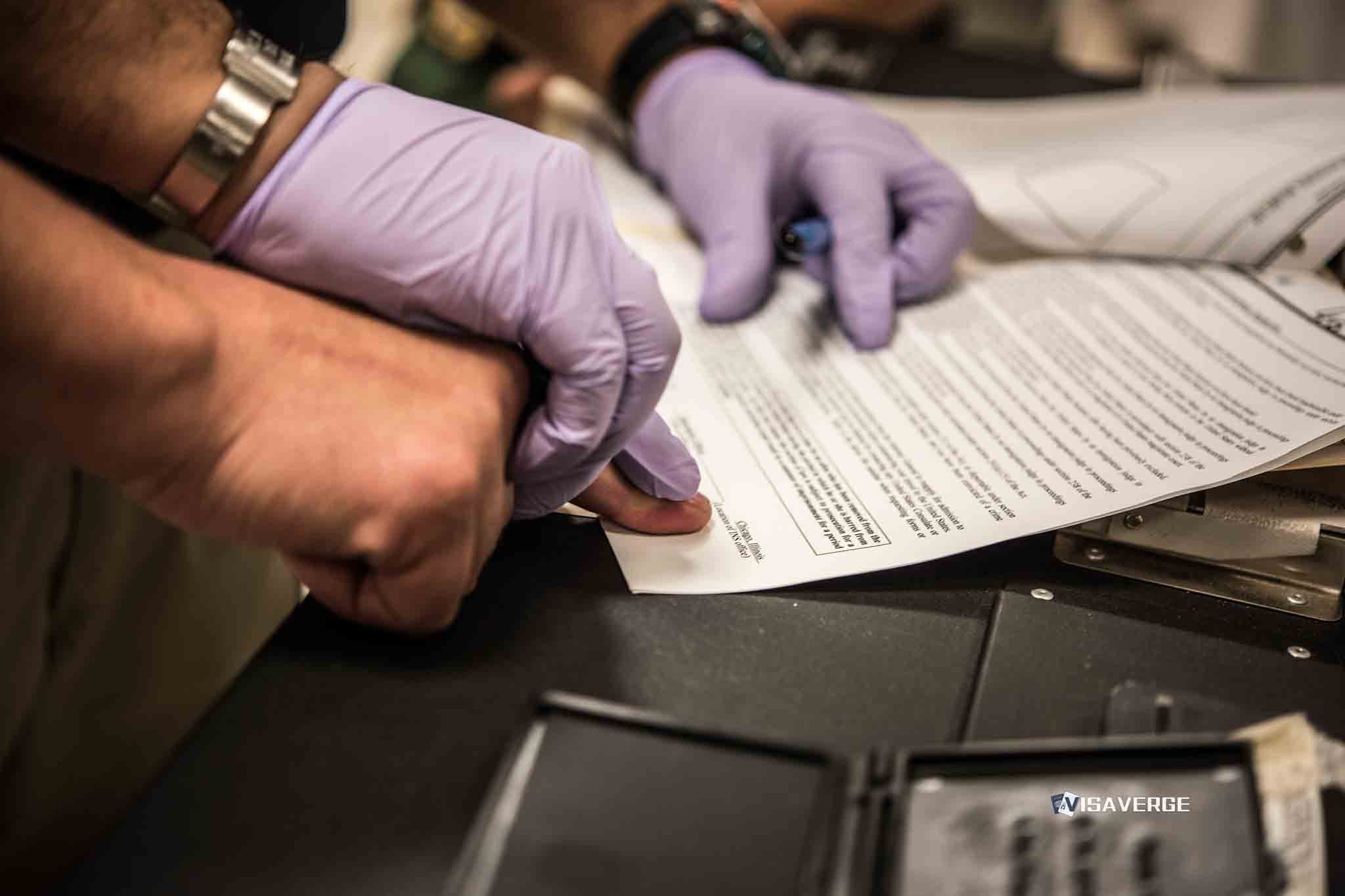
The officers seized his iPhone 15 Pro Max without a warrant and downloaded a complete copy of its stored data. Authorities returned the device eight days later. The copy remained in a format that could not then be read or reviewed.
The data contains confidential information, including attorney-client communications, according to the court’s ruling. Lattarulo is a part owner of Georges Cote LLP and represents people in immigration proceedings. He also posts know-your-rights information on Instagram; his videos regularly draw hundreds of thousands of views, and one earlier account put a post at about 388,000 views.
Burroughs found the timing supported a retaliation claim
The judge cited Lattarulo’s public opposition to immigration policies and his representation of people in immigration proceedings as protected activity. The timing and the unusual phone search also informed her preliminary assessment.
The firm received a Notice of Inspection on September 8, 2025, followed by a Notice of Suspect Documents on September 25. Officers searched Lattarulo’s phone three days after the second notice, even though HSI policy generally gives employers 10 business days to address questions about employees’ work authorization.
Burroughs also compared the treatment of Lattarulo with that of his partner, Audai Cote. Cote had the same or greater access to employment records, had not publicly spoken about immigrant rights and returned from Aruba on September 27 without a similar search.
The judge wrote that Cote “would have been a more logical target” if investigators wanted employment records at the earliest opportunity. She concluded the evidence before her suggested Lattarulo “would not have been searched except for his protected speech.”
The government denied targeting him because of his speech. It said the seizure arose from an HSI inquiry into whether the firm employed people unauthorized to work in the United States. The government also said it had additional evidence supporting the search, but declined to disclose it publicly while the investigation continued.
Lattarulo’s lawyers, Mary Lemay and Patrick Hanley, said they believed he was targeted because of his immigration representation and social-media advocacy. The judge’s findings remain preliminary, not a final decision on those claims.
The Fourth Amendment question remains open
The government argued that border-search authority allowed it to examine the phone. Burroughs questioned applying that rationale to an investigation into alleged employment violations unrelated to Lattarulo’s trip.
“Rather, it appears that the government seized on a fortuitous border crossing following a weekend vacation as an opportunity to search for evidence of a domestic crime it was already investigating”
The CBP and ICE directives described in the case allow border searches of electronic devices with or without individualized suspicion, subject to the directives and applicable law. Burroughs did not resolve whether the seizure itself crossed a constitutional line. The order addresses access to this copied data while the case proceeds.
Earlier orders blocked review while the court considered the copy
Lattarulo sued on October 2, 2025, seeking the phone’s return, a ban on searching it and destruction of information collected from it. On October 3, Burroughs directed DHS and CBP not to conduct or continue searches of the phone.
At an October 7 hearing, a prosecutor said the government had returned the device but would not delete the extracted data. The court raised concern that it could be used to identify and arrest immigrants. On October 20, the judge again barred officials from reviewing the copy while she considered whether to order its destruction.
Border-search rules remain contested beyond this case
CBP conducted 55,318 electronic-device searches in FY 2025, nearly 11 times the 2012 total; nearly a quarter involved U.S. citizens. The legal rules governing searches at the border remain contested. In United States v. Alisigwe, the Second Circuit reasoned that border agents need no suspicion to search a traveler’s property, including a phone.
The Supreme Court’s 2014 decision in Riley v. California generally required a warrant for police to search the phone of someone they arrest. That case involved searches incident to arrest, not a border search. In a separate case involving immigration lawyer Adam A. Malik, the Fifth Circuit upheld DHS’s use of a filter team and found reasonable suspicion to seize his phone based on an apparent connection to an arms dealer.
Watch Lattarulo v. Noem for the case’s conclusion and any later decision on whether the preserved copy may be accessed.
This article provides general information and is not legal advice. Consult a qualified immigration attorney about your specific case.
Keep reading
More in Immigration → Immigration · Nov 14
Albany Mayor Signs Executive Order Restricting City Role in ICE Activity
What does Albany’s new order mean for ICE activity and residents? Learn which city properties and resources are covered—and what federal agents can st…
 Immigration · Nov 14
Immigration New Zealand Pauses Visa Processing; NZeTA Applications Remain Available
 Immigration · Nov 13
State Legislatures Passed Immigrant Protections and Enforcement Laws in 2026, Analysis Finds
 Immigration · Nov 13
Stranded in the U.S. With an Expiring ESTA or I-94? What to Do