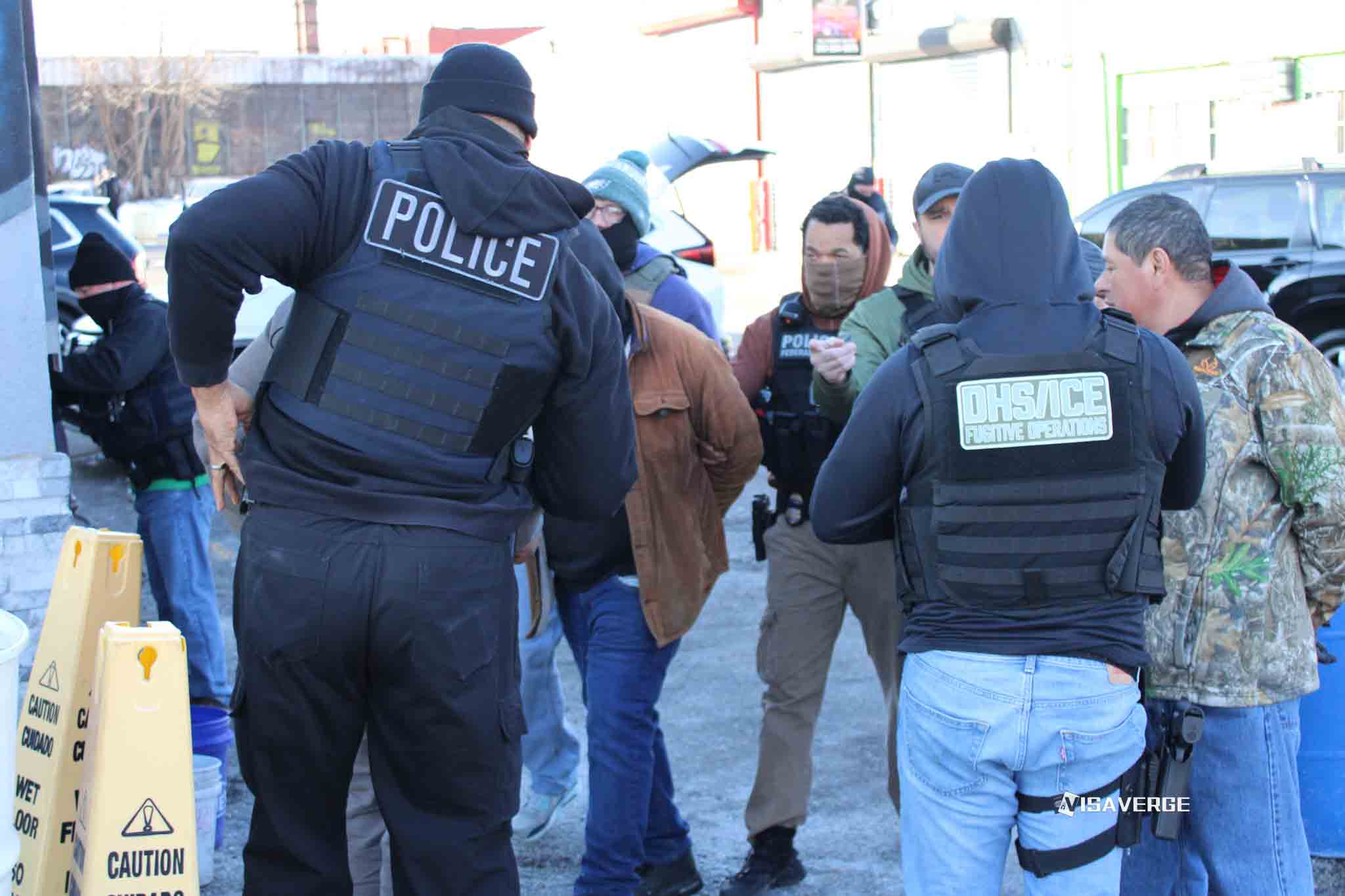
ICE officer Christian Castro was charged by the Justice Department with making false statements to federal investigators in the shooting case involving Julio Cesar Sosa-Celis. The charge remained under seal as of September 3, 2026, while Castro was released from a Texas jail on August 27, 2026 after a federal judge declined to force his return to Minnesota.
- August 27, 2026: Castro was released from a Texas jail after a federal judge declined to compel his return to Minnesota.
- A day earlier, the judge said he could not stop the county sheriff from releasing Castro or order Texas Gov. Greg Abbott to sign the extradition warrant.
- Castro still faces four counts of second-degree assault and one count of falsely reporting a crime in Minnesota state court tied to the January 14, 2026 shooting.
- Federal authorities continued their investigation into the officers’ false statements, and ICE and DHS previously said the officers could face discipline, termination, and criminal prosecution.
ICE officer Christian Castro pleaded not guilty in federal court on September 5, 2026 to six counts of making false statements to the FBI, and a federal grand jury had indicted him on September 2, 2026. In a separate state proceeding, Minnesota Attorney General Keith Ellison said Castro appeared in Hennepin County District Court on September 17, 2026, waived future extradition proceedings, and was released on $200,000 bail.
- Federal prosecutors say DOJ is still evaluating the evidence and has not ruled out additional charges in the case against Christian Castro.
- Castro was released from federal custody on a $75,000 unsecured bond with a GPS ankle monitor after his federal appearance.
- Minnesota officials said Castro’s next state-court appearance is set for November 3, 2026, while his next federal hearing is scheduled for October 28.
- The Department of Homeland Security has suspended Christian Castro, and the federal false-statements case remains separate from the Minnesota assault and false-reporting charges tied to the January 14, 2026 shooting of Julio Cesar Sosa-Celis.
1 earlier update
ICE officer Christian Castro was charged by the Justice Department with making false statements to federal investigators in the shooting case involving Julio Cesar Sosa-Celis. The charge remained under seal as of September 3, 2026, while Castro was released from a Texas jail on August 27, 2026 after a federal judge declined to force his return to Minnesota.
Free toolUSCIS Receipt Number Decoder- August 27, 2026: Castro was released from a Texas jail after a federal judge declined to compel his return to Minnesota.
- A day earlier, the judge said he could not stop the county sheriff from releasing Castro or order Texas Gov. Greg Abbott to sign the extradition warrant.
- Castro still faces four counts of second-degree assault and one count of falsely reporting a crime in Minnesota state court tied to the January 14, 2026 shooting.
- Federal authorities continued their investigation into the officers’ false statements, and ICE and DHS previously said the officers could face discipline, termination, and criminal prosecution.
- Hennepin County prosecutors charged ICE agent Christian Castro for shooting a Venezuelan immigrant during Operation Metro Surge.
- The victim, Julio Sosa-Celis, suffered a gunshot wound to the leg after Castro fired through a door.
- Prosecutor Mary Moriarty insists federal officers lack absolute immunity for state-level criminal acts committed during operations.
(NORTH MINNEAPOLIS, MINNESOTA) – Hennepin County prosecutors charged ICE agent Christian Castro in the January 14, 2026 shooting of Julio Sosa-Celis, a Venezuelan immigrant, during Operation Metro Surge in north Minneapolis.
| India | China | ROW | |
|---|---|---|---|
| EB-1 | Feb 01, 2023 ▲109d | Jul 01, 2023 | Current |
| EB-2 | Nov 01, 2013 | Oct 01, 2021 ▲30d | Jan 01, 2025 |
| EB-3 | Jan 01, 2014 | Jan 08, 2022 ▲7d | May 15, 2024 ▼109d |
| F-1 | Jan 22, 2020 | Jan 22, 2020 | Jan 22, 2020 |
| F-2A | Sep 22, 2026 ▲31d | Sep 22, 2026 ▲31d | Sep 22, 2026 ▲31d |
Prosecutors filed four counts of second-degree assault and one count of falsely reporting a crime against Castro under Minnesota state law, setting up a case that reaches beyond the shooting itself and into the legal question of whether a federal immigration officer can face state criminal prosecution for actions taken during an enforcement operation.
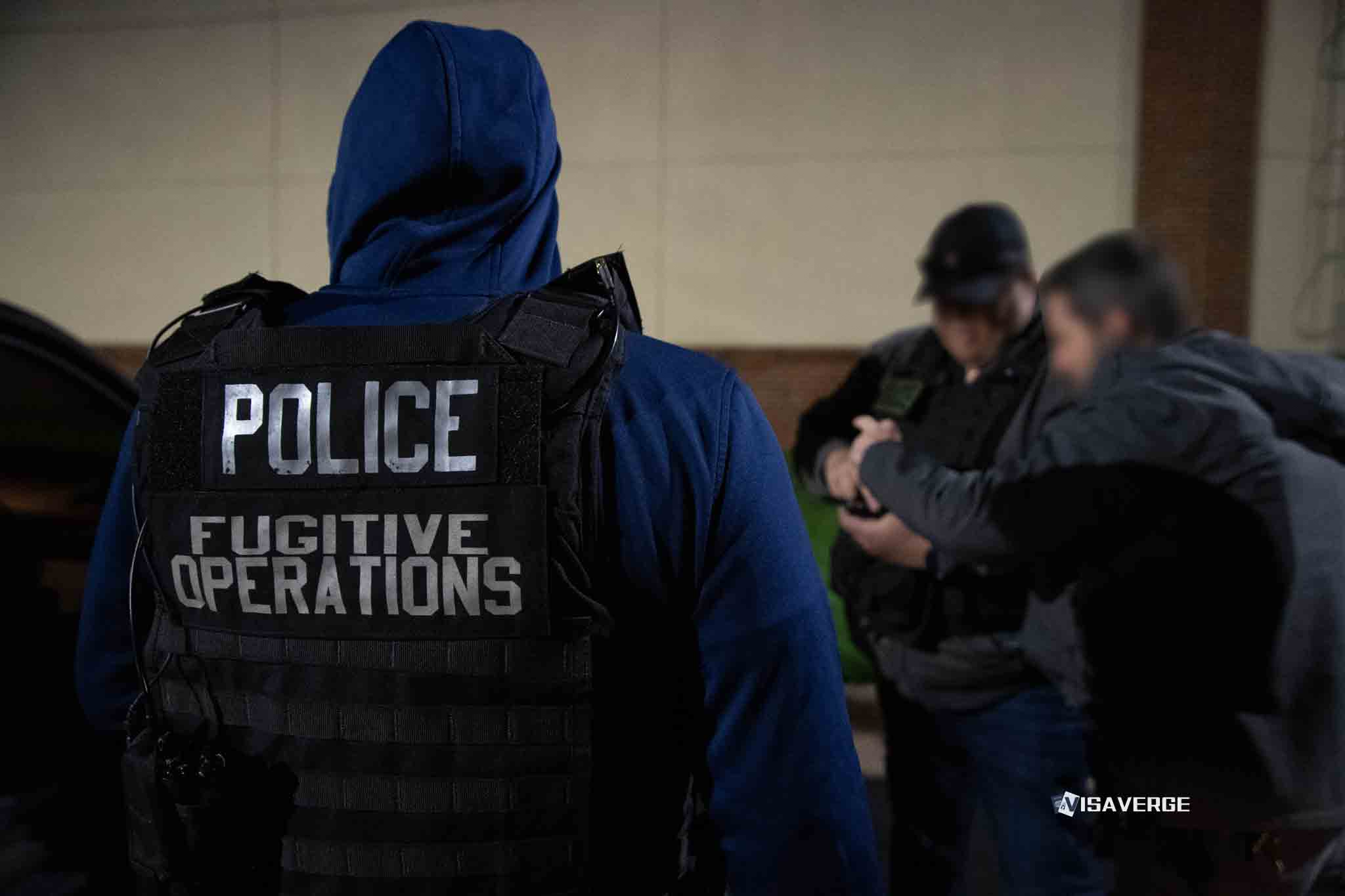
Hennepin County Attorney Mary Moriarty said Castro fired his service weapon through the front door of a home after people had run inside and “presented absolutely no threat” to him or anyone else. Prosecutors said the bullet struck Sosa-Celis in the right leg/thigh.
No one else in the home was injured. Authorities said a nationwide warrant was issued for Castro’s arrest.
The shooting unfolded during Operation Metro Surge, an ICE enforcement operation in Minneapolis. That places the case inside a federal immigration action while the criminal charges now move through a state court system.
ICE said the agent involved was under investigation by the U.S. Attorney’s Office and could face disciplinary action, including termination, and possibly criminal prosecution. That federal review runs alongside the state charges filed in Hennepin County.
Moriarty framed the case in direct terms. Her office said there is “no such thing as absolute immunity for federal officers who commit crimes in this state or any other.”
That statement goes to the central legal issue raised by the charges. Castro worked as a federal immigration officer, but prosecutors brought the case under state assault and false-reporting laws rather than under federal immigration statutes.
The distinction matters inside the courtroom. A state prosecutor is alleging that a federal officer committed ordinary state crimes during an operation tied to federal immigration enforcement.
Minnesota authorities have not accused Castro in connection with an immigration offense. The charges focus on the use of his weapon and on the allegation that he falsely reported a crime.
Sosa-Celis, identified by prosecutors as a Venezuelan immigrant, survived the shooting after the bullet hit his right leg/thigh. The account released by prosecutors says the shot came through the home’s front door after the people inside had already run into the house.
Moriarty’s description leaves little ambiguity about the prosecution’s theory. In her account, the people behind that door posed no threat when Castro pulled the trigger.
That allegation gives the assault counts their shape under state law. Prosecutors are arguing that the use of force was unlawful at the moment it occurred, not that the operation itself was unlawful because it involved immigration enforcement.
The false-reporting count adds a separate layer to the case. It signals that prosecutors believe Castro did more than fire the shot, and that they are also alleging he gave a false account of criminal conduct afterward.
Authorities have not reported any other injuries inside the home. The gunshot wound to Sosa-Celis’s right leg/thigh was the only injury identified in the charging account.
Castro now faces exposure on multiple fronts. The state case could produce criminal penalties under Minnesota law, while the federal employment review could lead to disciplinary action, including termination.
ICE did not present the matter as closed. The agency said the U.S. Attorney’s Office was investigating, leaving open the possibility of action beyond internal discipline.
The split between the state prosecution and the federal review is one of the most striking features of the case. Local prosecutors are pressing forward with criminal counts even as federal authorities examine the same shooting through their own channels.
That arrangement often raises arguments about immunity and authority, especially when a federal officer says he acted during official duties. Moriarty answered that point before any courtroom fight over it, saying federal status does not create blanket protection from prosecution in Minnesota.
Her wording was broad and categorical. “No such thing as absolute immunity for federal officers who commit crimes in this state or any other,” the office said.
The events of January 14, 2026 occurred in north Minneapolis, where the ICE operation placed federal agents in a residential setting. According to prosecutors, people ran inside the home before Castro fired through the front door.
That sequence will likely matter. If the prosecution proves the people in the house had already retreated and posed no danger, the state’s account of unlawful force becomes more direct.
The wording of Moriarty’s statement also suggests the case could test the boundary between official federal action and individual criminal liability. A federal badge can define why an officer was present, but prosecutors are arguing it does not control whether the conduct itself was criminal.
Castro’s arrest has not yet closed that debate. The issuance of a nationwide warrant shows how seriously state authorities are treating the case, but the legal battle over jurisdiction and immunity may become one of its most closely watched aspects.
The facts released so far are narrow and pointed. A federal agent entered a Minneapolis enforcement setting during Operation Metro Surge; a shot went through a front door; Sosa-Celis was hit in the right leg/thigh; and prosecutors say the people inside “presented absolutely no threat.”
Each of those facts bears on the assault counts. They also shape the public meaning of the case, because the charges do not arise from a border encounter or a distant detention transfer, but from a gunshot at a home in a Minneapolis neighborhood.
Sosa-Celis’s immigration status appears in the charging narrative because the operation itself was an ICE action. It does not alter the basic structure of the criminal allegations, which turn on force, injury and what prosecutors say happened after the shot was fired.
That is where the false-reporting count may carry unusual weight. Assault charges address the moment of violence; a false-reporting allegation can address what the prosecution believes the officer did next.
In practical terms, the state case asks one set of questions, and the federal review asks another. Minnesota prosecutors must prove the criminal counts they filed. ICE and the U.S. Attorney’s Office are examining whether Castro should remain in his job and whether additional action is warranted.
The named agencies in the matter reflect that overlap. Moriarty’s office is driving the criminal case in Hennepin County, while ICE has acknowledged an internal and federal review tied to the same shooting.
Castro’s name now sits at the center of both tracks. So does the name of Julio Sosa-Celis, whose wounding transformed an immigration operation into a state criminal prosecution.
Cases involving federal officers often produce arguments over who gets to judge conduct that happened during official operations. Minnesota has answered that question, at least at the charging stage, by filing state counts and seeking Castro’s arrest on a nationwide warrant.
No one else in the home was injured, a detail that narrows the physical harm described by prosecutors but does not narrow the legal stakes. A single bullet, a single injury, and a single allegation that the people inside posed no threat are enough to press the dispute into court.
Whether Castro can block or defeat the prosecution on immunity grounds will shape the next phase, but Moriarty has already staked out the county’s position in unmistakable terms. Federal officers, she said, do not carry “absolute immunity” if they commit crimes in Minnesota.
That leaves the case poised between two systems, state criminal law and federal immigration enforcement, with one Minneapolis shooting forcing the question into the open. At its center are three names now tied together in public record: Christian Castro, the ICE agent charged; Julio Sosa-Celis, the man shot in the right leg/thigh; and Operation Metro Surge, the enforcement action during which prosecutors say the shot was fired.