- South Dakota has expanded ICE partnerships through 287(g) agreements across several counties to accelerate the deportation process.
- Local agencies can now perform immigration functions using both Jail Enforcement and Task Force models under federal supervision.
- The expansion coincides with a $170 billion federal budget boost for immigration and border enforcement through 2025.
(SOUTH DAKOTA) – South Dakota expanded its ICE partnership through 287(g) agreements, a step state officials say will speed deportations and reduce local costs.
By May 21, 2025, the state had 287(g) agreements in place with the sheriff’s offices in Dunn, McKenzie, and Eddy counties, plus the Dickinson Police Department. The arrangement gives local agencies a larger role in immigration enforcement under federal supervision.
Free toolUSCIS Receipt Number Decoder
Dunn County Sheriff’s Office, McKenzie County Sheriff’s Office, and Dickinson Police Department signed their agreements in March 2025. Eddy County Sheriff’s Office signed in May 2025.
The expansion ties South Dakota more closely to a federal system that allows local law enforcement agencies to perform limited immigration functions. In practice, that means county jail officers and local police can move beyond routine booking or patrol work and take part in steps that place people into the deportation pipeline.
| India | China | ROW | |
|---|---|---|---|
| EB-1 | Feb 01, 2023 ▲109d | Jul 01, 2023 | Current |
| EB-2 | Nov 01, 2013 | Oct 01, 2021 ▲30d | Jan 01, 2025 |
| EB-3 | Jan 01, 2014 | Jan 08, 2022 ▲7d | May 15, 2024 ▼109d |
| F-1 | Jan 22, 2020 | Jan 22, 2020 | Jan 22, 2020 |
| F-2A | Sep 22, 2026 ▲31d | Sep 22, 2026 ▲31d | Sep 22, 2026 ▲31d |
ICE uses two models in these agreements. One is the Jail Enforcement Model, under which local jail officers, working under ICE supervision, identify people in custody who may be removable and place them into immigration proceedings.
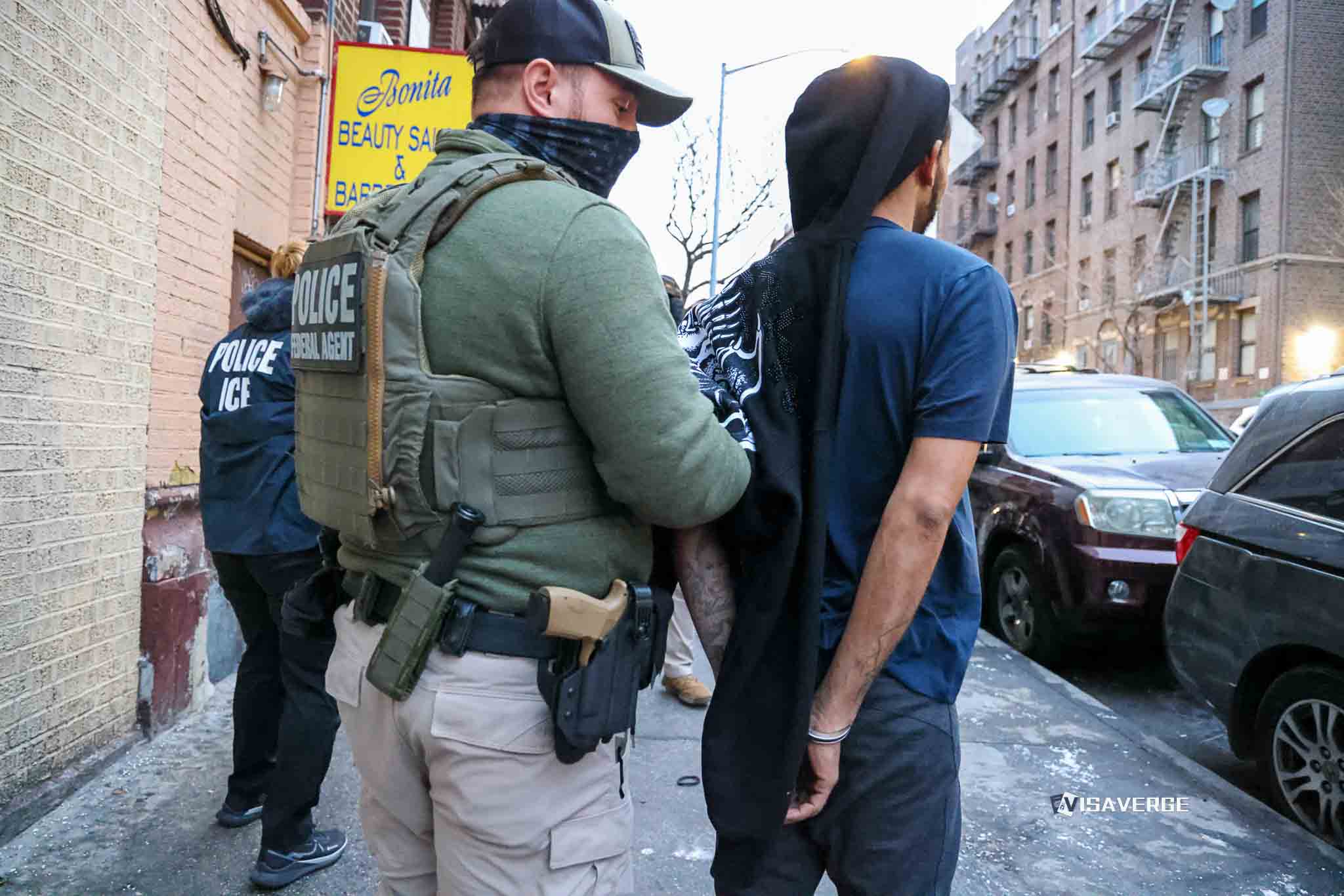
The other is the Task Force Model. Under that structure, local officers are deputized to help make immigration arrests in the field during routine police activity.
ICE describes the task force model as “a force multiplier.” The phrase captures the federal agency’s view that local departments can extend ICE’s reach without requiring federal officers to handle every arrest themselves.
That operational shift has practical consequences inside county jails and on local streets. Police officers and jail staff become more directly involved in immigration enforcement, rather than limiting their role to local criminal matters while federal agents handle immigration cases separately.
State officials say that structure can produce faster removals and lower costs. Once the federal government assumes custody and removal processing, local governments can avoid some of the expense tied to holding people for longer periods or managing cases that move beyond ordinary local law enforcement work.
The same structure can also widen the number of cases that feed into deportation proceedings. People already in custody can be identified for immigration action through the jail model, while routine police activity can produce immigration arrests in the field through the task force model.
South Dakota’s expanded ICE partnership comes as Congress has directed far more money toward immigration enforcement. In the 2025 budget reconciliation package, Congress approved about $170 billion for immigration and border enforcement.
ICE received about $75 billion over four years, or roughly $18.7 billion per year. About $45 billion of that was designated for detention capacity, while nearly $30 billion was designated for ICE personnel and enforcement operations.
Those figures matter for states and local agencies entering 287(g) agreements because detention space, staffing, transport, and removal processing all depend on federal resources. With more money directed to beds and enforcement operations, the federal government is in a stronger position to take custody of people identified or arrested through these agreements.
In South Dakota, the county and municipal agencies now operating under the program form a small but direct network: three sheriff’s offices and one police department. Each sits inside a system that blends local officers with federal immigration authority, whether inside a jail or during day-to-day patrol work.
The jail model and task force model do not work the same way, but each shifts a portion of immigration enforcement closer to local agencies. One starts after a person is already in custody; the other extends into routine field encounters, where deputized officers can assist with immigration arrests.
That distinction shapes how the agreements work on the ground. A jail officer under ICE supervision reviews the status of people already booked into custody, while a deputized field officer can become involved during ordinary police activity that leads to an immigration arrest.
Supporters inside government frame the arrangement in practical terms, not only as an enforcement tool but also as a cost question. If federal authorities take over detention and removal processing, local agencies can shift part of the burden away from county budgets while still keeping a role in the process.
The result is a more integrated enforcement structure between local departments and federal immigration authorities. South Dakota has added that structure through signed agreements with Dunn, McKenzie, and Eddy county sheriff’s offices and the Dickinson Police Department, using the two ICE models that now sit at the center of the state’s expanded cooperation.