- Armenia passed laws for biometric identification standards to align with European Union security requirements in May 2026.
- New red passports and IDs will feature facial recognition and fingerprints to facilitate eventual visa-free Schengen travel.
- The reform establishes 74 benchmarks for document security and border management with implementation targeted for late 2026.
(ARMENIA) — Armenia’s National Assembly passed a package of biometric identification laws on May 12, 2026, moving the country closer to the document-security standards the European Union requires under the EU Visa Liberalization Action Plan.
The legislation aims to bring Armenian travel documents into line with ICAO 9303, the international standard for machine-readable and biometric identity documents, as Yerevan presses for eventual visa-free travel to the Schengen Area.

Arpine Sargsyan, Armenia’s minister of internal affairs, said the overhaul would reach beyond passports and ID cards. “I believe that by the fall of 2026, we will have a completely new situation in the Republic of Armenia, and the pace of digitalization will accelerate even more.”
Free toolDS-160 Form Filling Online Helper ToolBrussels handed Armenia the first formal assessment of that effort a week earlier. During the first Armenia-EU Summit in Yerevan on May 5, 2026, the European Commission delivered the First Progress Report on the visa plan and described Armenia’s reforms in document security and border management as being at an “advanced stage of fulfillment,” while praising the government’s “strong political commitment.”
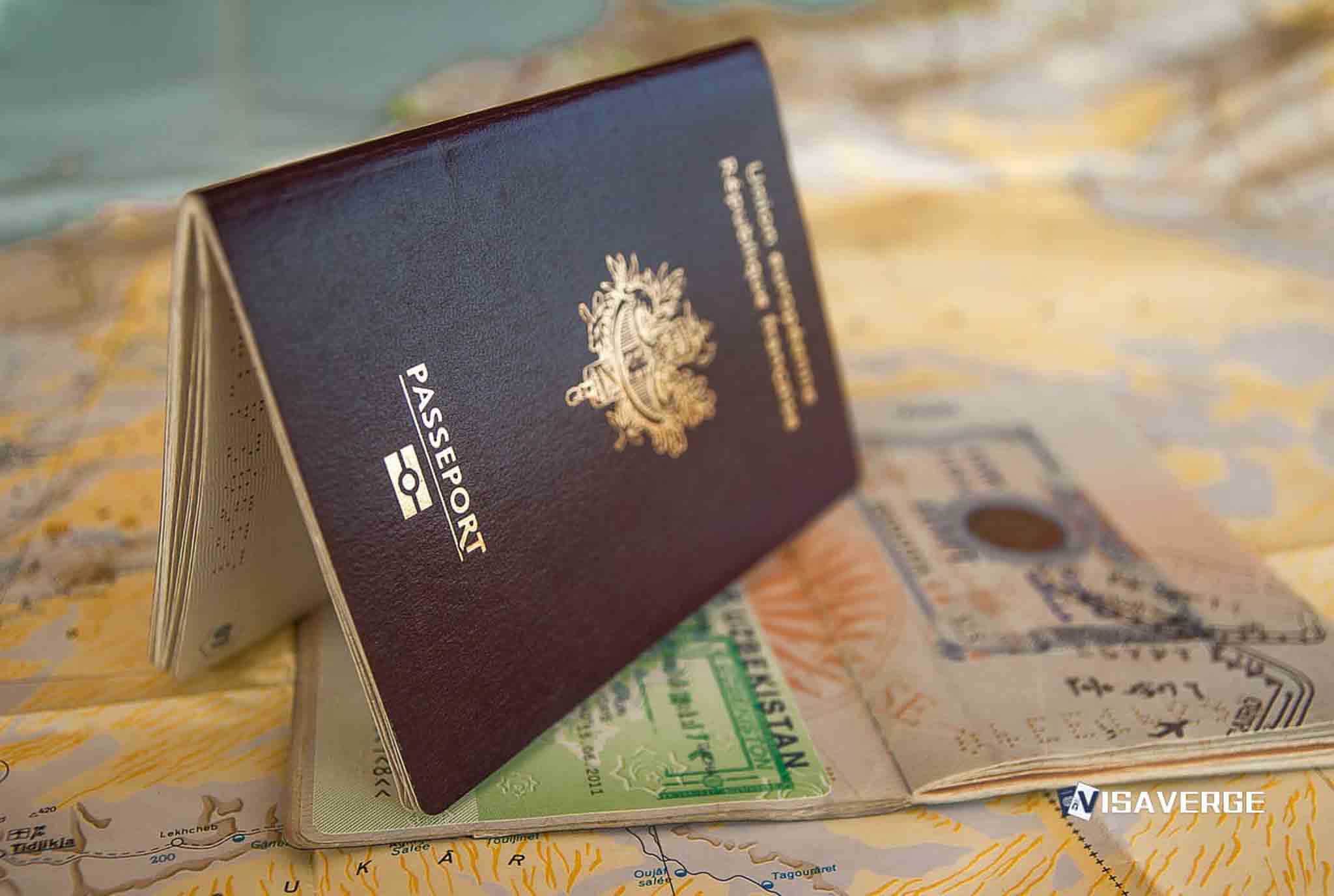
Prime Minister Nikol Pashinyan had already previewed one of the most visible changes on April 28, 2026, saying the new biometric passports would be red. The color reflects the first stripe of the Armenian flag and matches a format used widely in international travel documents.
| India | China | ROW | |
|---|---|---|---|
| EB-1 | Feb 01, 2023 ▲109d | Jul 01, 2023 | Current |
| EB-2 | Nov 01, 2013 | Oct 01, 2021 ▲30d | Jan 01, 2025 |
| EB-3 | Jan 01, 2014 | Jan 08, 2022 ▲7d | May 15, 2024 ▼109d |
| F-1 | Jan 22, 2020 | Jan 22, 2020 | Jan 22, 2020 |
| F-2A | Sep 22, 2026 ▲31d | Sep 22, 2026 ▲31d | Sep 22, 2026 ▲31d |
Those announcements placed Armenia’s ID overhaul at the center of a wider policy push that reaches past passport design. The EU plan sets 74 benchmarks for Armenia across four blocks: document security, border and migration management, public order and security, and fundamental rights.
Under the new law, Armenian citizens aged 16 and older must hold a biometric ID card. The documents will carry facial recognition data and fingerprints, which the government says will reduce fraud and support contactless border control systems at international airports.
Officials have also tied the new system to domestic digital services. The cards are meant to let citizens sign documents electronically and access health insurance as a broader national digital rollout moves toward late 2026.
The passport itself is being presented as a state document and a cultural object. The design includes an outline map of Armenia, the Armenian alphabet associated with Mesrop Mashtots, and the phrase, “To know wisdom and instruction, to perceive the words of understanding.”
Implementation is being handled through Haypass, a consortium formed in 2024 by Idemia Identity Security France and ACI Technology. The public-private partnership gives the Armenian government outside technical support as it rebuilds identity systems to meet European requirements.
That work carries practical consequences for border processing. Biometric documents that comply with ICAO 9303 can interact with automated and contactless control systems more easily than older paper-based formats, which is one reason document security sits near the front of the EU liberalization agenda.
Armenia’s push remains a step-by-step process rather than an immediate change in travel rights. Once the EU grants visa liberalization, Armenian citizens holding biometric passports would be able to enter the Schengen Area without a visa for 90 days within any 180-day period, with that shift currently estimated for 2027 to 2028.
That timeline leaves a gap between legal reform at home and any change at the external border of the EU. Armenian travelers still need current visa documents until Brussels completes the visa liberalization process and member states approve the final move.
Foreign residents in Armenia face their own transition date. Starting November 1, 2026, residence permits for foreigners will shift to polycarbonate biometric cards, and applicants, including members of the diaspora, will have to submit biometrics in person in Armenia.
The shift to in-person enrollment signals how broad the overhaul is becoming. Armenia is not only replacing passport booklets; it is rebuilding the identity architecture used by citizens, long-term residents and state service platforms.
Washington has not linked that modernization drive to any change in U.S. immigration rules for Armenians, but the United States has framed its ties with Armenia in broader strategic terms. In a White House statement issued on April 24, 2026, the administration said, “My Administration is strengthening our strategic partnership by delivering significant opportunities for the Armenian people and promoting lasting stability across the South Caucasus region.”
U.S. diplomatic activity in the region has also accelerated this year. In February 2026, Vice President JD Vance visited Yerevan, becoming the first sitting U.S. vice president to do so.
At the same time, the U.S. Department of State imposed a separate policy change on January 21, 2026, pausing immigrant visa processing for approximately 75 countries while it reassessed “public charge” rules. No USCIS or DHS notice has tied Armenia’s biometric document project to any change in U.S. visa requirements for Armenian nationals.
That distinction matters for Armenians dealing with two different systems at once. The EU track is focused on mobility, border management and document integrity, while U.S. visa policy remains governed by a separate set of consular and immigration rules.
Inside Armenia, the government is presenting the biometric laws as both a technical reform and a governance project. Sargsyan’s reference to a “completely new situation” by the fall of 2026 points to a timetable that reaches into everyday bureaucracy, from identity verification to access to state-backed insurance and digital signatures.
The European side has given Yerevan political encouragement, but it has not declared the process finished. The first progress report delivered at the summit marked an official checkpoint in a longer sequence of legislative, technical and administrative changes that Armenia still must complete under the EU Visa Liberalization Action Plan.
Document security often serves as the most visible benchmark in such plans because travelers can see it in the passport they carry. Border management and public order requirements are less visible, but they usually determine how quickly the process moves once new documents enter circulation.
Armenia’s government has tried to show that the project is not limited to compliance paperwork. By choosing a red passport, adding national symbols and expanding the role of biometric IDs in domestic services, officials are tying a foreign-policy objective to a national redesign of identity documents.
The effort also places Armenia within a familiar European sequence in which states seeking visa-free access first harden document standards, then prove border controls, migration management and rights protections over time. The 74 benchmarks set by the EU give that sequence a formal structure.
Public verification of the next steps will come largely through official channels already used by Armenian and foreign officials. The EU’s Armenia page is available at [EU External Action](https://www.eeas.europa.eu/armenia), the Armenian government’s newsroom at [Government of Armenia](https://www.gov.am/en/news/), the U.S. country page at [U.S. Department of State](https://www.state.gov/countries-areas/armenia/), and migration and citizenship updates through the Armenian interior system at [police.am](https://www.police.am).
By late 2026, Armenians are expected to see the first concrete results in the form of new biometric IDs, red passports and expanded digital services. Visa-free entry to Europe still lies further ahead, but the legal and technical groundwork now sits in Armenian law, in the new document design, and in a benchmark list that Brussels has already begun to mark off.