- Trump’s 2024 campaign promise of automatic green cards for graduates has shifted to stricter immigration enforcement in 2026.
- The administration implemented aggressive visa revocations targeting Chinese students in strategic technology sectors like AI and semiconductors.
- Proposed rules aim to eliminate Optional Practical Training (OPT), removing the primary work bridge for international graduates.
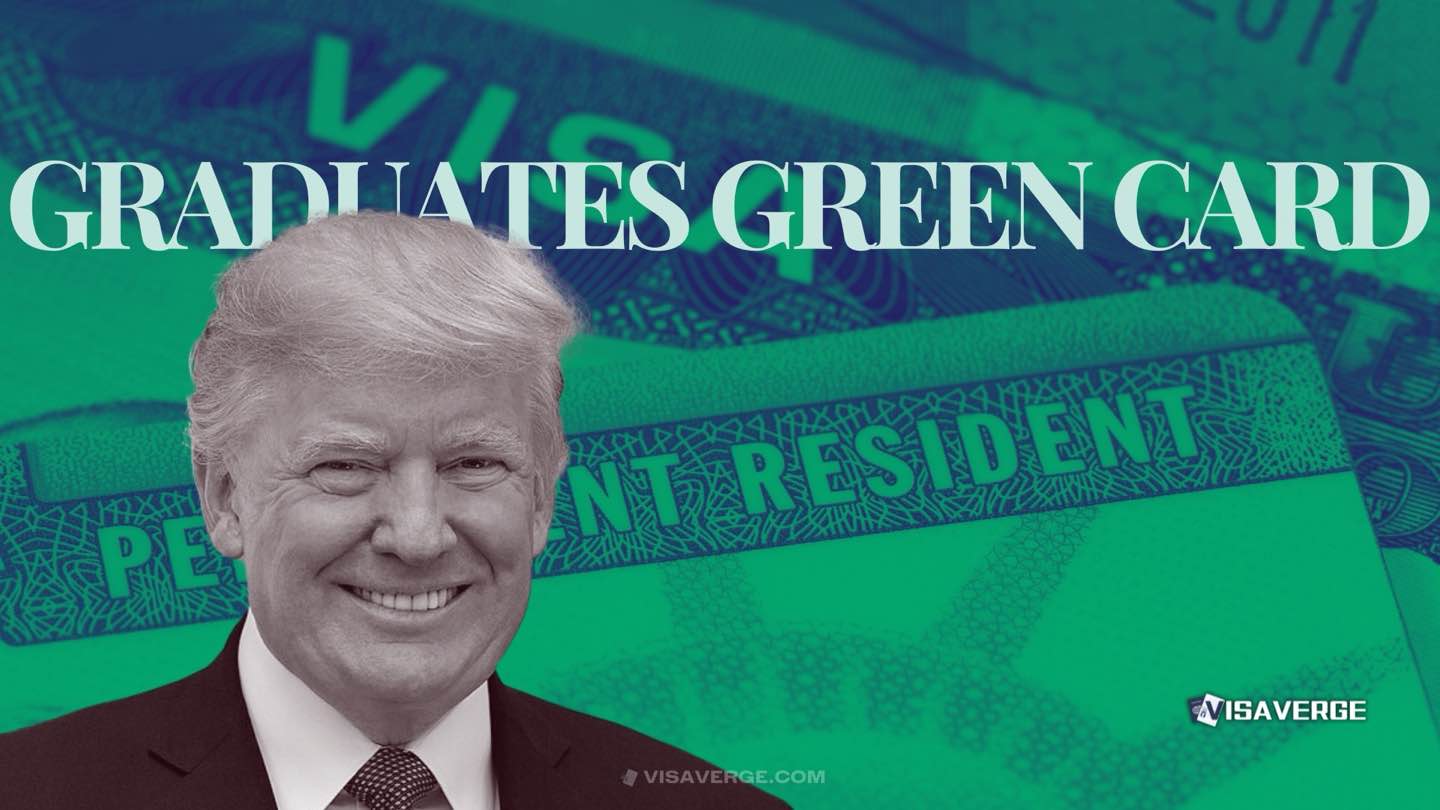
(UNITED STATES) Donald Trump said in June 2024 that foreign graduates should receive green cards automatically with their diplomas, including students at junior colleges. By 2025 and 2026, his administration had moved the other way, with visa revocations for Chinese students, a push to end post-graduation work permits, and wider vetting for visas and green cards.
That gap matters for students, universities, employers, and families making long-term plans in the United States ??. It also matters for graduates from China and India who once heard a promise of easier permanent residence, then faced tighter rules instead.
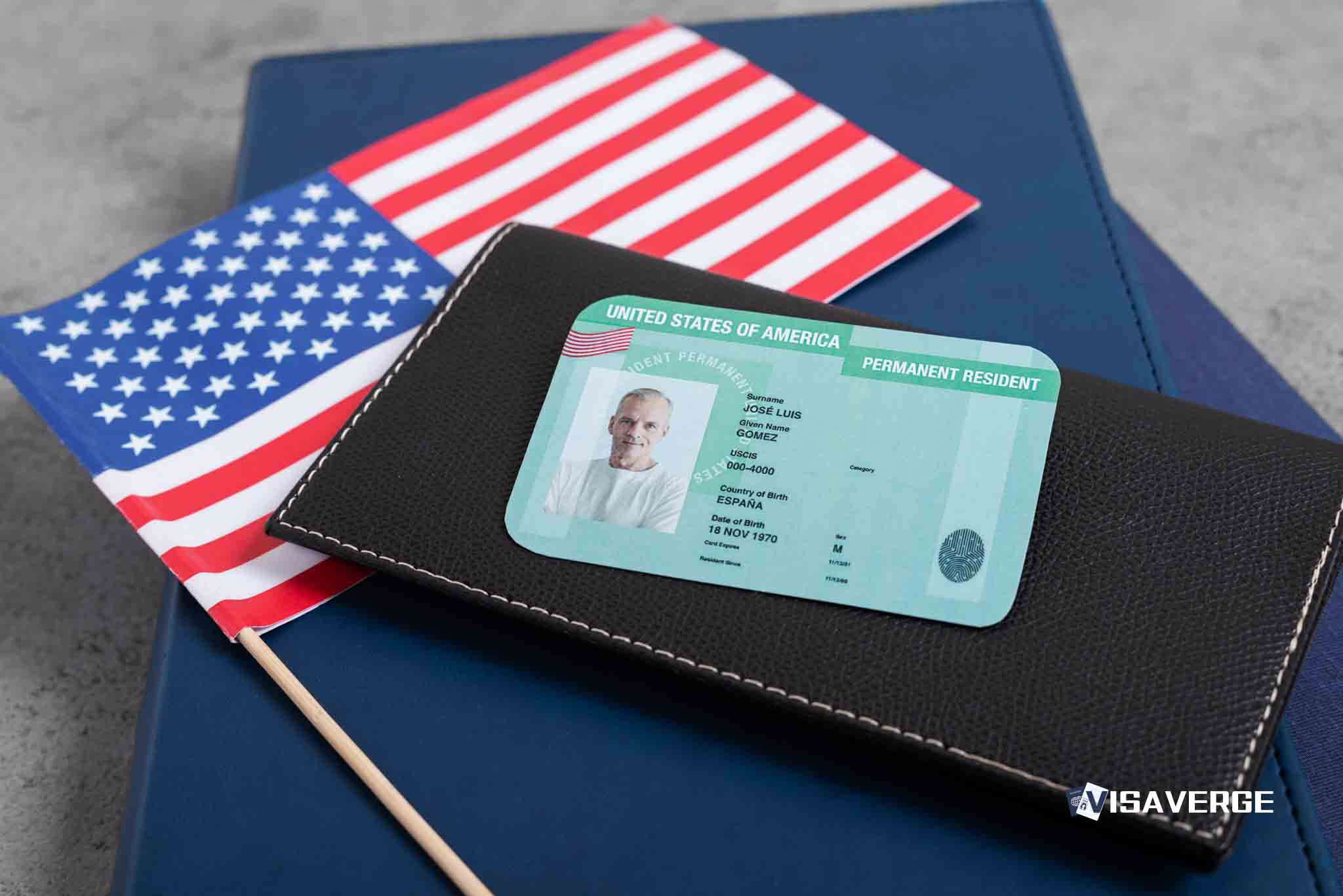
June 2024: Trump’s promise of automatic green cards for graduates
On the All-In podcast on June 20, 2024, Trump said, “What I want to do and what I will do is, you graduate from a college, I think you should get automatically as part of your diploma a green card to be able to stay in this country—and that includes junior colleges too.”
Free toolCSPA Age-Out Calculator OnlineHe framed the idea as an answer to a long-running U.S. problem. Students come to American schools, earn degrees, then leave and build companies elsewhere because they cannot stay. Trump pointed directly to Chinese students and Indian students as examples of people the United States should try to keep.
The campaign quickly narrowed that broad promise. Karoline Leavitt said any such plan would come only after what she called the “most aggressive vetting process in U.S. history” to screen out “communists, radical Islamists. and America haters.” That clarification showed the idea was never presented as a blanket benefit for every graduate.
2025 to 2026: No automatic policy, only tighter restrictions
Once Trump returned to office in January 2025, no policy created automatic green cards for graduates. There was no diploma-to-residence system, no new direct path for foreign students, and no public move to make student-to-green-card cases easier.
Instead, the record from DHS, USCIS, and the State Department shows a harder line. The administration backed visa cancellations, deeper reviews of applicants’ social media, and new pressure on the legal routes many graduates use before they ever qualify for permanent residence.
That shift changed the practical question for international students. The issue was no longer whether a U.S. degree would lead quickly to green cards. The issue became whether students could keep their visas, keep working after graduation, and avoid new reviews of benefits already granted.
May 28, 2025: Chinese students face aggressive visa revocations
The clearest break came on May 28, 2025, when Secretary of State Marco Rubio said the State Department would “aggressively revoke visas for Chinese students, including those with connections to the Chinese Communist Party or studying in critical fields.”
Those fields included artificial intelligence, biotech, and semiconductors. For students in science and technology programs, that language sent an unmistakable message. A degree in a strategic sector could trigger more scrutiny, not a smoother path to stay.
In June 2025, the administration added another hard measure. A presidential proclamation barred nearly all foreigners from entering the United States to attend Harvard University after the school reportedly refused to share a list of international students with federal authorities.
For many families overseas, the message was stark. Elite admission no longer looked like a stable route into the American system. Even at top universities, a visa could become vulnerable to fast political and security decisions.
The move against OPT and other post-graduation work permits
The administration also targeted the bridge that lets many students remain in lawful status after school. During a May 2025 confirmation hearing, USCIS Director nominee Joseph Edlow said he wanted to eliminate Optional Practical Training, the work program that allows many F-1 students to work after graduation.
On May 22, 2025, Edlow said, “What I want to see would be essentially a regulatory and sub-regulatory program that would allow us to remove the ability for employment authorizations for F-1 students beyond the time that they are in school.”
That statement went to the heart of the student pipeline. OPT is not a green card. It is also not an H-1B visa. It is the main work bridge between a U.S. degree and an employer-sponsored future. If that bridge is removed, many graduates lose their first real chance to build a record for later immigration filings.
For employers, the effect is just as direct. Companies often hire international graduates first through OPT, then sponsor them later if the fit is good. Removing post-graduation work permits would shrink that pool sharply.
Social media checks and reopened green card cases
Another major turn came from vetting. In an April 9, 2025 news release, DHS said USCIS would consider social media activity, including “antisemitic activity” or content “supporting antisemitic terrorism,” when deciding student visas and green cards.
Then on April 24, 2026, USCIS Director Joseph Edlow announced that the agency was reopening and re-vetting green cards approved after January 20, 2021. His warning was blunt: “If you have already done it and you think you have gotten away with it, we are going back.”
That changed the sense of permanence many immigrants rely on. A granted case was no longer treated only as a closed matter. Past approvals themselves became open to renewed scrutiny.
July 4, 2025 law adds more pressure on future graduates
The broader legal climate also moved away from the 2024 campaign promise. On July 4, 2025, President Trump signed the One Big Beautiful Bill Act (`H.R. 1`). The law focused on restricting benefits for many non-citizens and lawful residents, including access to SNAP, Medicare, and Affordable Care Act subsidies.
It also raised the cost of employment sponsorship. The law imposed a $100,000 supplemental fee on new H-1B visas, effective September 21, 2025. In March 2026, the administration also proposed doubling the minimum wage requirement for entry-level H-1B workers.
For recent graduates, those steps matter. Even if OPT survives in any form, the next stage becomes harder and more expensive. Employers may decide a new graduate is not worth the added cost.
Why the change matters for campuses and the labor market
Taken together, these moves replaced the idea of welcoming foreign graduates with a system built around suspicion and review. For many Chinese students in technical fields, the earlier talk of automatic green cards gave way to something much closer to a presumption of inadmissibility.
Universities are already feeling the effect. International enrollment for the 2025–2026 academic year fell by 7% to 15%, according to Open Doors data from the Institute of International Education. Fear of visa cancellations and fear of losing post-graduation work rights both fed that drop.
The labor market will feel it too. U.S. employers have long relied on foreign graduates trained at American universities, especially in engineering, computing, and research-heavy fields. When those students stop coming, or leave faster, the loss hits hiring pipelines almost immediately.
According to analysis by VisaVerge.com, the story is no longer about whether foreign graduates will receive automatic green cards. It is about how fast the federal government can narrow the routes students once used to study, work, and stay.
Readers tracking official updates can monitor the USCIS Newsroom, DHS press releases, and State Department visa updates.