- A Maryland judge ruled the USCIS pause unlawful for green card applicants from 39 countries.
- The order requires USCIS to resume processing for 83 plaintiffs whose cases were frozen since January.
- Applicants still face standard adjudication steps including biometrics, interviews, and security checks.
(MARYLAND, U.S.) – USCIS green card case processing remains uneven as of April 2026, but a federal court order in Maryland has forced movement in a small group of stalled cases after months of an indefinite hold.
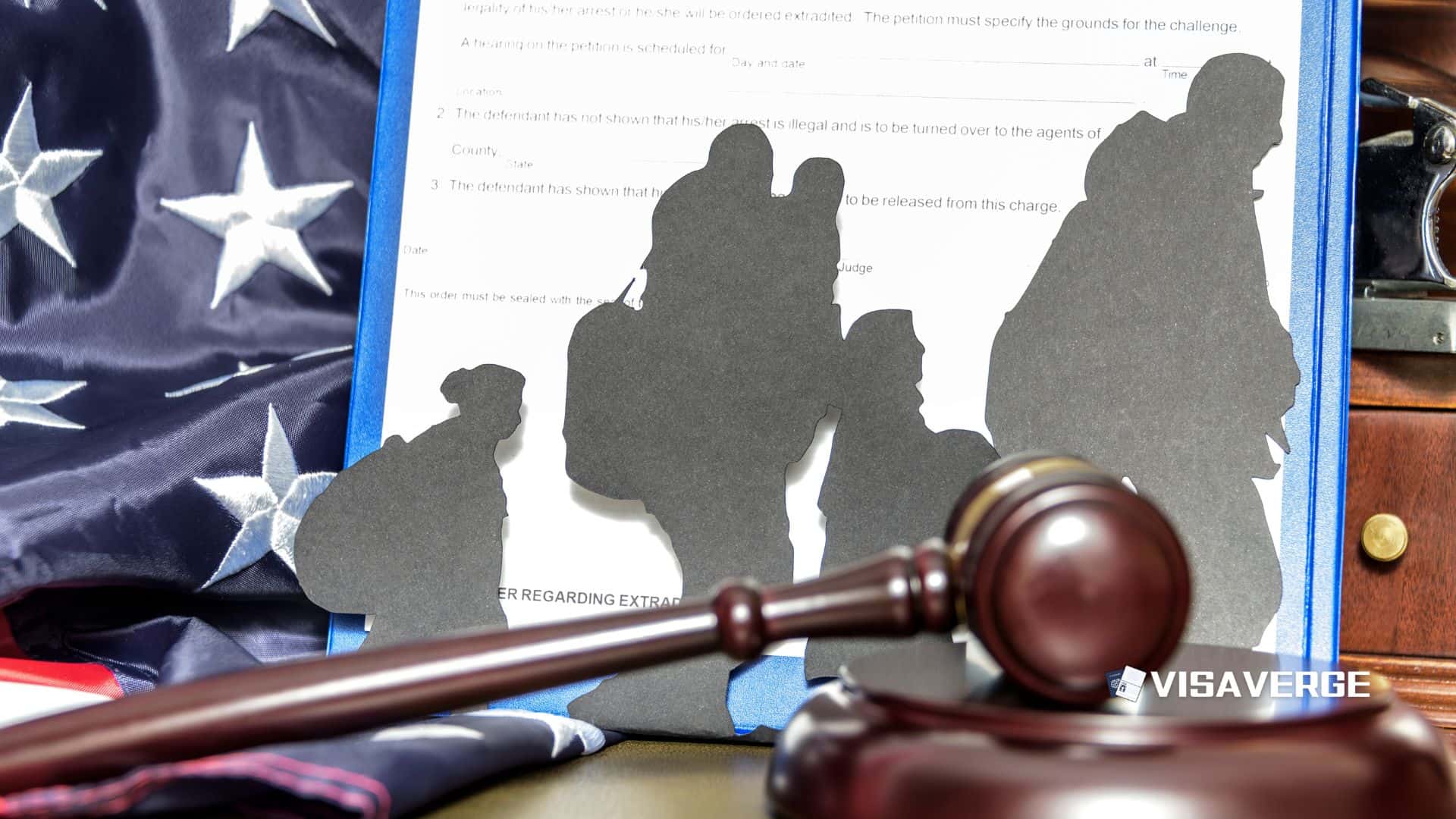
Federal Judge George L. Russell III ruled Monday that USCIS acted unlawfully when it stopped adjudicating green card applications for immigrants from 39 countries who were already living legally in the United States. The order requires USCIS to resume processing for 83 plaintiffs whose cases had been frozen since January 1.

The affected filings center on Form I-485, Application to Register Permanent Residence or Adjust Status. The pause also reached related benefits in some cases, including Form I-765, Application for Employment Authorization, and Optional Practical Training for STEM students. Many applicants had already held lawful status for years before their cases stopped moving.
Free toolCSPA Age-Out Calculator OnlineThe court said USCIS does not have authority to refuse adjudication altogether. Judge Russell did not order approvals, and he did not impose a fixed deadline. He ordered the agency to make decisions within a reasonable time. The ruling also rejected the government’s argument that the court should not intervene in the agency’s processing choices.
USCIS had defended the pause on national security grounds. The agency said the hold allowed maximum vetting of applicants from countries it viewed as high risk. The ruling leaves that rationale in place for broader policy fights, but it blocks indefinite non-decisions for the plaintiffs in this case.
The immediate reach of the order is narrow. It applies directly to the 83 plaintiffs. USCIS can still keep similar cases on hold for non-plaintiffs unless the agency changes course or another court issues broader relief. No public implementation memo or Federal Register notice has accompanied the ruling so far.
⏱️ Processing Time: USCIS processing times are estimates, not guarantees. Check the official tool at [USCIS Processing Times](https://egov.uscis.gov/processing-times/).
Applicants tracking adjustment cases should read the order against the agency’s regular workload. Form I-485 processing often stretches because of background checks, biometrics, requests for evidence, interview scheduling, and local field office capacity. A court order can restart a file, but it does not remove every step in the normal adjudication path.
USCIS publishes center and field office estimates that vary by form type and category. Employment-based and family-based adjustment cases do not move at the same pace. Cases transferred through the National Benefits Center also depend on interview availability at local offices.
| Form / Office | Purpose | Typical USCIS estimate as of April 2026 |
|---|---|---|
| I-485 at National Benefits Center | Adjustment of status preprocessing | 8-14 months |
| I-485 at local field office | Interview and final decision stage | Varies by city |
| I-765 | Employment authorization | 3-7 months |
| I-131 | Travel document | 4-9 months |
These figures are estimates from USCIS as of April 2026. Service center assignments, case category, prior immigration history, and security review can push a case outside the posted range. An RFE, or request for evidence, usually adds more time because the case pauses until USCIS receives and reviews the response.
? Current Fee: Form I-485 costs $1,440 for most applicants as of April 2026. Check the current schedule at [USCIS Fees](https://www.uscis.gov/fees). Wrong fee amounts can trigger rejection.
Applicants in the Maryland case can expect the next visible signs of movement to be familiar ones. USCIS may issue a biometrics notice, transfer notice, interview notice, or RFE. Some may see online status updates first through [myUSCIS](https://my.uscis.gov). Others may receive paper notices before the online account changes.
Applicants outside the lawsuit face a harder path. The ruling may help in future litigation, but it does not automatically reopen every stalled file. Anyone whose case has been pending well past posted times should keep records that show the filing date, receipt number, prior status, and any harm caused by the delay.
If a case has become urgent, expedite requests remain limited. USCIS generally considers expedites for severe financial loss, emergencies, humanitarian reasons, nonprofit interests, government interests, or clear USCIS error. Expedite requests need documents. A short statement without proof rarely works.
Case status checks should follow a simple sequence:
- Check the receipt number at [myUSCIS](https://my.uscis.gov).
- Compare the filing date with the posted estimate at [USCIS Processing Times](https://egov.uscis.gov/processing-times/).
- If the case is outside normal time, submit an e-request through the USCIS account.
- Call 1-800-375-5283 if the online tools do not resolve the issue.
- Keep copies of every notice, RFE response, and service request confirmation.
⚠️ Common Mistake: Applicants often assume a court order means approval is next. It does not. USCIS still reviews eligibility, admissibility, and supporting records.
People filing new adjustment cases should send a complete package from the start. Include the correct edition of Form I-485, the right fee, civil documents, medical exam if required, and any related filings such as Form I-765 or Form I-131, Application for Travel Document. Many delays begin with missing documents, unsigned forms, or outdated filing fees.
Applicants affected by an unusual hold should save every USCIS notice and watch for policy changes on [USCIS](https://www.uscis.gov). Plaintiffs covered by the Maryland order should monitor their mail and online account closely. Resume notices, biometrics scheduling, and RFEs often arrive before any broader public guidance.
? Official Resources: Download forms at [USCIS Forms](https://www.uscis.gov/forms). Check processing times at [USCIS Processing Times](https://egov.uscis.gov/processing-times/). Fees and processing times are subject to change-always verify current information at [USCIS](https://www.uscis.gov).