- Senate Democrats are pushing S.J.Res. 99 to restore automatic EAD extensions for thousands of immigrants.
- The measure targets an October 2025 rule that ended 540-day work authorizations during renewal processing.
- Nearly 100,000 H-4 spouses face potential employment gaps without this legislative intervention in 2026.
(UNITED STATES) — Senate Democrats are pushing S.J.Res. 99, a measure that would overturn a October 30, 2025 USCIS rule and restore automatic extensions of Employment Authorization Documents for certain immigrants, including many H-4 spouses whose renewals are still pending when their work permits expire.
The resolution, introduced on December 10, 2025 by Senator Jacky Rosen and placed on the Senate Legislative Calendar on March 24, 2026, remains pending in Congress as of April 26, 2026. If lawmakers enact it, workers who file eligible EAD renewals on time could again keep working while USCIS processes their cases.

That matters most for dependent spouses of H-1B workers who rely on a current EAD to stay employed. Nearly 100,000 H-4 spouses, many of them Indian nationals, face possible work gaps if USCIS does not approve a renewal before the existing card expires.
USCIS changed the rule last fall. Renewal applicants who filed on or after October 30, 2025 no longer received the automatic continuation of work authorization that had previously protected eligible workers during long processing periods.
| India | China | ROW | |
|---|---|---|---|
| EB-1 | Feb 01, 2023 | Aug 01, 2023 ▲31d | Current |
| EB-2 | Nov 01, 2013 | Oct 01, 2021 | Apr 01, 2025 ▲90d |
| EB-3 | Jan 22, 2014 ▲21d | Jan 22, 2022 ▲14d | Jun 15, 2024 ▲31d |
| F-1 | Jan 22, 2021 ▲366d | Jan 22, 2021 ▲366d | Jan 22, 2021 ▲366d |
| F-2A | Oct 22, 2026 ▲30d | Oct 22, 2026 ▲30d | Oct 22, 2026 ▲30d |
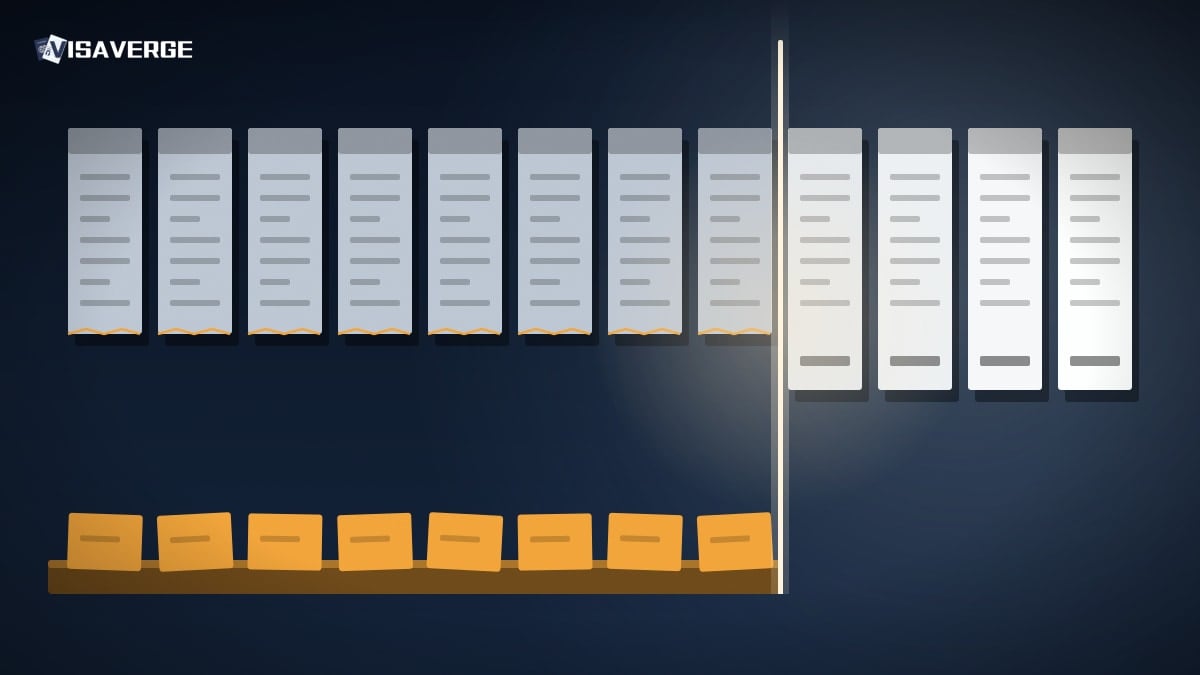
Before that rollback, eligible renewal applicants could continue working for up to 540 days while USCIS adjudicated the case. The interim final rule ended that practice for new renewal filings after the cutoff date, while preserving automatic extensions that had already been granted before October 30, 2025.
DHS said it made the change to prioritize vetting and screening before granting a new period of employment authorization. In the Federal Register rule, the department argued that automatic extensions could allow work authorization to continue before USCIS completed a fresh eligibility and background review.
Supporters of the Senate measure have framed the effect differently. Senator Alex Padilla’s office said the October 2025 rule ended automatic extensions for 18 categories of noncitizens, including refugees, asylees, TPS holders and spouses of H-1B nonimmigrants.
Immigration and labor groups have urged senators to reverse course. The American Immigration Lawyers Association said the resolution would overturn the termination of the 540-day automatic extension rule, while the AFL-CIO argued that lapses in work authorization can push workers out of lawful employment and create instability for families and employers.
H-4 spouses occupy a narrow but economically important corner of the U.S. immigration system. Certain spouses of H-1B workers may apply for employment authorization when the principal H-1B worker has an approved I-140 immigrant petition or qualifies for H-1B extensions beyond the normal six-year limit under AC21.
That group includes many Indian families caught in long employment-based green card backlogs. DHS has previously recognized that visa-number limits can leave these households waiting years for permanent residence.
During that wait, an H-4 EAD often supports more than one salary line on a household budget. The income can cover mortgages, rent, childcare, student loans, medical insurance, retirement savings and long-term career progression.
Without an automatic extension, a timely filed renewal does not guarantee continued work authorization. Once the current EAD expires, the spouse generally must stop working until USCIS approves the new card.
If Congress enacts S.J.Res. 99, that gap would narrow for eligible renewal applicants. The measure would overturn the October 2025 rule and restore the automatic-extension framework for timely filed EAD renewals that meet the existing filing rules.
The proposal does not broaden who can qualify for an H-4 EAD. It addresses the renewal gap for people who already meet the eligibility standards and file on time.
The measure also carries procedural weight beyond one class of work permits. Under the Congressional Review Act, a successful joint resolution of disapproval can invalidate an agency rule and restrict the agency from issuing a substantially similar rule without later congressional authorization.
Congress has not finished that process. Even if the Senate passes the resolution, the House must still approve it and the President must sign it, unless Congress later overrides a veto.
Until that happens, the October 2025 rule remains in effect. H-4 EAD holders and employers are still operating under a system in which a pending renewal alone may not protect employment after the card’s expiration date.
That has turned filing timelines into a compliance issue as well as a family finance issue. Households now need to track three dates closely: the H-1B worker’s status expiration, the H-4 spouse’s I-94 or H-4 approval validity, and the EAD expiration date.
Those dates are connected. H-4 EAD renewal timing often depends on the H-1B worker’s extension process, which means an employer’s delay in filing the H-1B extension can shrink the spouse’s practical window to prepare the rest of the package.
USCIS guidance sets a hard outer limit for early filing. H-4 spouses cannot file a renewal EAD more than 180 days before the existing EAD expires.
That forces families to prepare early but not too early. Many immigration lawyers advise assembling the H-1B extension, H-4 extension and H-4 EAD renewal filings as soon as the rules allow so the applications can move quickly once the filing window opens.
Employers face their own deadlines. If an employee’s EAD expires and no valid automatic extension applies, continued employment can create I-9 reverification and compliance risk.
DHS acknowledged that point in the Federal Register when it ended the extension policy. The department said the rule could lead to temporary lapses in employment authorization where USCIS could not process renewals before expiration.
That risk has made the Senate vote closely watched by immigrant families and by companies with employees working on EAD-based authorization. A restored automatic-extension system would not solve long processing times, but it would give eligible renewal applicants a legal bridge during the wait.
Indian families stand to feel the effect most sharply because of the size of the employment-based backlog and the share of H-4 spouses tied to H-1B households. In many of those homes, the second income is tied directly to the validity of an EAD rather than to any change in the spouse’s qualifications or job performance.
Supporters of the resolution argue that work interruptions caused by processing delays fall hardest on families that complied with the rules and filed on time. Opponents of automatic extensions have pointed to the government’s interest in completing vetting and background checks before allowing a new period of work authorization.
Congress now has to decide which concern carries more weight. As of April 26, 2026, no change has taken effect, and the Senate measure remains a proposal rather than a restored protection.
H-4 spouses planning renewals are still working under the same rule USCIS put in place on October 30, 2025. Families who depend on that income are preparing filings early, coordinating with the H-1B employer and keeping proof of timely filing while they wait to see whether S.J.Res. 99 can move beyond the Senate and reopen automatic extensions for eligible Employment Authorization Documents.