- The U.S. Embassy in Bangkok now requires many visa applicants to make social media accounts public for screening.
- The policy expansion covers diverse nonimmigrant visa categories including K, R, Q, and various H visa types.
- Consular officers will review up to five years of online activity to verify identity and security admissibility.
(BANGKOK, THAILAND) — The US Embassy in Bangkok announced on April 20, 2026 that Thailand-based applicants in a widening group of nonimmigrant visa categories must make their social media accounts public for review during consular processing.
The requirement follows a State Department expansion that took effect on March 30, 2026 and now reaches several categories beyond the student, exchange visitor and H visa groups already subject to online scrutiny. The stated purpose is identity verification, security screening, and admissibility checks.
The change reaches A-3, certain C-3, G-5, H-3, certain H-4, K-1, K-2, K-3, Q, R-1, R-2, S, T and U visas. It adds those categories to H-1B and H-4 applicants, as well as F, M and J student or exchange visitor applicants already covered by online presence review.
Thai applicants in those categories now face a practical step that goes beyond filing forms and attending an interview. They may need to ensure their profiles are set to “public” or “open” before or during processing at the embassy.
| India | China | ROW | |
|---|---|---|---|
| EB-1 | Feb 01, 2023 | Aug 01, 2023 ▲31d | Current |
| EB-2 | Nov 01, 2013 | Oct 01, 2021 | Apr 01, 2025 ▲90d |
| EB-3 | Jan 22, 2014 ▲21d | Jan 22, 2022 ▲14d | Jun 15, 2024 ▲31d |
| F-1 | Jan 22, 2021 ▲366d | Jan 22, 2021 ▲366d | Jan 22, 2021 ▲366d |
| F-2A | Oct 22, 2026 ▲30d | Oct 22, 2026 ▲30d | Oct 22, 2026 ▲30d |
The instruction builds on a rule that has been in place since May 31, 2019, when the State Department began requesting social media identifiers from most U.S. visa applicants worldwide on immigrant and nonimmigrant visa forms. That earlier disclosure asked for handles or usernames on the `DS-160` and other applications.
This expansion goes further. Listing a handle on the `DS-160` is different from allowing a consular officer to view years of activity across an applicant’s online presence.
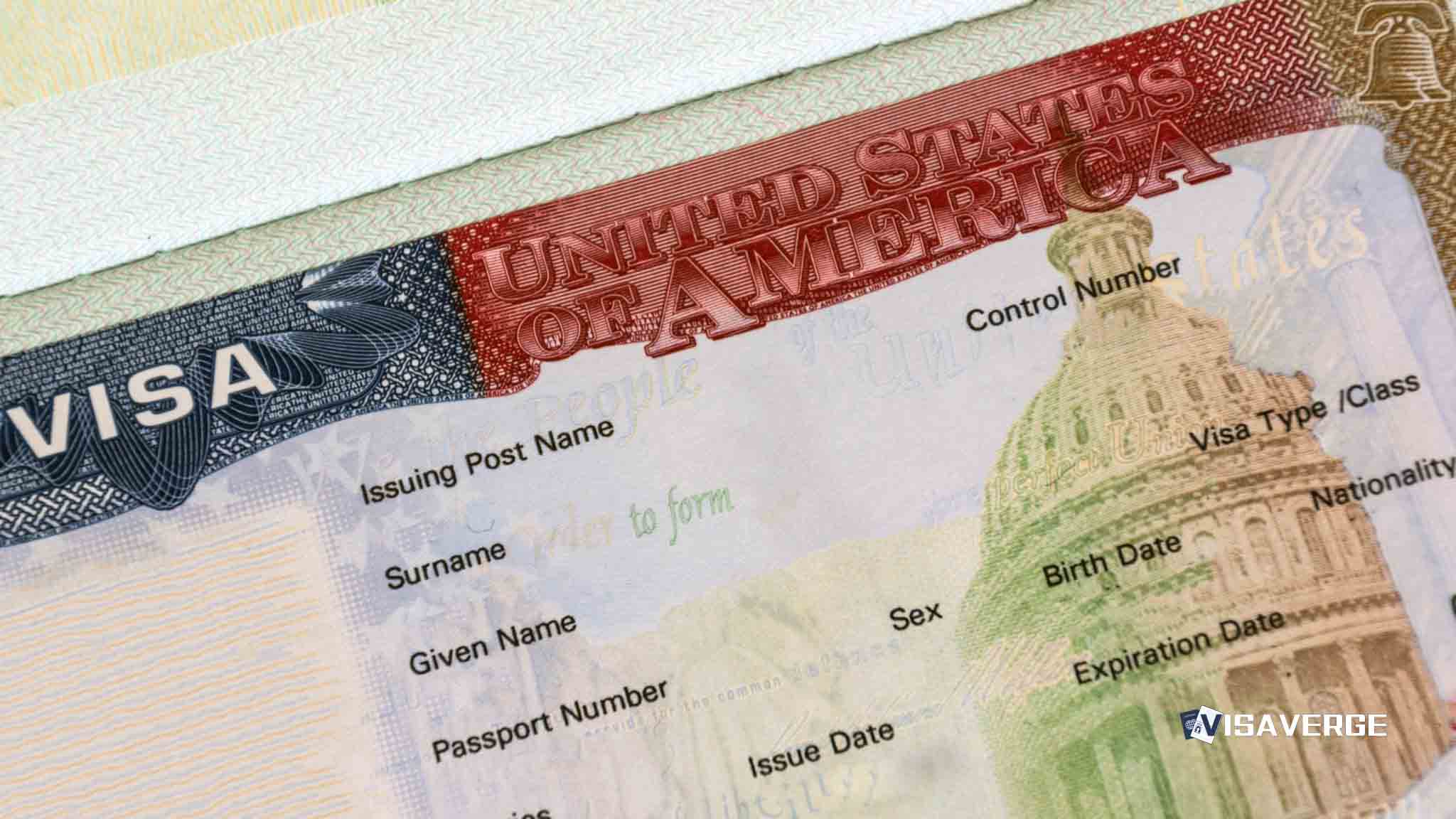
The `DS-160` remains the core application for temporary travel and K visa cases. Consular officers use the form, supporting documents and the interview to decide eligibility, and the embassy’s new instruction adds a broader online presence review to that process.
Applicants with private or limited profiles risk delays if an officer decides more information is needed. In visa processing, those cases can be refused under INA 221(g) while the officer seeks additional documents, information or administrative processing.
That possibility puts pressure on travelers with fixed deadlines. Students applying for F-1, M-1 and J-1 visas often work against academic start dates, SEVIS reporting deadlines and housing commitments, while H-1B workers and dependents can face disruptions tied to start dates or return-to-work plans.
K visa applicants face another layer of exposure because relationship history often appears online as well as in application files. T and U visa applicants, who may be victims of trafficking or crime, can face sharper safety and privacy concerns if their public profiles contain sensitive information.
The scope of review stretches across Facebook, Instagram, TikTok, X, YouTube, LinkedIn, blogs, forums and other searchable online activity. Content up to five years old may be examined for fraud, terrorism, hate speech, anti-U.S. attitudes, overstays or inconsistencies with information given on forms or in an interview.
That breadth has fueled criticism in Thailand, where online commenters have questioned whether a visa process should require public exposure of personal accounts. Social media pages often hold family photographs, political opinions, religious activity, relationship history, employment details and private networks that were not created for government inspection.
The objections have centered on privacy as well as fairness. Critics have also called for clearer instructions on how long accounts must remain public, which platforms fall within the rule, and what protections exist for applicants whose safety could be affected by wider visibility.
No immediate reversal appears likely. The policy, as described by the State Department, reflects a broader shift toward using digital identity as part of admissibility review rather than treating visa files as a package limited to forms, bank records, school papers, job offers and interview answers.
That shift leaves applicants with a narrow margin for inconsistency. Names, education history, employment records, location history and relationship claims on an application now need to match not only supporting documents and interview responses, but also publicly visible material online.
Applicants are also being pushed to think about what consular officers may find under their names even beyond the accounts formally listed on the form. Searchable blogs, forum posts and older public pages can become part of the review if they appear connected to the applicant.
The practical advice is straightforward. Applicants should list all handles used in the required disclosure period and should not delete or hide accounts to avoid review.
They should also check that biographical details across their accounts line up with what appears on the visa forms and supporting evidence. If old posts are inaccurate, misleading or easy to misread, they should be ready to explain them truthfully during the interview.
The requirement does not extend to passwords. The State Department notice instructs covered applicants to adjust privacy settings to public or open, but it does not say applicants must hand over login credentials.
That distinction may matter most in humanitarian cases. Applicants who believe broader visibility could create personal risk are advised to seek case-specific legal advice before refusing or limiting access.
Schools, sponsors and employers also face new preparation work. Universities admitting Thai students may need to warn applicants earlier in the process because digital-footprint checks can affect interview timing and post-interview administrative processing.
Employers with H-1B staff may need to build more flexibility into travel schedules for workers who must obtain visa stamps before returning to the United States. A delay tied to profile visibility or further review can disrupt both work plans and family travel.
The same applies to sponsors connected to exchange, cultural and religious programs. Q, R-1 and R-2 applicants now enter a process where online records can draw as much attention as paper records.
Applicants preparing for K visas may face especially close review of posts, photographs and timelines that relate to a relationship history. The embassy has also referenced K-1-specific guidance in a PDF, while routine services had resumed as of April 2026 updates.
The timeline behind the policy now spans three dates that matter for applicants in Thailand. The embassy announced the local requirement on April 20, 2026, the expansion to additional visa classes took effect on March 30, 2026, and social media identifier disclosure on the `DS-160` dates back to May 31, 2019.
Those dates mark a steady tightening rather than a single abrupt change. What began as a requirement to disclose handles has become, for covered categories, a requirement to let officers examine visible profiles as part of visa vetting.
Applicants should apply well before planned travel because processing times vary by case. That warning carries extra weight now that an online presence review can become part of the file before a visa is issued.
Resources for applicants in Thailand include the US Embassy in Bangkok and USTravelDocs. Case guidance is also available from Siam Legal at +66 2-266-3698.
The result is a visa process in which digital records sit alongside forms and interviews as evidence of identity and intent. Thai applicants who fall under the expanded rule now face a consular review that reaches beyond the application packet and into years of public online life.