- Human rights groups issued a travel advisory for international visitors attending the 2026 FIFA World Cup.
- The coalition warns of enhanced social media screening and potential racial profiling at U.S. borders.
- U.S. officials maintain that strict national security vetting is necessary for a safe global tournament.
(UNITED STATES) — A coalition of more than 120 organizations urged international visitors on Thursday, April 23, 2026, to “exercise caution” when traveling to the United States for the 2026 FIFA World Cup, citing a widening immigration crackdown, tighter screening, and a heavier federal security presence around the tournament.
The advisory, issued by the ACLU, Amnesty International, and other groups, warned of “arbitrary denial of entry,” “invasive social media screening,” and “racial profiling.” U.S. officials answered with a different message, saying they are preparing a safe tournament while rejecting some of the warnings as politically driven.
Andrew Giuliani, executive director of the White House Task Force on the FIFA World Cup 2026, said in a briefing on December 3, 2025, and again in April 2026, “I’ve known the president for 25 years. The president does not rule out anything that will help make American citizens safer. there is a fictional narrative out there that the president is not welcoming to foreigners. [but] every single decision is a national security decision.”
DHS Secretary Markwayne Mullin said on April 22, 2026, “The Department of Homeland Security is working alongside the task force and @FIFAcom to ensure all U.S.-based matches are safe and secure. Our message is simple: We can secure our borders while opening our doors to the world.”
USCIS had already signaled a harder line. In an alert titled “Strengthened Screening and Vetting,” released on March 30, 2026, the agency said, “USCIS will continue to strengthen our screening and vetting procedures to ensure maximum protection for national security. [and] root out fraud in the immigration system. These actions reflect the Trump administration’s commitment to making America safe again.”
ICE Acting Director Todd Lyons said in February 2026 that ICE would be a “key part of the overall security apparatus for the World Cup,” especially in host cities. That role now sits alongside broader tournament security plans as all 78 U.S. matches carry National Special Security Event status, which places coordination under federal direction.
The tournament arrives at a loaded moment. It is the first men’s World Cup hosted by the United States since 1994, and it coincides with the country’s 250th anniversary. Under the Trump administration, that anniversary year has also brought an elevated enforcement posture on immigration, with civil liberties groups tying the World Cup to policies that reach far beyond the stadium gates.
Travel restrictions already block many would-be visitors. Presidential proclamations in effect since January 1, 2026, fully restrict entry for nationals from 19 countries, including Afghanistan, Iran, Somalia, and Haiti. Athletes and coaches may receive exemptions, but ordinary fans from those countries are largely shut out.
Federal officials and FIFA created a fast-track interview channel for some applicants through the FIFA Priority Appointment Scheduling System, known as FIFA PASS. The program gives ticket holders expedited visa interviews, but officials have warned that a match ticket or a FIFA PASS confirmation does not guarantee a visa and does not guarantee admission at the border.
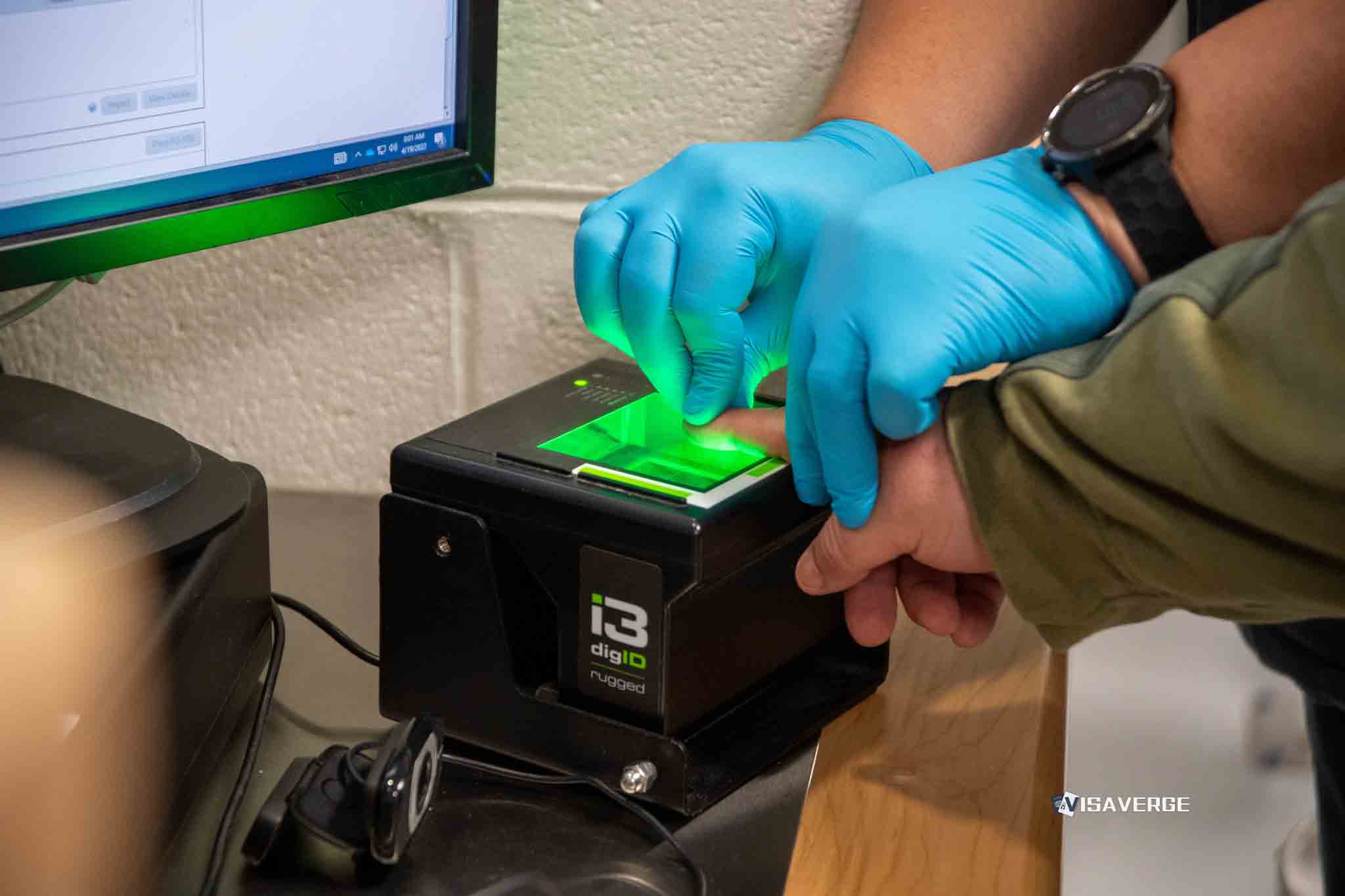
The advisory’s warnings go beyond delayed applications. It says minority communities and LGBTQ+ visitors face a higher risk of scrutiny, and it says transgender travelers may run into visa problems if applications do not match “sex assigned at birth.” The groups also urged journalists and fans to remove sensitive information from their devices and turn off facial recognition and fingerprint passwords before arrival.
Those concerns land amid a detention system under strain. Civil groups said on April 23, 2026, that 68,289 individuals were in ICE detention and that 14 deaths had been reported in custody since the start of 2026. The same coalition linked those figures to the climate awaiting some visitors if screening at airports or land borders turns into detention.
Another pressure point emerged inside the government itself. A partial DHS funding lapse began on February 14, 2026, and lasted more than 70 days. Rear Admiral Christopher Tomney testified that the lapse had “hindered coordination” with local host city law enforcement, raising questions about how smoothly federal agencies can manage both security and entry processing during a tournament expected to draw visitors from around the world.
The White House and DHS have framed that tension as a matter of national security, not deterrence. Giuliani’s comments put that approach in blunt terms, and USCIS followed with language centered on vetting and fraud detection. Mullin used a softer formulation, pairing secure borders with open doors, but the administration’s public language has consistently placed enforcement alongside hospitality, not apart from it.
Geopolitics has sharpened that posture. Officials have tied heightened vetting to visitors from regions with what they call identified security risks, while a separate suspension now affects immigrant visa seekers from 75 countries with high welfare use rates. Non-immigrant visas for World Cup travel remain possible, but applicants from those countries face extreme vetting.
At ground level, civil groups say the cumulative effect will fall unevenly. Their advisory describes a system in which race, national origin, gender identity, and digital privacy all shape the risk of delay or denial. It also reflects anxiety around reports of a “suited and booted” federal presence near stadiums and fan zones, where immigration agents could become part of the visible security architecture of the event.
Visitors looking for government updates can track vetting changes through the [USCIS Newsroom](https://www.uscis.gov/newsroom), review entry information through the [CBP World Cup Travel Guide](https://www.cbp.gov/travel), monitor planning through the [DHS World Cup Commission](https://www.dhs.gov/world-cup-2026-commission), and check interview and visa rules on the [State Department’s visa site](https://travel.state.gov). Those pages will matter as the World Cup approaches, because the administration’s message remains twofold: the United States wants the tournament to project welcome, and it intends to exercise caution through the full force of its border and immigration system.