- Howard Lutnick said the Gold Card has approved just one person while hundreds remain in review.
- The program uses EB-1 and EB-2 rules, but a $1 million payment now serves as proof of merit.
- More than 100,000 people joined the waitlist as legal challenges and vetting delays continue.
Commerce Secretary Howard Lutnick told a House Appropriations Committee hearing on April 23, 2026, that the Trump administration has approved just one person for the new Gold Card immigration program, even as hundreds of applications are under review.
“They have approved, recently, one person, and there are hundreds in the queue that they are going through. They’ve just set it up, and they wanted to make sure they did it perfectly,” Lutnick said.
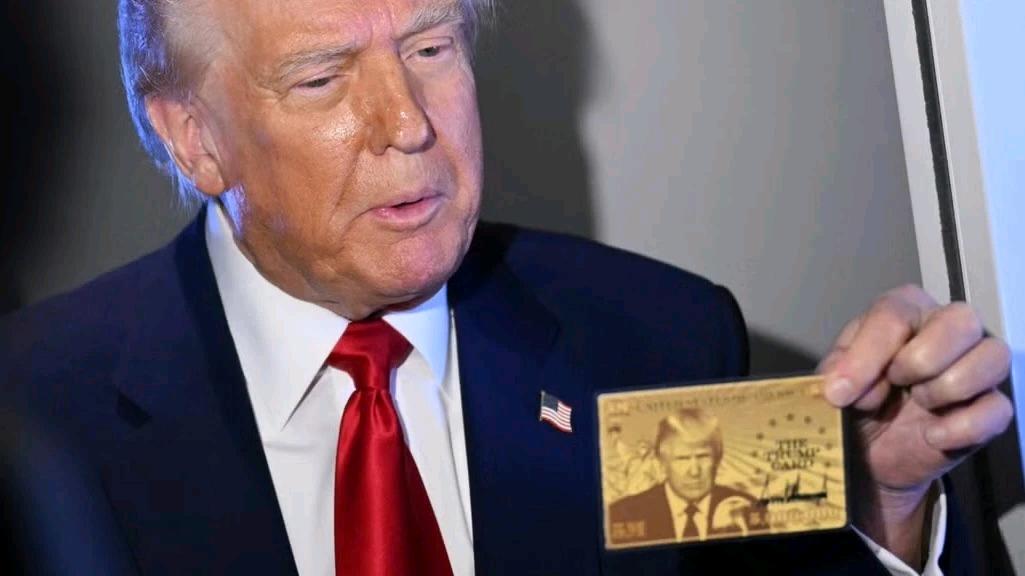
Lutnick said the slow pace reflects intensive screening by the Department of Homeland Security. He described the review as “the most serious vetting and analysis” in U.S. history and said each applicant goes through an “extraordinary vet” before approval.
President Trump launched the program on September 19, 2025, through Executive Order 14351, casting it as a high-capital, merit-based path to permanent residence and eventual citizenship. Trump described it on social media as: “Essentially it’s the green card on steroids. A direct path to Citizenship for all qualified and vetted people.”
| India | China | ROW | |
|---|---|---|---|
| EB-1 | Feb 01, 2023 | Aug 01, 2023 ▲31d | Current |
| EB-2 | Nov 01, 2013 | Oct 01, 2021 | Apr 01, 2025 ▲90d |
| EB-3 | Jan 22, 2014 ▲21d | Jan 22, 2022 ▲14d | Jun 15, 2024 ▲31d |
| F-1 | Jan 22, 2021 ▲366d | Jan 22, 2021 ▲366d | Jan 22, 2021 ▲366d |
| F-2A | Oct 22, 2026 ▲30d | Oct 22, 2026 ▲30d | Oct 22, 2026 ▲30d |
As structured by the White House, the Gold Card does not create a new visa category. It operates through the existing EB-1 and EB-2 frameworks, treating a $1 million payment as prima facie evidence of “exceptional business ability” and “national benefit.”
The cost is steep. Individuals must make a non-refundable financial gift of $1 million to the U.S. Department of Commerce, while corporations sponsoring an employee must pay $2 million. Each dependent adds another $1 million, and every application also carries a $15,000 processing fee paid to DHS for vetting.
USCIS published Form I-140G, the Immigrant Petition for the Gold Card Program, on December 10, 2025, using the agency’s existing petition structure to house the new program. The form is available at Immigrant Petition for the Gold Card Program.
That legal design sits at the center of the administration’s effort to shift immigration policy toward applicants with large amounts of capital and what officials describe as merit-based credentials. The program is intended to replace or alter the EB-5 Immigrant Investor Program, which requires at-risk investment and the creation of 10 jobs.
Under the Gold Card model, that job-creation requirement disappears. In its place is a direct, unrestricted payment to the government, paired with agency review under categories already in immigration law.
The gap between the administration’s early revenue claims and the number of actual approvals is wide. In December 2025, officials said the program had generated $1.3 billion in “value” from initial registrations, yet by April 24, 2026, only one applicant had received approval.
Interest in the program appears to be heavy. More than 100,000 people had reportedly joined the initial waitlist at TrumpCard.gov as of April 2026, while Lutnick said hundreds are now in the adjudication queue.
That volume, set against the single confirmed approval, points to a bottleneck between registration and final decision. The administration has promoted the Gold Card as a fast-track option, but the record described this week shows that vetting has slowed the program’s rollout.
The administration has tied that delay to deliberate caution rather than a change in policy. DHS outlined the review process in a December 2025 announcement on Implementation of the Gold Card Vetting Process, and Lutnick repeated that message on Capitol Hill.
Legal pressure is building at the same time. On February 3, 2026, a coalition led by the American Association of University Professors filed AAUP v. DHS, arguing that the program bypasses Congress’s authority over immigration and sells residency in violation of the Immigration and Nationality Act.
The lawsuit targets the same feature that the administration has made central to its pitch: a large cash contribution replacing the usual investor visa structure. The government has presented the payment as evidence that an applicant brings unusual economic value; the challengers argue that immigration categories cannot be remade by executive action alone.
Trump and his advisers have framed the initiative as part of a broader remake of employment-based immigration. The White House has said the program would steer the system toward wealthy applicants and away from older pathways that require more detailed proof of economic activity after arrival.
Howard Lutnick’s testimony offered the first official count since the program’s launch. It also set a much lower benchmark than the administration’s early promotion suggested, with one approval standing against a claimed surge of registrations and a public rollout that began more than seven months ago.
The administration has also floated an even more expensive tier. Officials have teased a “Platinum Card” tied to a $5 million contribution and a possible tax benefit that would allow holders to stay in the United States for up to 270 days per year without being subject to U.S. taxes on non-U.S. income.
No approval count has been announced for that proposal. What the government has confirmed is narrower and more concrete: a program launched by executive order, a petition form published by USCIS, a waitlist above 100,000, hundreds of cases in line for review, and one person approved so far.