- USCIS officers are now directed to deny green card applications based on ideological or anti-American views.
- Scrutiny focuses on pro-Palestinian campus activism and social media posts following the October 7, 2023, attacks.
- The administration frames the policy as a national security measure targeting hostile sentiments toward American values.
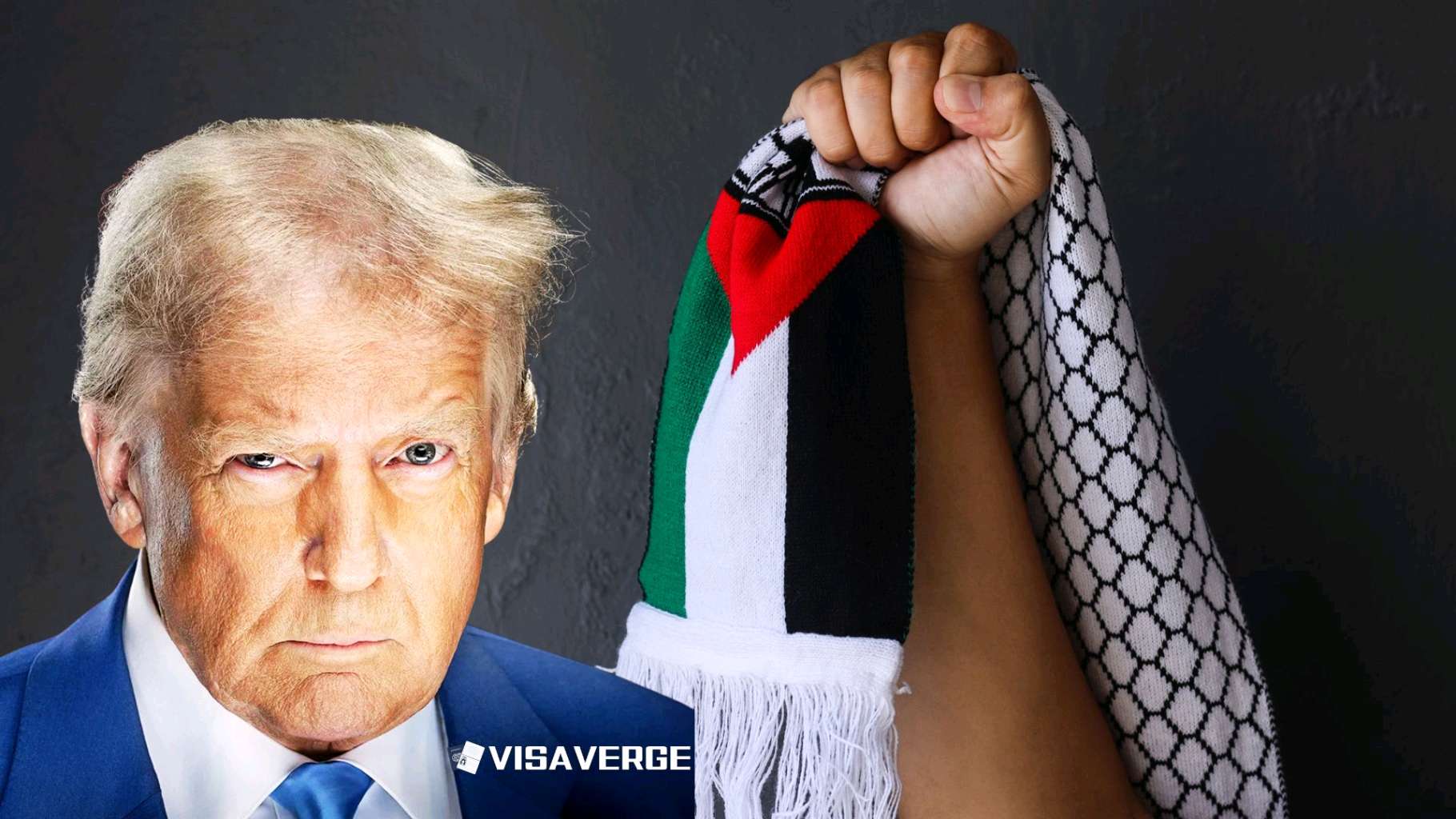
(UNITED STATES) — The Trump administration issued guidance to U.S. Citizenship and Immigration Services officers directing them to deny green cards to applicants who have expressed views it deems “antisemitic” or “anti-American”, including some pro-Palestinian speech and participation in post-October 7, 2023 campus protests.
The guidance, distributed in March 2026, tells officers to scrutinize activities “endorsing, promoting or supporting anti-American views” or “antisemitic terrorism, ideologies or groups.” It places particular emphasis on on-campus actions after Hamas’s October 7, 2023, attack on Israel.
Examples in Department of Homeland Security training materials include an Israeli flag crossed out with the text “Stop Israeli Terror in Palestine”, a social media post replacing “Israel” on a map with “Palestine”, and a post stating Israelis should “taste what people in Gaza are tasting”.
The new direction builds on an August 2025 USCIS announcement mandating vetting of green card applicants for those ideologies. It followed earlier 2026 directives to review visa applicants’ social media, including international students, for “antisemitic activity”.
President Donald Trump had already issued an executive instruction in August 2025 requiring investigations into anti-American and antisemitic ideologies. Opposition to Israeli policies was flagged as a potential barrier.
| India | China | ROW | |
|---|---|---|---|
| EB-1 | Feb 01, 2023 | Aug 01, 2023 ▲31d | Current |
| EB-2 | Nov 01, 2013 | Oct 01, 2021 | Apr 01, 2025 ▲90d |
| EB-3 | Jan 22, 2014 ▲21d | Jan 22, 2022 ▲14d | Jun 15, 2024 ▲31d |
| F-1 | Jan 22, 2021 ▲366d | Jan 22, 2021 ▲366d | Jan 22, 2021 ▲366d |
| F-2A | Oct 22, 2026 ▲30d | Oct 22, 2026 ▲30d | Oct 22, 2026 ▲30d |
That sequence marks a steady tightening of ideological screening inside the immigration system. By April 2026, the policy had expanded scrutiny in green card adjudications beyond the categories that long dominated those decisions.
USCIS Director Joseph Edlow defended the approach in congressional testimony. He said individuals with “hostile sentiments toward American values or supporting designated terrorist entities” should be denied permanent residency.
Agency spokesperson Zach Kahler cast the policy as a security measure rather than a speech rule. Kahler described the measures as national security protections, not speech restrictions.
Officers are encouraged, but not required, to deny applications on those grounds. That guidance shifts the focus from traditional criteria such as criminal history or family ties toward ideology and expression.
The scope set out in the materials reaches beyond direct statements of support for violent groups. It covers activities the administration says endorse, promote or support anti-American views or antisemitic ideologies, and it singles out speech and activism tied to demonstrations on college campuses after October 7, 2023.
International students sit close to the center of that policy shift because the administration had already ordered social media reviews for visa applicants, and because campus protests over Israel and Gaza became a focal point in federal enforcement. Students who joined pro-Palestinian demonstrations now face a system in which those actions can follow them into later applications for permanent residency.
The guidance also aligns with broader efforts to deport non-citizen students involved in pro-Palestinian campus activism. That connection links temporary visa screening, campus protests and green card adjudications into a single line of immigration enforcement.
Critics say the policy collapses political dissent into ideological disqualification. Former administration official Amanda Baran argued that the guidance contradicts free expression principles.
Opponents also argue that the policy conflates criticism of Israeli government policy with antisemitism. They say it treats conduct such as flag desecration as disqualifying even though the Supreme Court has protected that act as political speech.
Those objections turn on how immigration officers interpret broad phrases in the guidance. Terms such as anti-American views and antisemitic ideologies leave room for officers to weigh political language, social media posts and protest activity that would normally sit in the realm of expression rather than criminal conduct.
The administration’s examples show how that line is being drawn. A crossed-out Israeli flag, a map labeling the territory as Palestine, and a post saying Israelis should “taste what people in Gaza are tasting” are presented as indicators that can count against an applicant.
None of those examples involves a criminal charge in the guidance itself. Instead, they show USCIS treating expression, symbolism and online speech as relevant evidence in deciding whether someone should receive lawful permanent residence.
That marks a broader change in how officers are told to assess eligibility. Green card cases have historically centered on family relationships, employment sponsorship, admissibility bars and criminal records; the new guidance adds a more explicit ideological screen.
The administration has tied that screen to its account of national security and to support for designated terrorist entities. Critics counter that the practical effect reaches much further, especially in cases involving speech about Israel, Palestine and the war in Gaza.
Campus activism has supplied many of the fact patterns the policy now highlights. Demonstrations after October 7, 2023 became an organizing point in the administration’s immigration response, and the new guidance folds those protests into the adjudication of permanent residency cases.
Applicants now face a review process in which political statements, protest signs and social media imagery can weigh alongside the ordinary evidence in a green card file. As of April 2026, that expansion of ideological scrutiny had become part of the government’s formal approach to permanent residency decisions.