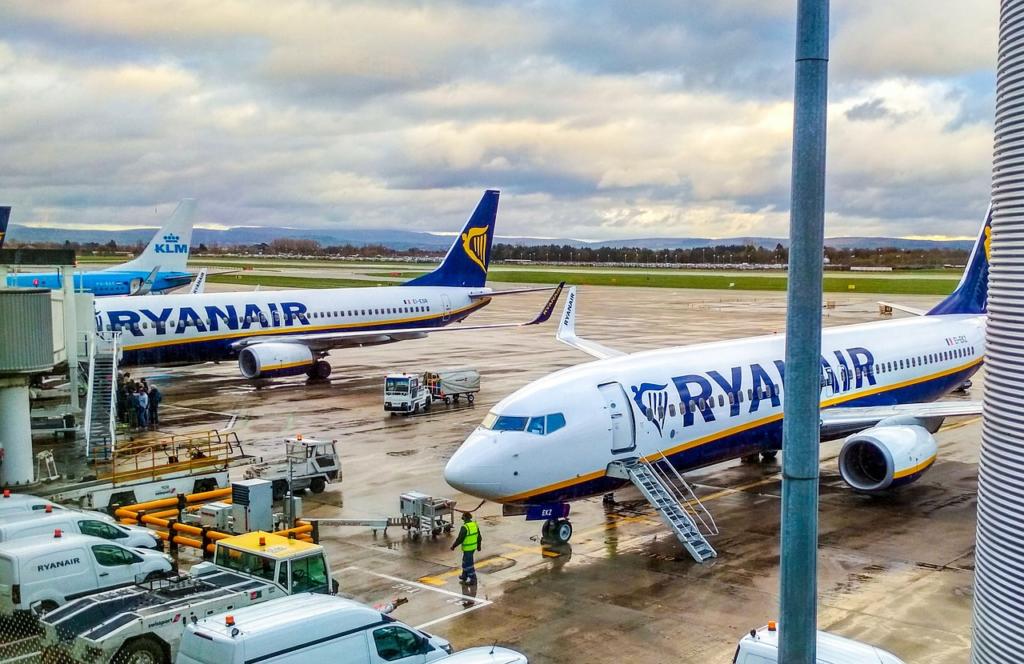
Ryanair said on July 20, 2026 that profit for its April-June quarter fell 34% to €538 million ($615.6 million) as the Middle East conflict pushed up fuel costs and weakened demand. The airline also warned that summer fares will be “modestly lower” than last year and declined to issue full-year FY27 guidance because of “Middle East conflict, fuel price volatility and limited booking visibility.”
- Chief Financial Officer Neil Sorahan said the quarter was hit by a “big swing factor” as the price of Ryanair’s 20% unhedged fuel more than doubled, with operating costs rising 11% to €3.81 billion.
- Michael O’Leary said the airline’s “conservative hedging policy” gives it a “cost advantage over all other EU competitors” amid volatile oil prices and economic uncertainty.
- Ryanair carried 61.3 million passengers with a 94% load factor, but average fares fell 6% to €48 as the company discounted prices to protect volumes.
- Sorahan warned of a “difficult winter” for European aviation, saying consolidation and capacity cuts could prove “positive for pricing.”
- Ryanair CEO Michael O’Leary warns that airlines face bankruptcy if jet fuel prices remain at $150 per barrel.
- Airlines like Wizz Air and Air Baltic are vulnerable to financial collapse by October or November 2026.
- Rising costs linked to Iran conflict could cause widespread flight cancellations starting as early as June.
(DUBLIN) – Ryanair CEO Michael O’Leary warned on April 28, 2026 that two or three European airlines could go bankrupt in October or November if jet fuel prices remain at $150 per barrel, naming Wizz Air and Air Baltic as vulnerable.
O’Leary gave the warning at a press conference in Dublin and in an interview with Italian newspaper Il Sole 24 Ore. He said the pressure from higher jet fuel prices was already spreading across European aviation.
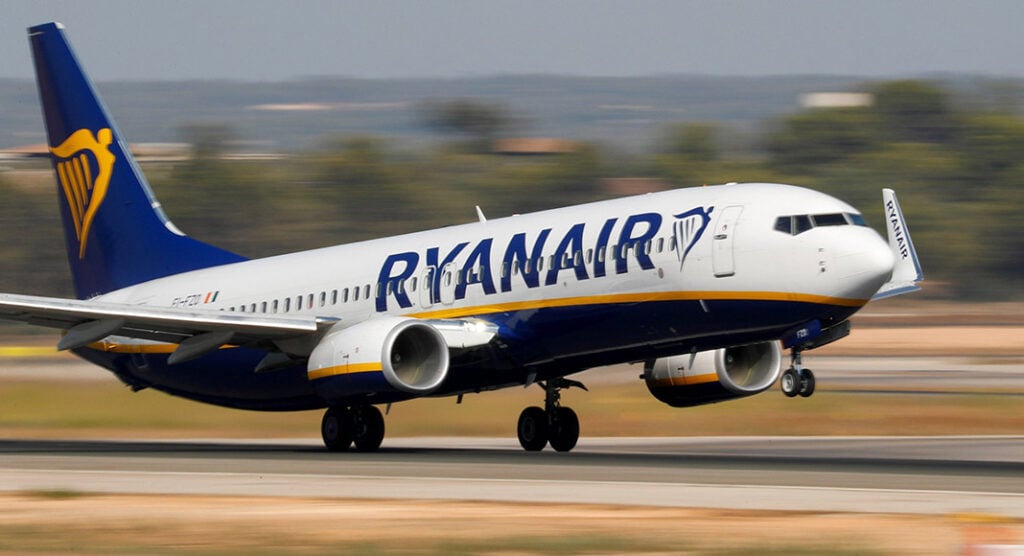
Ryanair has already absorbed an extra $50 million in costs in April alone, he said, after jet fuel prices surged from $74 to $150 per barrel. If those prices persist, the impact on Ryanair could reach $600 million within a year.
He tied the rise to the Iran conflict, which he said was curtailing Europe’s kerosene supply. Reserves were estimated to last about six weeks, with risks centered on the Strait of Hormuz.
O’Leary said flight cancellations could start in June if conditions continue. Most European airlines have fuel hedged through summer, he said, but face greater exposure after that protection runs out.
Ryanair is more insulated than many rivals. The airline hedged 80% of its fuel needs at $67 per barrel through March 2027.
The remaining 20% of its fuel needs is being bought at market rates above $150 per barrel. That split leaves Ryanair exposed to current prices on part of its fuel bill, but far less than carriers that did not lock in lower rates.
O’Leary singled out Wizz Air and Air Baltic when asked which airlines looked most exposed if fuel stays at current levels into autumn. He said the financial strain would sharpen in October or November, after summer hedges expire and winter demand weakens.
His remarks extended a public clash with Wizz Air. O’Leary referred to the airline’s threat of legal action over earlier comments on its finances and said it “won’t have enough time” to sue if bankruptcy hits.
He also said reduced competition would be “a good thing for our business.” The comment underscored how Ryanair sees turbulence among weaker rivals as a commercial opening, even as higher fuel costs hit its own balance sheet.
Wizz Air rejected the claims as “categorically untrue and false.” The response marked a direct rebuttal to one of Europe’s most outspoken airline chiefs and kept alive a dispute that has moved beyond fuel costs alone.
The warning lands at a point when fuel hedging has become a dividing line across the sector. Carriers that bought protection earlier at lower prices can cushion the immediate shock, while those with less cover face the full weight of current market rates.
That difference matters most if high prices persist beyond summer. Airlines with protection through the peak travel season can keep operating without immediate cuts, but their position changes once those contracts expire.
O’Leary’s timeline pointed directly to that risk window. June, in his account, is when cancellations could begin if supply pressures continue, while October and November are when weaker airlines may run out of room.
Europe’s kerosene market now sits under strain from the same geopolitical pressure that pushed crude and refined fuel costs sharply higher. O’Leary’s warning linked that pressure to physical supply as well as price, saying reserves could last about six weeks if disruption persists.
The Strait of Hormuz remains central to that concern because of its role in energy flows. Any threat around that route adds to uncertainty for airlines already budgeting against a fuel bill that has doubled from $74 to $150 per barrel.
Ryanair’s own figures show how fast that pressure builds, even for a carrier with heavy hedging. An extra $50 million in one month offers a measure of the strain facing airlines that bought less cover or locked in at higher levels.
Wizz Air has become the most visible target of O’Leary’s criticism, but his warning covered a broader slice of the market. He said two or three European airlines could fail if current prices hold, a sign that the threat, in his view, extends beyond a single rival.
Air Baltic was the other airline he named as vulnerable. O’Leary did not limit the risk to low-cost carriers, but his comments pointed to operators with less protection against prolonged swings in jet fuel prices.
European airlines now head into the summer with a temporary shield in place and a volatile market behind it. O’Leary’s message was blunt: if jet fuel prices stay at $150 per barrel, the pressure that began in April will deepen into cancellations in June and, by autumn, possible failures.