- A federal court ruled that ICE must have a judicial warrant for civil immigration arrests at New York courthouses.
- Administrative warrants signed by agency officials no longer suffice for enforcement activity inside or near covered courts.
- The Protect Our Courts Act requires ICE to notify court personnel before conducting surveillance or arrests in 2026.
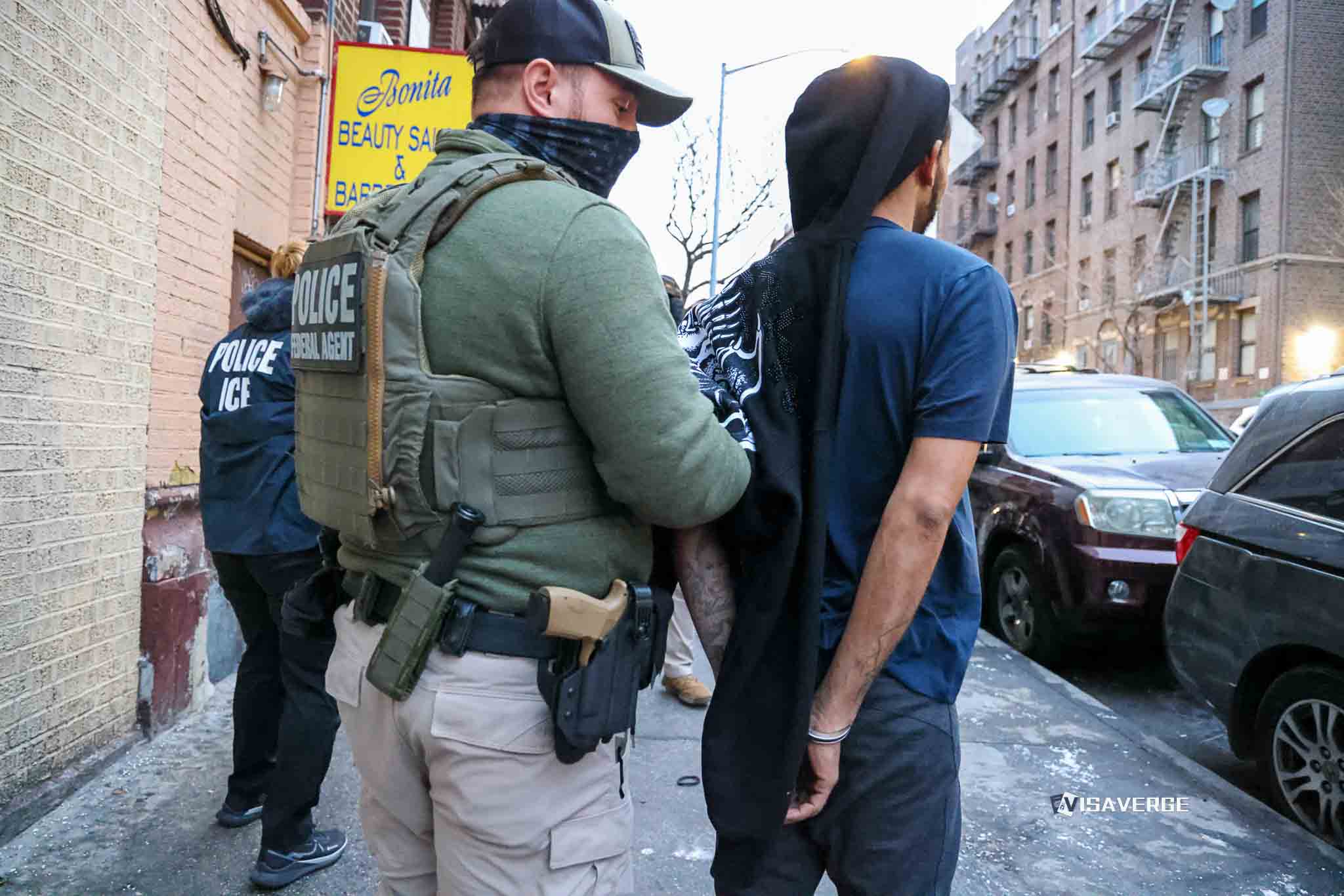
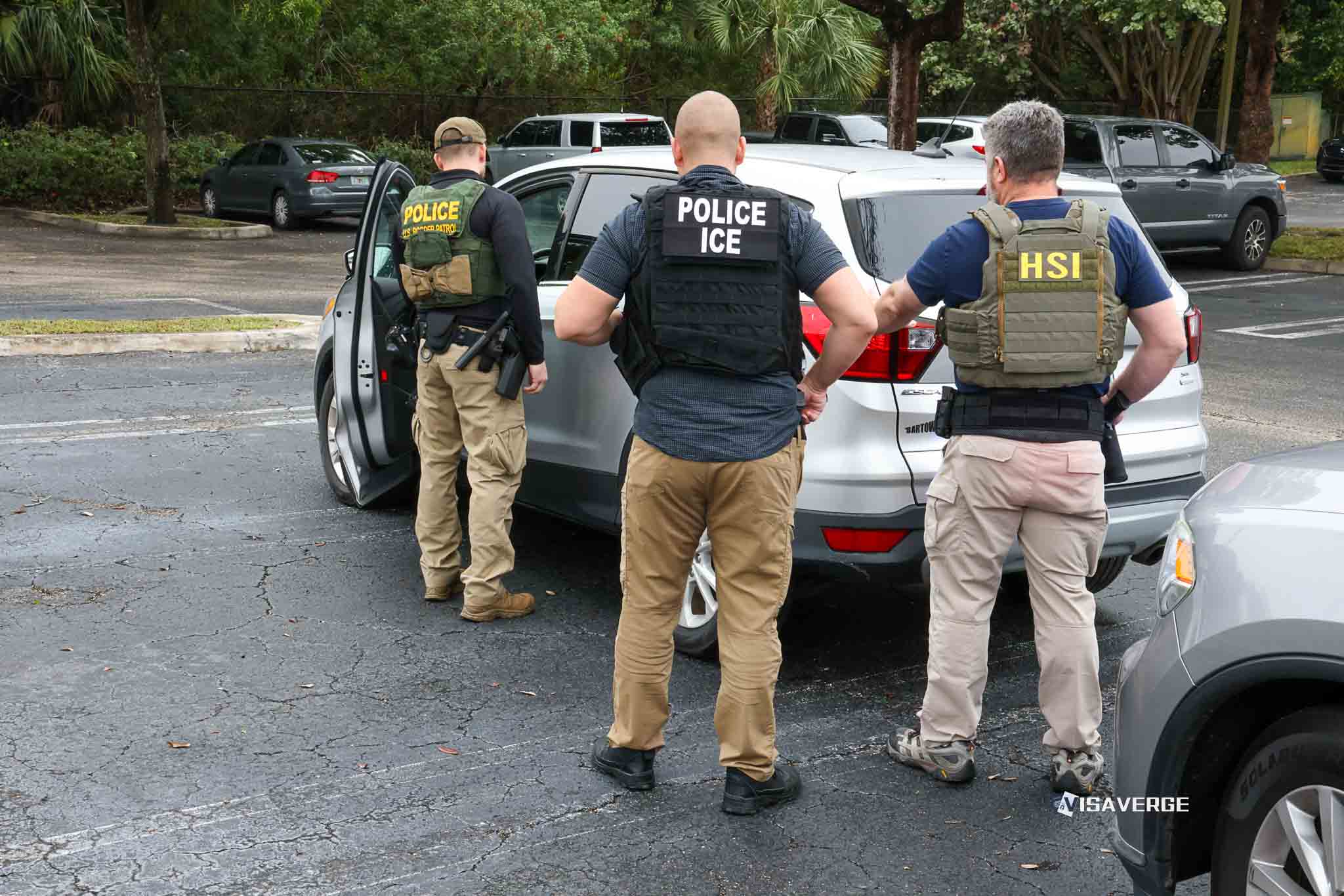
(NEW YORK) — A federal court barred ICE from making civil immigration arrests at New York state courthouses without a judicial warrant in New York v. U.S. Department of Homeland Security, a challenge to courthouse arrest practices brought by New York state officials and immigrant advocates.
The ruling covers civil immigration arrests at or near New York state, city, and municipal courthouses. ICE can still make an arrest in those places if it has a judicial warrant.
Free toolUSCIS Receipt Number Decoder
An administrative warrant signed by ICE officials does not meet that standard under New York courthouse protections. The distinction leaves federal immigration officers with authority in narrower circumstances than they would have under agency paperwork alone.
The court order sits alongside New York’s Protect Our Courts Act, which requires notice to court personnel when ICE intends to surveil, observe, or arrest someone at a courthouse. That requirement reaches beyond arrests themselves and extends to planned enforcement activity tied to courthouse grounds.
| India | China | ROW | |
|---|---|---|---|
| EB-1 | Feb 01, 2023 ▲109d | Jul 01, 2023 | Current |
| EB-2 | Nov 01, 2013 | Oct 01, 2021 ▲30d | Jan 01, 2025 |
| EB-3 | Jan 01, 2014 | Jan 08, 2022 ▲7d | May 15, 2024 ▼109d |
| F-1 | Jan 22, 2020 | Jan 22, 2020 | Jan 22, 2020 |
| F-2A | Sep 22, 2026 ▲31d | Sep 22, 2026 ▲31d | Sep 22, 2026 ▲31d |
New York’s protections come from two sources. State law supplies part of the framework, and federal court rulings supply another, creating a layered set of limits on how ICE can operate around courthouses in the state.
That framework does not automatically match the rules elsewhere. The scope can differ from other states because New York’s courthouse protections combine its own statutes with federal decisions that apply in this setting.
The case centers on a practice that state officials and immigrant advocates challenged directly in federal court. Their lawsuit targeted ICE courthouse-arrest activity in New York and produced a ruling that ties civil immigration arrests in or near covered courthouses to a warrant signed by a judge.
Covered locations include state, city, and municipal courthouses. The wording also reaches activity “at or near” those buildings, a phrase that matters because enforcement disputes often turn on exactly where an officer acted and what legal authority supported that action.
Within that structure, the difference between a judicial warrant and an administrative warrant is decisive. A judicial warrant comes from a court; an administrative warrant signed by ICE officials is not enough under the courthouse protections at issue here.
That point narrows the circumstances in which ICE can carry out a civil immigration arrest in the courthouse setting. It also gives court personnel a clearer standard when federal officers seek to act inside or around a courthouse.
The Protect Our Courts Act, often shortened to POCA, adds a separate operational requirement. When ICE intends to surveil, observe, or arrest someone at a courthouse, the law requires notice to court personnel.
Notice obligations can shape courthouse routines well before any arrest occurs. Court staff, security personnel, and administrators may need to account for planned federal enforcement activity while also maintaining ordinary court operations.
The ruling does not erase all ICE authority in New York courthouses. It preserves a path for action where officers have a judicial warrant, while shutting off reliance on an administrative warrant alone for civil immigration arrests in the covered locations.
That line matters in practice because civil immigration enforcement often proceeds through immigration paperwork rather than a warrant issued by a judge. In the courthouse context addressed here, New York’s protections demand more.
Advocates who pushed the case challenged courthouse arrests on access-to-justice grounds, and the ruling strengthens the limits they sought. New York state officials, who joined that challenge, now have a federal court decision reinforcing state-level protections already on the books.
Courts themselves also gain a more defined role under the combined legal scheme. If ICE plans to surveil, observe, or arrest a person at a courthouse, personnel must receive notice under POCA, and any civil immigration arrest at or near the covered courts requires the right kind of warrant.
The decision does not rest on every area of immigration law. Related authority such as Matter of M-S-, 27 I&N Dec. 509 (A.G. 2019), addressed immigration detention issues, but that decision is separate from limits on courthouse arrests.
That separation is legally important. Rules governing detention in immigration proceedings do not answer the narrower question raised in New York about whether ICE can make a civil immigration arrest in or near a courthouse without a judge’s warrant.
By drawing that line, the federal court kept the courthouse case focused on place, process, and authority. The question was not general detention policy; it was whether civil immigration enforcement at courthouses in New York had to satisfy protections created by state law and enforced through federal litigation.
The answer, in this ruling, was yes. ICE cannot make those civil immigration arrests at or near New York state, city, and municipal courthouses without a judicial warrant, and an administrative warrant does not substitute for one.
Courthouse security protocols may now reflect that clearer boundary. Staff who receive notice under the Protect Our Courts Act can evaluate planned enforcement activity against the warrant requirement, while advocates for immigrant rights are likely to treat the ruling as a stronger basis for challenging arrests that fall outside it.
The operational effect reaches both everyday court administration and the conduct of federal officers. In a courthouse setting, notice and warrant rules can determine whether an intended ICE action proceeds, pauses, or draws immediate legal scrutiny.
New York’s approach also stands as a reminder that courthouse-arrest rules do not turn on federal immigration authority alone. State protections and federal court rulings can work together, and in New York they have produced a narrower path for civil immigration arrests in and around courthouses than ICE could claim under an administrative warrant.
Anyone trying to follow the case closely will likely focus on three points: the exact case caption, the current scope of ICE courthouse-arrest authority in New York, and how the Protect Our Courts Act applies when officers plan to surveil, observe, or arrest a person at a courthouse. The federal court’s order places those questions at the center of how New York courts and ICE will operate around one of the state’s most sensitive enforcement settings.