- Spanish police arrested 35 people in a nationwide crackdown on high-quality forged Colombian passports.
- The new EU Entry/Exit System flagged biometric mismatches in Oviedo, leading to the bus station arrests.
- An international network sold forged documents for up to 6,000 euros to bypass Schengen visa rules.
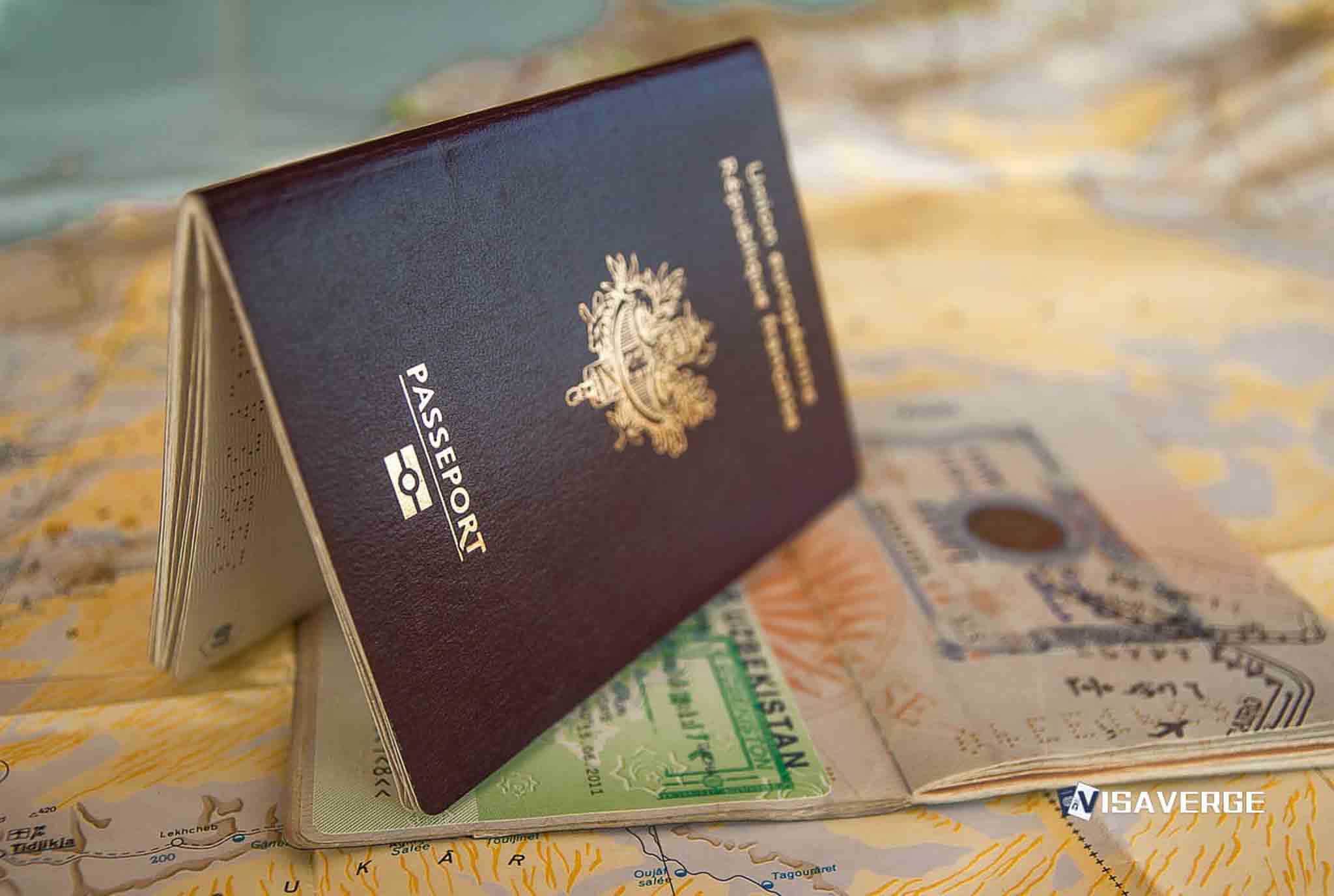
(OVIEDO, ASTURIAS, SPAIN) — Spanish Police arrested two people of Dominican origin in Oviedo after officers found them carrying forged Colombian passports that investigators said were used to evade Schengen visa rules in a wider crackdown spanning much of the country.
Officers detained a man and a woman at an inter-city bus station in the Asturian city, the Spanish National Police announced on May 18, 2026. Police said the pair carried high-quality counterfeit Colombian passports that appeared legitimate at first glance but showed irregular laminates.
Free toolSchengen Short-Stay Visa Calculator
The arrests formed part of an operation across 15 Spanish provinces that had produced 35 arrests by May 18. Investigators linked the Oviedo pair to an international document-forgery network that they believe operates from Colombia.
Spanish authorities said the EU Entry/Exit System, or EES, helped expose the documents. The system flagged the passports when the biometric chip data did not match the optical readings on the document, a discrepancy that drew officers to the pair.
| India | China | ROW | |
|---|---|---|---|
| EB-1 | Feb 01, 2023 ▲109d | Jul 01, 2023 | Current |
| EB-2 | Nov 01, 2013 | Oct 01, 2021 ▲30d | Jan 01, 2025 |
| EB-3 | Jan 01, 2014 | Jan 08, 2022 ▲7d | May 15, 2024 ▼109d |
| F-1 | Jan 22, 2020 | Jan 22, 2020 | Jan 22, 2020 |
| F-2A | Sep 22, 2026 ▲31d | Sep 22, 2026 ▲31d | Sep 22, 2026 ▲31d |
Spain put the EES fully into operation in early 2026, adding an automated layer to checks that had long relied on visual inspection and database queries. In the Oviedo case, police said the forged Colombian passports were sophisticated enough to pass an initial look, which made the biometric mismatch central to the arrests.
Investigators said the network supplied doctored passports to Latin American and Caribbean nationals for between €4,000 and €6,000. The alleged scheme depended on substitution: people from countries that require a Schengen visa, including the Dominican Republic, posed as citizens of countries that do not, including Colombia.
That method, described by investigators as a recurring fraud route, exploits differences in visa treatment inside the Schengen area. Under Schengen visa rules, Colombian citizens can travel visa-free for short stays, while Dominican nationals need a visa.
During house searches after the Oviedo arrests, officers seized €9,300 in cash, a laptop containing passport templates and multiple blank visa stickers. Police said those items strengthened the case that the pair were not isolated travelers but part of a supply chain tied to forged identity documents.
Spanish authorities also notified Interpol and the Colombian Consulate as they traced the origin of the passports and the digital trail of payments. Interpol features in the case not as a peripheral contact but as part of the cross-border effort to identify how the documents moved and who produced them.
The case unfolded during a week of broader international attention on immigration fraud. On May 14, 2026, U.S. Citizenship and Immigration Services and the Department of Justice filed denaturalization actions against 12 individuals for “concealing material facts” during the immigration process.
“USCIS is committed to protecting the integrity of our nation’s legal immigration system. Those who willfully misrepresent themselves to obtain U.S. citizenship will be held accountable,” a USCIS Newsroom release said on May 14, 2026.
A day earlier, on May 13, 2026, DHS officials discussed an EU-US agreement that expanded access to biometric records, including fingerprints and facial images, for cases involving people using “stolen or fraudulent identities” to cross borders. On May 18, 2026, DHS also issued a statement on the detention of high-risk “criminal illegal aliens,” highlighting the use of international databases such as Interpol to track fugitives using false identities.
Those U.S. actions did not address the Oviedo arrests directly, but they showed the same enforcement pattern now shaping European border checks: biometric screening, data-sharing and document analysis. In Spain, the EES flag turned a routine control into an arrest at the station.
Police said the alleged network relied on what investigators described as a “Schengen Loophole,” in which visa-required nationals obtained passports from visa-exempt countries after the biodata page had been expertly substituted. The operation in Spain suggested the trade had expanded well beyond a single city, with arrests scattered across the country rather than concentrated in one transit hub.
Oviedo offered a clear snapshot of how that trade works on the ground. A pair of travelers boarded an inter-city route with documents that looked real enough to move through ordinary checks, but the biometric record embedded in the passport chip pointed elsewhere.
The use of forged Colombian passports has drawn attention because Colombia occupies a valuable place in the hierarchy of travel documents inside Europe. A counterfeit document from a visa-exempt country can function as an entry ticket for someone who would otherwise face scrutiny under Schengen visa rules before boarding a plane or crossing a border.
Spanish law exposes the suspects to severe penalties. Police said they face charges of document forgery and crimes against the rights of foreign citizens, offenses that carry penalties of up to eight years in prison.
Authorities also typically enter people caught using such services into the Schengen Information System, or SIS. That process can trigger immediate deportation and long-term exclusion, often a 10-year ban covering all 29 Schengen member states.
The Schengen-wide effect gives document fraud cases weight far beyond the country of arrest. A detention in northern Spain can close legal travel routes across most of continental Europe for years, even before any prison sentence ends.
Police have not framed the Oviedo case as an isolated border offense. Their account places it inside a market that sells altered documents to people seeking access to Europe through identity substitution rather than through formal visa channels.
That market appears to blend old and new methods. Officers cited physical irregularities in the laminate, while the EES detected the mismatch between the passport’s biometric chip and its printed data, showing how modern screening systems can catch forged documents that still look convincing in the hand.
The operation also showed how bus stations, not only airports, have become enforcement points. Inter-city terminals handle constant domestic and cross-border movement, making them useful places for both traffickers and police.
Spanish Police did not release the names of the two people arrested in Oviedo. What officers did release was the structure around them: a Colombia-based network, forged Colombian passports priced at €4,000 to €6,000, evidence seized in searches, and a national operation that reached 35 arrests across 15 provinces by May 18.
Official statements on the case and related fraud enforcement actions appear in the [Spanish National Police press releases](https://www.policia.es/_es/comunicacion_prensa.php), the [USCIS Newsroom](https://www.uscis.gov/newsroom), [DHS news releases](https://www.dhs.gov/news) and [Interpol news updates](https://www.interpol.int/en/News-and-Events). In Oviedo, the arrest at a bus station turned those wider policy themes into a simple result: two passengers stopped, two passports seized, and one more route through Europe pulled into view.