- South Africa’s High Court struck down procedural barriers that previously blocked asylum seekers from filing protection claims.
- The unanimous ruling ensures that non-refoulement obligations prevent deportation based solely on irregular entry or missed deadlines.
- The decision contrasts sharply with restrictive U.S. Supreme Court rulings that have recently expanded executive border control authority.
(SOUTH AFRICA) — South Africa’s Constitutional Court on July 7, 2026 struck down key provisions of the Refugees Act 130 of 1998, holding that asylum seekers cannot be shut out of the system or deported solely for procedural failures. The ruling removes barriers that had blocked claims by people who entered outside official ports or missed short reporting deadlines, and it is likely to shape similar protection cases centered on non-refoulement.
The case is Scalabrini Centre of Cape Town and Another v Minister of Home Affairs and Others [2026] ZACC 30. The Court unanimously confirmed a High Court order invalidating sections 4(1)(f), 4(1)(h), 4(1)(i), and 21(1B) of the Refugees Act. In practical terms, the judgment means an asylum claim must be assessed on its merits before removal, rather than being rejected at the threshold because of the manner of entry or a missed filing window.
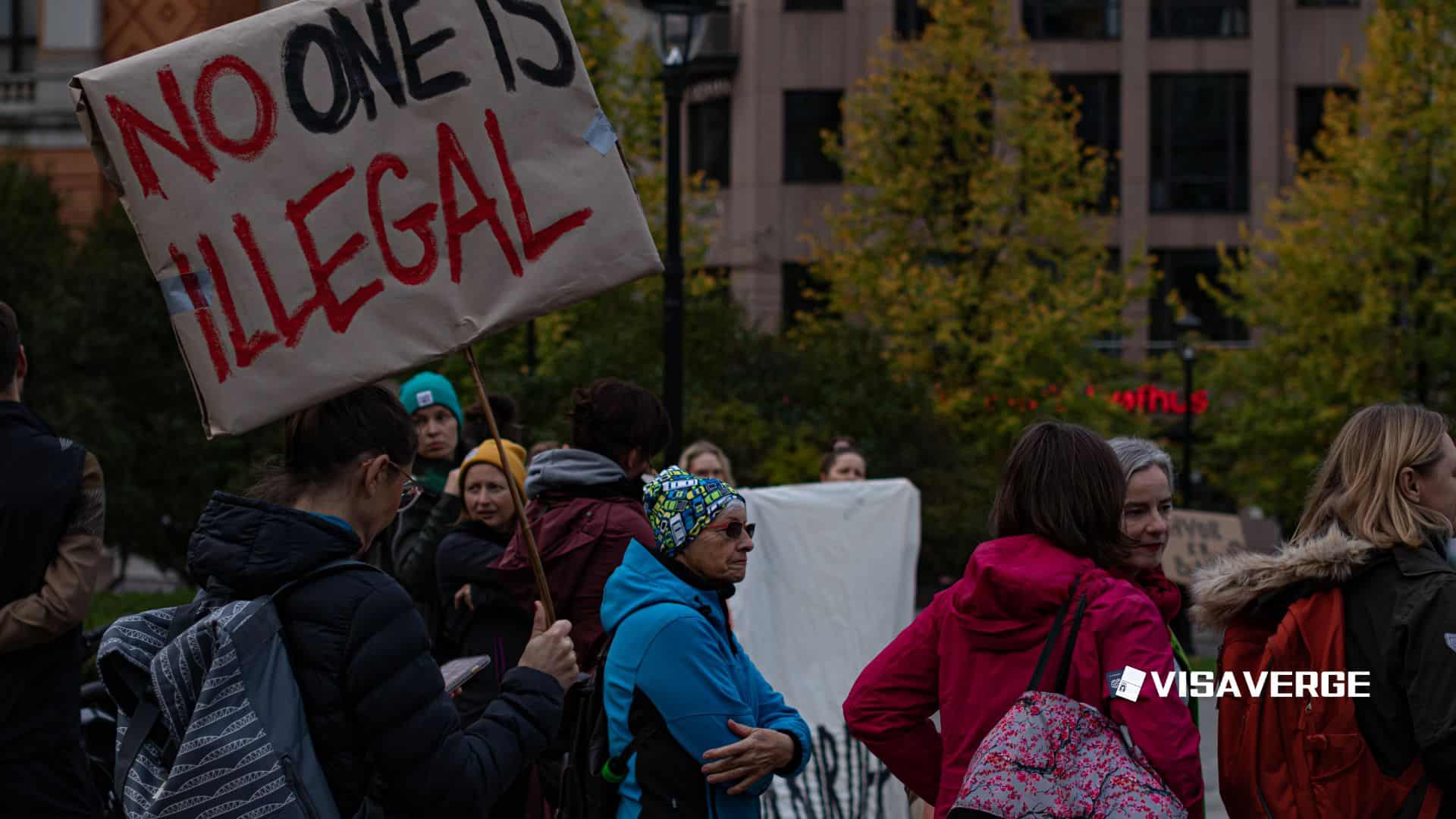
The provisions at issue had created what the Court described as a disbarment regime. Under that system, a person who entered South Africa through an unofficial point, or failed to report to a Refugee Reception Office within five days, risked exclusion from the asylum process and deportation without a substantive hearing. The Court held that those rules conflicted with constitutional protections and with South Africa’s obligations not to return people to persecution or other serious harm.
Free toolUSCIS Receipt Number DecoderThe facts that drove the ruling were straightforward and severe. Asylum seekers who had not complied with formal entry and reporting rules could be denied access to the refugee status determination system altogether. That denial came before any official decided whether the person faced persecution, war, or torture on return. The Court found that this structure endangered the principle of non-refoulement, which bars a state from sending someone to a place where that person faces persecution or comparable danger.
The judgment also gave unusual weight to the position of children. The Court said procedural barriers could inflict double harm on minors by exposing them to removal while also disrupting access to schooling, health care, and legal identity. In refugee law, that matters beyond family cases. A court that identifies children’s rights as part of the constitutional injury often narrows the state’s room to defend rigid exclusion rules.
That practical effect is immediate. People who previously could have been screened out for irregular entry or delayed reporting now may insist on access to a hearing process. Lawyers handling refugee matters in South Africa will likely cite the decision whenever the government attempts summary removals without first examining the protection claim itself. The judgment does not grant refugee status automatically. It requires a lawful chance to seek it.
Warning: A right to apply is not the same as a grant of asylum. Applicants still must present a credible protection claim and comply with later procedures once admitted into the system.
The ruling also invites comparison with the United States, where the legal direction has recently been the reverse. In late June 2026, the U.S. Supreme Court upheld restrictive border measures in Mullin v. Al Otro Lado. The Department of Homeland Security then described the Court’s decisions as giving the government more tools to secure the border, including measures that bar certain noncitizens from applying for asylum before they set foot in the United States.
That approach sits uneasily beside the text and structure of the U.S. asylum statute, but it now governs border practice unless later litigation narrows it. U.S. asylum law appears primarily in INA § 208, with withholding protections in INA § 241(b)(3). Those provisions exist alongside regulations and executive border policies. After Mullin v. Al Otro Lado, executive authority at the border appears to carry greater weight than access-to-process arguments advanced by asylum seekers and advocates.
USCIS added another June-to-July development with its July 1, 2026 policy alert on Haiti’s Temporary Protected Status. That alert followed Mullin v. Doe and addressed the termination of TPS for Haiti, including employment authorization issues during the transition. TPS is distinct from asylum, but the policy signal was clear. Federal agencies were moving quickly to align operations with recent Supreme Court rulings that favored the government’s position.
The legal contrast is stark. South Africa’s Constitutional Court treated procedural access to the asylum system as a constitutional and rights-based question. The U.S. Supreme Court, as described by DHS, treated border restrictions largely as an issue of executive control and territorial limits on who may invoke asylum procedures. One system widened the hearing right. The other validated turnback authority before full entry.
That difference matters in day-to-day case handling. In South Africa, a person who crossed irregularly and missed an early deadline may still press for refugee status determination without facing automatic disqualification. In the United States, a person at the southern border may be turned back before physically entering the country, sharply limiting any practical opportunity to lodge an asylum application under the Refugee Act of 1980 and related provisions.
Practice point: Anyone facing removal, turnback, or a missed asylum reporting deadline should seek legal help immediately. Early procedural errors often shape the entire case record.
There is no significant dissent to parse in the South African judgment because the Constitutional Court ruled unanimously. That unanimity strengthens the decision’s value in future litigation. Government lawyers may still test its boundaries in implementation disputes, including questions about screening, detention, and proof of intent to seek asylum. Still, the core holding is hard to miss: procedure cannot be used to extinguish protection claims before they are heard.
For U.S. practitioners, the South African case is not binding authority, but it offers a clear comparative example of how constitutional courts can treat non-refoulement as a limit on procedural gatekeeping. In U.S. immigration jurisprudence, by contrast, precedent often turns on statutory text, territorial entry doctrines, and deference to the political branches. Matter of D-K-, 25 I&N Dec. 761 (BIA 2012), for example, illustrates how Board of Immigration Appeals decisions can shape asylum procedure within the U.S. administrative system, even though the current border dispute is being driven by Supreme Court rulings and executive policy.
No obvious circuit split appears to control the South African holding. In the United States, any lower-court conflict over these border restrictions has been overtaken, at least for now, by the Supreme Court’s recent decisions. The result is a sharp divergence between two democracies that both operate within refugee-law frameworks but now assign very different weight to front-end access.
People affected by these rulings should focus on timing, records, and legal posture. In South Africa, evidence of an intention to seek asylum still matters, even though irregular entry alone no longer justifies exclusion. In the United States, individuals facing border turnback, expedited processes, TPS termination issues, or related asylum barriers typically need immediate case-specific advice from counsel familiar with federal court developments and agency implementation.
Official resources: EOIR, USCIS, AILA Lawyer Referral, Immigration Advocates Network.
⚖️ Legal Disclaimer: This article provides general information about immigration law and is not legal advice. Immigration cases are highly fact-specific, and laws vary by jurisdiction. Consult a qualified immigration attorney for advice about your specific situation.