- The Supreme Court upheld birthright citizenship in a six to three ruling against Executive Order fourteen one sixty.
- Chief Justice Roberts affirmed the Fourteenth Amendment’s promise of citizenship to nearly all children born on American soil.
- The decision prevents the administration from denying legal status to children of undocumented immigrants and visa holders.
(UNITED STATES) — The Supreme Court ruled on June 30, 2026, that President Donald Trump could not end birthright citizenship by executive order. It delivered a 6-3 decision in Trump v. Barbara (No. 25-365) and reaffirmed that the 14th Amendment guarantees citizenship to nearly all children born on U.S. soil.
The justices struck down Executive Order 14160. They rejected the administration’s effort to deny citizenship recognition to some children born in the United States to undocumented mothers and to mothers in the country on temporary visas. The order had been blocked by federal injunctions and never took effect.
Free toolSubstantial Presence Test Calculator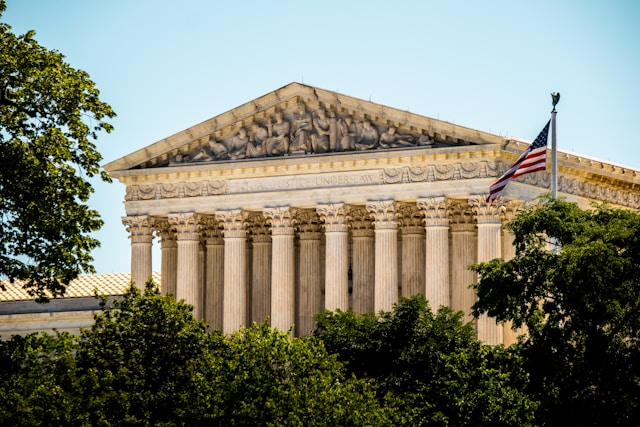
Citizenship, then and now, was the right to have rights — to freely participate in our political community. The Framers of the Fourteenth Amendment extended that promise to ‘every free-born person in this land.’ We keep that promise today.
Chief Justice John Roberts
Roberts also rejected the administration’s reading of the Citizenship Clause as “dramatically revisionist.” He wrote that “Words appearing frequently in the Executive Order—‘mother,’ ‘father,’ ‘lawful,’ ‘temporary’—are absent from the Clause. For a simple reason: they did not matter.”
| India | China | ROW | |
|---|---|---|---|
| EB-1 | Feb 01, 2023 ▲109d | Jul 01, 2023 | Current |
| EB-2 | Nov 01, 2013 | Oct 01, 2021 ▲30d | Jan 01, 2025 |
| EB-3 | Jan 01, 2014 | Jan 08, 2022 ▲7d | May 15, 2024 ▼109d |
| F-1 | Jan 22, 2020 | Jan 22, 2020 | Jan 22, 2020 |
| F-2A | Sep 22, 2026 ▲31d | Sep 22, 2026 ▲31d | Sep 22, 2026 ▲31d |
The ruling marked the most searching Supreme Court test of birthright citizenship since United States v. Wong Kim Ark in 1898. That case long treated as the foundation of modern constitutional citizenship law. The decision left in place more than a century of settled practice under which children born in the United States receive citizenship at birth regardless of their parents’ immigration status, with narrow exceptions not at issue here.
Trump signed Executive Order 14160 on January 20, 2025, his first day back in office. Titled “Protecting the Meaning and Value of American Citizenship”, it directed federal agencies to refuse citizenship recognition to children born in the United States if their mothers lacked lawful permanent status and the father was also not a citizen or lawful permanent resident. It also applied if their mothers held temporary visas including H-1B, F-1, J-1, L-1, and B-1/B-2.
The first court blocks came from multiple federal injunctions, beginning in the District of New Hampshire. Because of those orders, the policy never took effect while the litigation moved upward.
The Court’s alignment showed a majority broader than the three liberal justices alone. Roberts joined Justices Sonia Sotomayor, Elena Kagan, Amy Coney Barrett and Ketanji Brown Jackson in the majority. Justice Brett Kavanaugh concurred in the judgment, agreeing the order was unlawful but writing separately to focus on federal law violations.
Justices Clarence Thomas, Samuel Alito and Neil Gorsuch dissented. Their dissents would have allowed the restrictions to take effect.
At oral arguments on April 1, 2026, D. John Sauer, advocating for the Trump administration, argued that children of undocumented immigrants and temporary visa holders were not “subject to the jurisdiction” of the United States because their parents could not legally “domicile” in the country. The Court rejected that argument as having “scant evidence.”
That holding cut directly at the administration’s effort to treat the phrase “subject to the jurisdiction” as a limit broad enough to exclude large categories of U.S.-born children. In practical terms, the ruling confirmed that a president cannot rewrite constitutional citizenship through executive action alone, even in an area where the White House often claims broad control over immigration enforcement.
The decision also stood as the second major defeat for the second Trump administration’s signature agenda at the Supreme Court. In February 2026, the Court struck down widespread global tariffs imposed by the administration.
Researchers projected that the birthright citizenship order would have affected about 250,000 babies born in the U.S. each year. Advocates including FWD.us estimated that, if the order had survived, the undocumented population in the United States would have increased by nearly 25% over the next 50 years.
Those projections drew attention not only because of the constitutional question before the Supreme Court, but because of the everyday documents tied to citizenship from birth. With the order invalidated, children born to international students, high-skilled workers on temporary visas and undocumented immigrants continue to receive U.S. passports, Social Security numbers and the legal status Roberts described as the “right to have rights.”
The administration had cast the order as a redefinition of who counts as fully within the country’s political community. Roberts answered that argument by returning to the text and history of the 14th Amendment, signaling that the Court saw the dispute not as a close policy choice for the executive branch, but as an attempt to unsettle a constitutional guarantee the justices viewed as deeply rooted.
The opinion is available in the Court’s slip opinion in Trump v. Barbara. The underlying order remains posted by the White House as Executive Order 14160, and the ruling leaves it without legal force.
By mid-afternoon on June 30, 2026, the Department of Homeland Security had not released a formal statement conceding the defeat. Five days earlier, on June 25, 2026, DHS General Counsel James Percival had praised separate immigration rulings on asylum and Temporary Protected Status, calling them “victories for the rule of law and common sense.”
Tuesday’s ruling settled the administration’s most direct challenge yet to birthright citizenship. It left the 14th Amendment where courts have long placed it: as a constitutional command, not a policy option that changes with a president’s signature.
What the Ruling Means for H-1B, F-1, and Other Visa-Holder Families
For families on temporary visas, the decision removes the uncertainty that had hung over deliveries since January 2025. Executive Order 14160 had specifically named children whose mothers held H-1B, F-1, J-1, L-1, or B-1/B-2 status. With the order struck down, a child born on U.S. soil to parents in any of those categories is a U.S. citizen at birth, exactly as before — eligible for a U.S. passport, a Social Security number, and the full set of rights that flow from citizenship.
Nothing changes operationally for these parents. Hospitals continue to file standard birth records, and state vital-records offices continue to issue birth certificates that establish citizenship. Because the order never took effect, there is no backlog of denied cases to unwind and no new paperwork to file. Families who delayed travel or worried about a child’s status while the case was pending can treat the matter as settled. For the rules that remain in force, see Current Rules for U.S. Birthright Citizenship Explained.
What the Dissenting Justices Argued
Justices Clarence Thomas, Samuel Alito, and Neil Gorsuch would have allowed the restrictions to take effect. The dissenters read the Citizenship Clause’s phrase “subject to the jurisdiction thereof” more narrowly than the majority, arguing it requires a fuller allegiance than mere presence on U.S. soil and that children of parents without lawful, permanent ties to the country fall outside it. They also questioned how broadly United States v. Wong Kim Ark should be read, suggesting the 1898 precedent concerned a child of lawfully domiciled parents rather than the categories covered by the order.
The majority rejected that framing. It found “scant evidence” for treating “subject to the jurisdiction” as a limit broad enough to exclude large groups of U.S.-born children, and stressed that the words the order leaned on — “mother,” “father,” “lawful,” “temporary” — appear nowhere in the constitutional text.
How the Case Reached the Supreme Court
Frequently Asked Questions
Did the Supreme Court end birthright citizenship?
No. The Court did the opposite. In its June 30, 2026 decision in Trump v. Barbara, it ruled 6–3 that birthright citizenship remains protected and struck down Executive Order 14160, which had sought to limit it.
Does the ruling affect children born to H-1B or F-1 visa holders?
Children born in the United States to parents on H-1B, F-1, J-1, L-1, or B-1/B-2 visas remain U.S. citizens at birth. The executive order had named these categories, but because it was struck down and never took effect, their citizenship is unchanged.
What was Executive Order 14160?
Signed January 20, 2025 and titled “Protecting the Meaning and Value of American Citizenship,” it directed agencies to deny citizenship recognition to some U.S.-born children whose mothers were undocumented or held temporary visas and whose fathers were not citizens or permanent residents. Courts blocked it before it took effect.
What does “subject to the jurisdiction thereof” mean?
It is the qualifying phrase in the 14th Amendment’s Citizenship Clause. The Court read it to cover nearly everyone born on U.S. soil, with narrow exceptions such as the children of foreign diplomats. It rejected the administration’s argument that the phrase excludes children of undocumented or temporary-visa parents.
Can birthright citizenship still be changed in the future?
Not by executive order. The ruling confirms a president cannot rewrite the Citizenship Clause alone. Changing it would require a constitutional amendment — a two-thirds vote in both houses of Congress and ratification by three-quarters of the states — or a future Supreme Court reversal.
Was the executive order ever in effect?
No. Federal injunctions blocked Executive Order 14160 from the start, so no child ever lost citizenship under it. The Supreme Court’s decision now leaves it permanently without legal force.