- Border agents identified twelve individuals for potential inadmissibility during a status check at a Calgary protest.
- Calgary police requested immigration verification for twenty people following complaints about noise and sidewalk obstructions.
- The protest involved international graduates challenging rejected work permits after federal eligibility rules changed in early twenty twenty-six.
Calgary police asked federal border officers to check the immigration status of people at a weekslong protest, leading to referrals for 12 individuals who may be inadmissible to Canada.
The Canada Border Services Agency checked documents for 20 people at the demonstration on August 12. Officers identified 12 as possibly inadmissible under the Immigration and Refugee Protection Act and directed them to attend a CBSA office for follow-up interviews later that day.
Free toolCanada Express Entry Points Calculator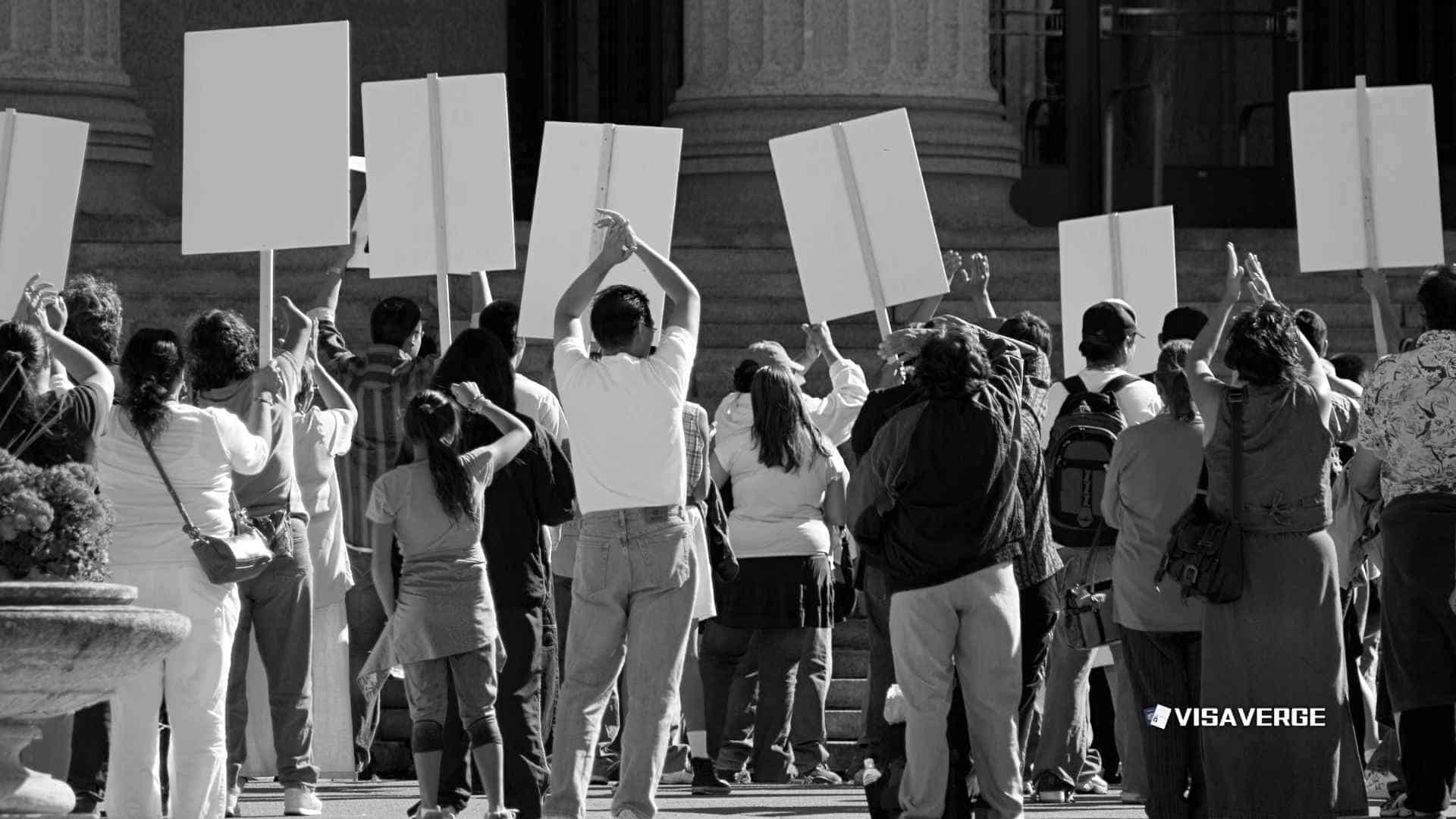
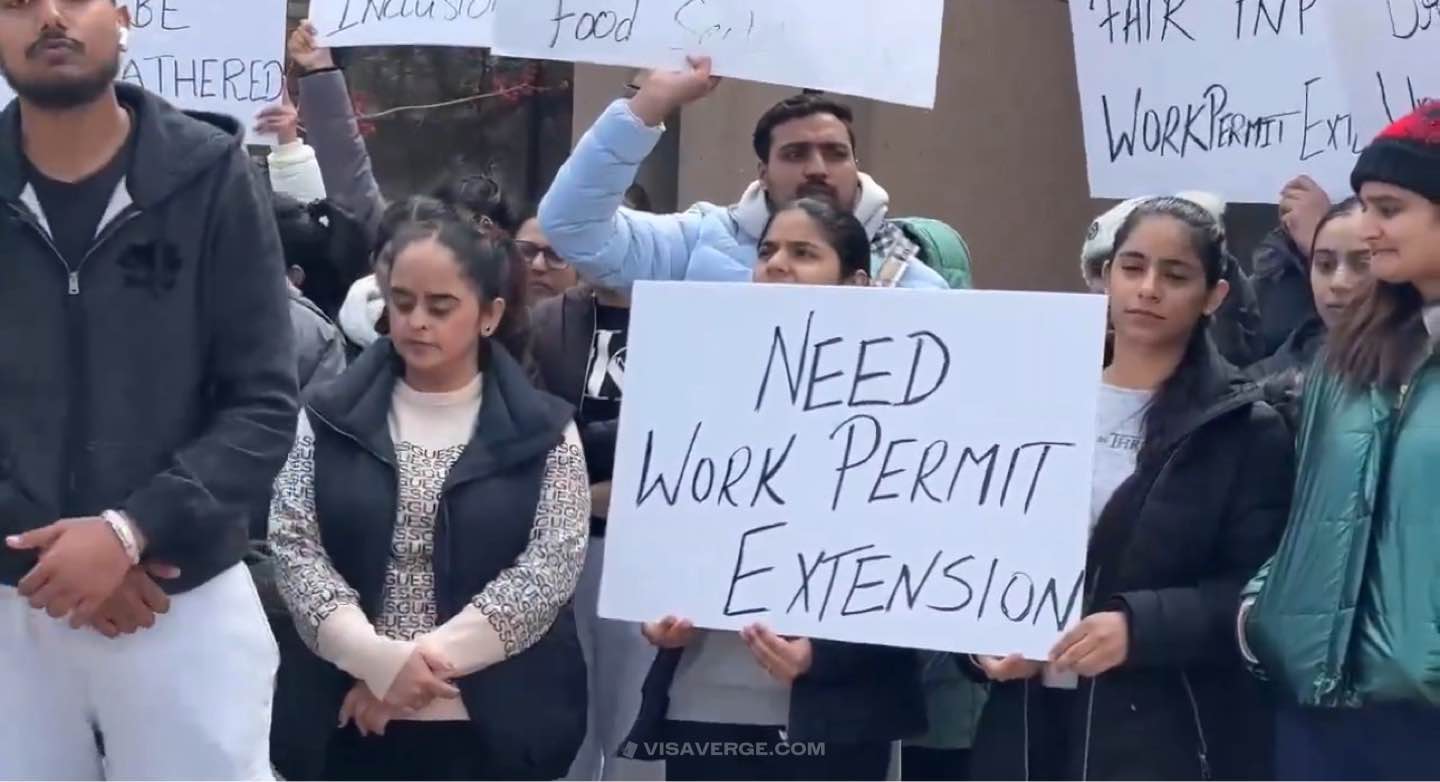
The protest began July 24 at Saddletowne Circle in northeast Calgary, near the Genesis Centre. International graduates, many from India and Punjab, had gathered to challenge rejected post-graduation work permit applications.
The agency said its initial request covered four people. After officers found two of them out of compliance with their immigration status, they expanded the checks to others at the site.
A CBSA spokesperson said the interviews were part of the follow-up process.
“The individuals were asked to attend the CBSA office later that day for a follow-up interview. Due to privacy legislation, no additional details on these cases will be provided.”
Calgary police said the protest had largely remained peaceful, but officers had received complaints about noise, blocked sidewalks, business obstructions, disturbances and public intoxication.
Police linked the check to blocked sidewalks and identification concerns
Police encountered people who were blocking sidewalks and impeding pedestrians, according to the material provided about the incident. Officers also requested identification from people who had set up tents or other structures without a permit on city property.
A Calgary police spokesperson said concerns about the identification supplied during that interaction led officers to contact the border agency for verification.
The department described the demonstration as “has largely been peaceful in nature,” while pointing to the complaints that prompted police attention. The protest later largely dispersed after the border checks, although some participants remained nearby while awaiting legal counsel.
The status review did not itself establish that all 12 people had violated immigration law. The agency identified them as possibly inadmissible and called them for interviews, where their individual circumstances could be examined.
Students were protesting rejected work permits
The demonstrators were international graduates who said their post-graduation work permit applications had been rejected. More than 1,000 international graduates were described as taking part in the weeks of demonstrations, primarily people from Punjab in India.
The dispute centres on graduates of non-credit programs delivered through public-private partnerships. Students said recruiters and institutions, including Portage College, led them to believe those programs would qualify them for post-graduation work permits.
Portage College spokesperson Andre Delaire said the college was seeking clarification from Immigration, Refugees and Citizenship Canada.
“Portage College’s understanding was that students enrolled in non-credit public-private partnership programs prior to May 15, 2024, would be eligible to apply for a Post-Graduation Work Permit. consistent with the information available at the time.”
Federal rules changed in early 2024 to exclude graduates of certain private-public partnership programs from post-graduation work permit eligibility. The students argue that officials should assess their applications under the rules that applied when they enrolled.
Roughly a dozen students have filed challenges in federal court over their rejected applications. The work permit litigation and the status reviews are separate matters, although both have unfolded around the same protest.
Possible exclusion orders could force departures
Jatin Shory, a Calgary immigration lawyer representing some of the students, said the presence of border officers at a protest site was highly unusual and intimidating. He compared the students to “sheep waiting for the fox.”
Shory said people found to be without status in Canada are commonly issued exclusion orders after CBSA interviews. Such orders require them to leave Canada immediately, confirm their departure with the agency and generally prevent them from returning for one year.
An interview referral is not the same as an exclusion order. The consequences depend on the facts of each person’s immigration record and the decision reached by the agency.
Students described the intervention as a raid and reported a climate of fear around the protest. Organizers temporarily paused the demonstration after the border officers attended the site.
The CBSA spokesperson also said privacy legislation prevented the agency from releasing further information about the 12 cases. That limits public detail about the reasons officers flagged individual protesters or the status of any interviews.
Political pressure is building around the student dispute
Alberta Premier Danielle Smith argued that student visas are temporary and said international students should return home after completing their education when they do not have a further basis to remain.
“A student visa is a temporary document to study in Canada. That was always understood. Where there is room for international students, the terms are simple. Earn your education, then return home to build a life with it. Rules are what make a fair system fair.”
The intervention came amid a harder federal immigration climate under Prime Minister Mark Carney’s government. Conservative critic Michelle Rempel Garner has called for an investigation into what she described as systemic failures and fraud in the student visa system.
Immigration Minister Metlege Diab has said the government sympathizes with the students, but they must follow established rules for status restoration or departure.
The protest’s central question remains whether graduates who enrolled before the 2024 changes received accurate information about work-permit eligibility. The federal court challenges will address some of those rejected applications, while the agency’s interviews will assess the individual immigration status of the 12 people referred after the August 12 check.
This article provides general information and is not legal advice. Consult a qualified immigration attorney about your specific case.