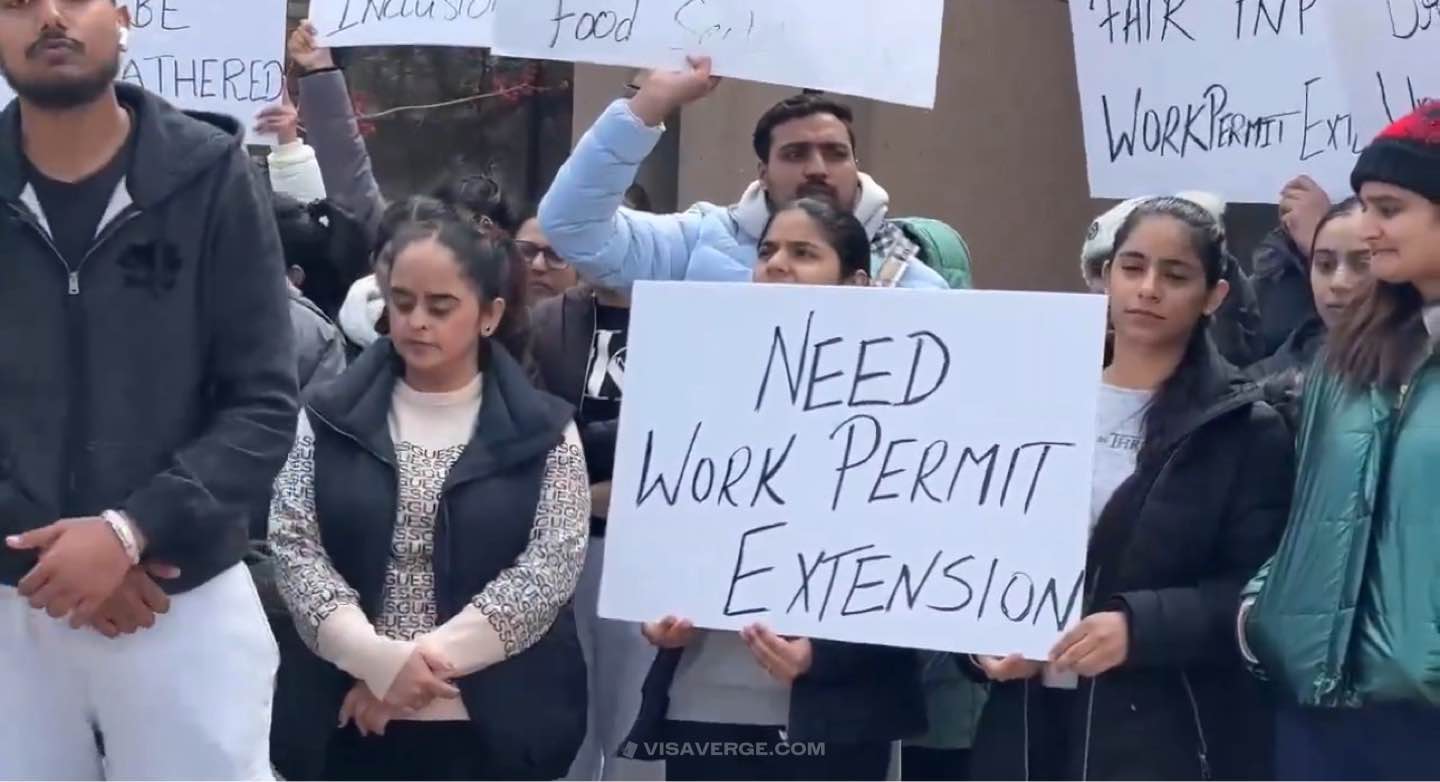
- Calgary international students began a hunger strike on July 24, 2026 after rising PGWP denials.
- Community organizers say more than 1,500 international graduates in Calgary are affected by the refusals.
- IRCC says no PGWP eligibility rules changed; it only clarified non-credit program requirements in June 2026.
A small group of international students in Calgary began a hunger strike on July 24, 2026, after a surge in Post-Graduation Work Permit denials. Community organizers say more than 1,500 international graduates in the city are affected.
The protest started in Alberta, but the fight is over paperwork. Students say the refusals have cut through plans they built around staying and working after graduation.

They say the programs were still being shown as eligible when they enrolled in 2024. That is their claim. They now say the June 2026 clarification reached back too far.
Immigration, Refugees and Citizenship Canada says nothing changed in the rule itself. In a statement dated July 17, 2026, the department said:
"There have been no changes to the eligibility criteria for the Post-Graduation Work Permit (PGWP) Program. The department updated its website in June 2026 to clarify the existing eligibility requirements related to non-credit programs of study."
The department says applicants must finish "a program of study that leads to a degree, diploma or certificate from a designated learning institution." It also says that long-standing rule excludes "general interest programs, ESL/FSL programs and other types of non-credit programs." Those categories are outside the program.
Most of the students in the dispute graduated from Portage College and the Canadian Institute of Osteopathic Therapy, known as CIOT. They studied business management and other diploma programs. Many say they paid upwards of $32,000 CAD on the understanding that the work permit would last for 3 years. The bills were steep.
A denied permit can end work status
A denied PGWP can strip a graduate of legal status to work. Students then must apply for a different visa, leave Canada or face deportation. Some have already gone to Federal Court. Jaspinder Kaur, a graduate from Punjab, India, has filed for judicial review over the department's reading of her program as non-credit.
The case has moved from classrooms to courtrooms. Fast.
Portage College says it does not decide immigration cases
In a July 21, 2026 response, Jaime Davies, Corporate Communications Manager at Portage College, said the college has "no involvement in the review, assessment, or determination of individual immigration applications" and that "applications are assessed and decided solely by IRCC."
The school says it does not make the call. The department does.
Ottawa has been tightening student routes since late 2024
Canada introduced caps on international student permits in late 2024 and kept tightening PGWP eligibility throughout 2025 to align with labor market needs. On July 15, 2026, the department also suspended the Parents and Grandparents Program for new applications.
That is part of a wider shift. Ottawa says it wants temporary residents below 5% of the total population by 2027.
The next benchmark is 2027.