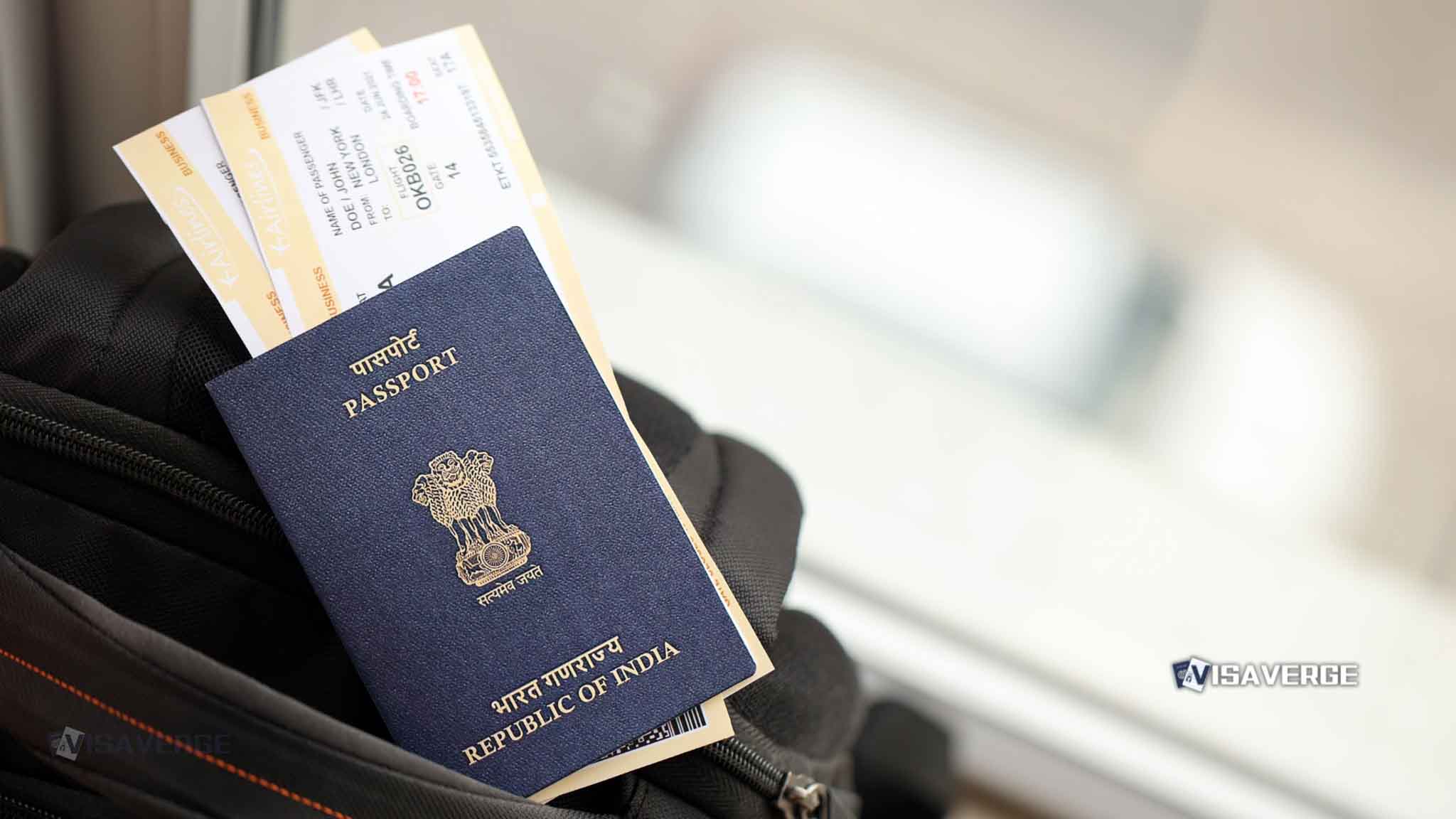
Indian visa, passport, and OCI processing in Australia is now suspended nationwide from 1 July 2026 after the VFS Global contract with India’s Ministry of External Affairs expired on 30 June 2026 and a fresh court order in India placed a stay on renewal. The pause affects applicants across Australia and leaves no announced date for service resumption.
- The suspension covers all Consular, Passport, Visa (CPV) and Overseas Citizen of India (OCI) services across Australia, including new submissions, pending applications, passport returns, urgent travel cases, and scheduled appointments.
- The Consulate General of India in Sydney published a notice confirming the temporary suspension and directing applicants to monitor the VFS Global website for updates.
- Applicants are being told to check the High Commission of India in Canberra, the Indian consulates, VFS Global, and the official Indian visa portal before attending appointments or traveling to a VFS centre.
- The official visa portal continues to direct applicants toward regular visa and eVisa pathways while the suspension remains in force.
- VFS Global centers in Australia may suspend India visa services starting July first, twenty twenty-six.
- Uncertainty over renewed service contracts affects document lodgment, passport renewals, and OCI applications across Australia.
- Travelers may still utilize the online eVisa route as a secondary option for eligible categories.
(AUSTRALIA) — India Visa Services in Australia may be disrupted from July 1, 2026, with reports indicating that VFS Global centres handling India-related applications could suspend services until further notice amid uncertainty over VFS Global’s renewed contract.
Free toolDS-160 Form Filling Online Helper ToolThe reported interruption affects the mechanics of applying and receiving documents, not the rules for who qualifies. Applicants with appointments, pending files, or passports already submitted through India Visa Services should verify their status before travelling to a centre from July 1, 2026.

People most exposed to the disruption include Australian citizens planning trips to India, Indian passport holders seeking renewal, families applying for Overseas Citizen of India status, and applicants waiting for visa, passport, surrender certificate or police clearance services. Business travellers, school holiday travellers and people with medical or family emergency trips also face immediate questions about timing.
| India | China | ROW | |
|---|---|---|---|
| EB-1 | Feb 01, 2023 ▲109d | Jul 01, 2023 | Current |
| EB-2 | Nov 01, 2013 | Oct 01, 2021 ▲30d | Jan 01, 2025 |
| EB-3 | Jan 01, 2014 | Jan 08, 2022 ▲7d | May 15, 2024 ▼109d |
| F-1 | Jan 22, 2020 | Jan 22, 2020 | Jan 22, 2020 |
| F-2A | Sep 22, 2026 ▲31d | Sep 22, 2026 ▲31d | Sep 22, 2026 ▲31d |
Reports tied to uncertainty over VFS Global’s contract
Reports tied the disruption to uncertainty over the outsourcing arrangement under which VFS Global has been handling India’s consular, passport and visa services in Australia. Services routed through VFS Global include regular visa applications, passport renewals, OCI applications, surrender certificates, police clearance certificates, attestation work, appointment booking, application tracking and passport return.
That leaves applicants with a practical problem rather than a policy one. A visa-rule change affects eligibility, while a service disruption affects how documents are lodged, how appointments are attended, how passports are returned and how consular formalities are completed.
eVisa route may still be open despite disruption
Applicants should not assume every India entry option has closed. Regular or paper visas are processed through Indian missions or posts, while eVisas are handled online through the Bureau of Immigration under India’s Ministry of Home Affairs, so some travellers may still have an online route even if VFS Global’s in-person services are interrupted.
Travellers planning to enter India in July or August 2026 need to separate those two systems. A disruption at India Visa Services in Australia could block document submission and appointments for regular visas or consular work, but it does not automatically mean an applicant is ineligible for an eVisa.
That distinction matters most for Australian citizens whose trips are close. Tourism, business, medical treatment, conferences and family visits may fit eVisa categories, but travellers still need to check whether their nationality, purpose of travel and case type fall within the current online rules before changing plans.
Applicants with VFS appointments from July 1
Applicants with VFS appointments from July 1 onward face a narrower set of decisions. They should check whether the centre is open, whether the appointment still appears in the system, whether the location has changed, whether the service category is being accepted and whether passport collection or courier delivery is operating before setting out.
Long-distance travel raises the stakes. Anyone crossing cities for an appointment should confirm again on the morning of travel rather than relying on screenshots, forwarded messages or social media posts that may not match official updates.
People whose passports are already with VFS Global face the most urgent risk because a delay in return can affect travel, work, study and other immigration filings. Those applicants should keep receipts and reference numbers ready, track the application through the official system if available, watch for email and SMS updates, and avoid filing a duplicate application unless instructed.
Urgent cases need direct confirmation rather than assumptions. Applicants waiting on passport return, OCI delivery or document pickup should contact VFS Global or the relevant Indian mission if travel is imminent and preserve proof of emergency travel, itineraries, payment receipts and courier tracking details.
Separate issues for OCI and Indian passport applicants
OCI applicants have a separate set of issues because the process can involve biometric or document submission appointments, acknowledgement, delivery and update services. Families should check whether existing appointments remain valid, whether pickup or delivery is affected, and whether minor-child OCI cases need rescheduling if service counters stop operating.
Indian passport applicants also need to confirm whether renewals are being accepted, whether urgent or Tatkaal services are affected, whether police verification or processing has already started, and whether a printed or dispatched passport is still moving through the return channel. People with passports close to expiry and near-term travel plans have little margin for delay.
Applicants seeking police clearance certificates for migration, employment or study may also be caught if India Visa Services operations pause at VFS Global centres. The same applies to surrender certificates, renunciation services, attestation work and Global Entry Program-related PCC requests, all of which depend on the outsourced service chain rather than a simple online eligibility check.
What travellers with fixed dates should avoid
Travellers with fixed dates should resist two common errors: cancelling flights too quickly or assuming everything will proceed normally. Before changing tickets, they should confirm whether an existing visa or OCI remains valid, whether an eVisa is available, whether the passport has been returned, and whether the airline requires any specific document validity.
That caution extends to business travellers and emergency cases. Someone travelling for a funeral, urgent family matter or medical reason may still need a regular visa, OCI, passport renewal or another consular document that an online eVisa cannot replace, so each case turns on the document type rather than the urgency alone.
Watch out for unofficial agents and intermediaries
Applicants should also be alert to confusion in the private market. Service disruption often creates an opening for agents or intermediaries to promise guaranteed urgent processing, special access to VFS appointments, unofficial passport retrieval or paid “emergency eVisa” handling.
India’s official visa portal warns that the Government of India has not authorised any agent or intermediary to charge a facilitation fee for emergency or express visa/eVisa services. People dealing with India Visa Services should therefore rely on official channels rather than unofficial payments or promises of special access.
The safest verification points are the High Commission of India in Canberra, the Consulate General of India in Sydney, the Consulate General of India in Melbourne, the Consulate General of India in Perth, VFS Global’s India services pages for Australia, the official Indian visa portal, the official eVisa portal, and direct email or SMS communication tied to the applicant’s appointment or file.
Immediate checks to reduce risk
Several immediate checks can reduce the chance of a missed trip or a wasted journey. Applicants should verify whether their appointment is still visible, whether their service category is active, whether courier return is running, whether their passport remains with VFS Global or has moved onward, and whether their existing visa or OCI already covers the planned travel.
Duplicate filings can make a bad situation worse. Applicants with pending cases should keep one clean record of receipts, appointment confirmations, reference numbers and communications, then wait for direction from the official channel handling the file rather than sending in a second application that can complicate tracking.
Action sequence for imminent travel
Anyone travelling in the next few days needs to act in sequence. First check whether the trip can proceed on an existing visa or OCI, then confirm whether an eVisa route is open if a fresh document is needed, and only after that assess whether a VFS Global appointment or passport return delay changes the travel date.
Public confirmation of the full operational impact was not clearly available as the disruption reports emerged, leaving applicants to sort verified information from rumor. Until Indian missions or VFS Global publish clear direction, the burden stays on travellers and pending applicants to check each appointment, each document and each travel plan against official updates before they move.