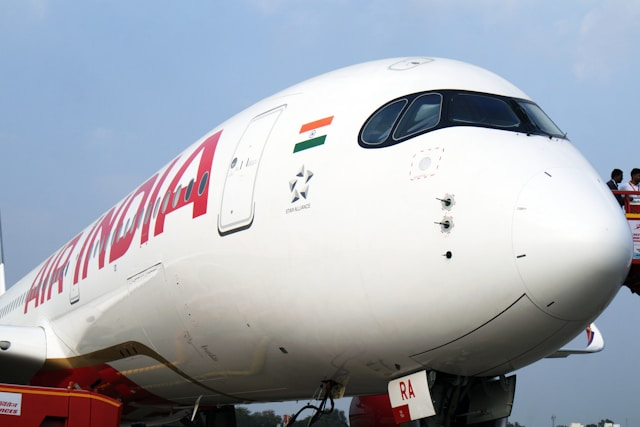
- An Air India A320 briefly lost control after all three hydraulic systems failed simultaneously.
- The aircraft registration VT-EXO dropped about 300 feet before recovery occurred within seconds.
- Investigators are checking pressure sensors and evaluating crew drug screening results for the inquiry.
Airbus’s preliminary analysis found that an Air India A320 briefly lost elevator and aileron control during flight AI2379 from Phuket to Delhi on August 4, 2026, as all three hydraulic systems showed failures. The aircraft dropped about 300 feet before recovering and landing safely in Delhi.
The control surfaces became unavailable for roughly four seconds. The first officer applied a full nose-down input, but Airbus recorded “no direct response” from the elevators and ailerons before hydraulic power returned.
The aircraft, registration VT-EXO, departed Phuket International Airport for Indira Gandhi International Airport. Its control response returned within seconds.
One technical account said all three systems failed within two seconds and recovered in seven seconds. Another described a complete loss lasting about six seconds, with associated failures. Airbus’s analysis did not establish a final cause.
The sudden change in pitch sent passengers and crew upward inside the cabin. Preliminary accounts differ on the number injured: one account listed eight passengers and four crew members, while other accounts put the total at 24.
The Indian government classified the event as a serious incident. The Aircraft Accident Investigation Bureau is leading the investigation.
Airbus has asked the airline to inspect the aircraft’s systems and sensors. It also requested operational checks of the hydraulic circuits and further technical information.
“In accordance with ICAO Annex 13, Airbus is providing technical assistance to the relevant investigating authorities. We are actively supporting the airline and will provide further information as it becomes available. A team of specialists is being dispatched to assist with the investigation.”
An Airbus spokesperson issued the statement as investigators examined whether a pressure sensor or pressure switch may have triggered the cascade. That possibility remains unconfirmed.
The control loss lasted only seconds, but the aircraft descended 300 feet
The elevators control pitch, while the ailerons control roll. Airbus’s assessment said both became unavailable after failures affected all three hydraulic circuits.
The first officer’s nose-down command produced no immediate movement from those surfaces. Power returned within seconds, allowing the crew to regain control and complete the flight to Delhi.
The reported recovery time varies slightly. One analysis placed all three systems back online by about 9:32:51 IST, while another said control returned about five seconds later.
| Reported detail | Finding |
|---|---|
| Aircraft | Airbus A320, registration VT-EXO |
| Route | Phuket International Airport to Indira Gandhi International Airport |
| Date | August 4, 2026 |
| Altitude loss | About 300 feet |
| Control-surface outage | About four to six seconds |
| Hydraulic recovery | Seven seconds in one technical account |
The differing intervals reflect preliminary descriptions of the same event. Neither establishes why the failures occurred.
Investigators are checking sensors, recorders and crew screening
The Aircraft Accident Investigation Bureau secured the flight data recorder and cockpit voice recorder for examination. Those devices can show the sequence of warnings, control inputs and system responses during the altitude loss.
Investigators are also reviewing the aircraft’s sensors and pressure-switch signals. Airbus’s initial assessment points toward a cascading technical failure rather than turbulence alone, but the investigation has not publicly determined the root cause.
The captain’s initial screening for psychoactive substances returned a non-negative result. Further laboratory testing was prompted, adding another line of inquiry to the investigation.
The event involved no reported loss of control after the systems recovered. The aircraft landed safely in Delhi.
Airbus is assisting the Indian investigation
The manufacturer is providing technical assistance under ICAO Annex 13 and dispatching specialists to support the airline and investigating authorities. It has not announced a final explanation for the simultaneous failures.
The review also seeks more information from Air India and requires operational checks of the affected systems. Those checks will help investigators compare recorded warnings with the aircraft’s physical condition.
The injury figures remain unsettled in the preliminary material. One account recorded eight passengers and four crew members injured, while other accounts cited 24 people overall. The cabin injuries followed the aircraft’s abrupt pitch change and altitude loss.
The Indian government’s serious-incident classification keeps the case within the formal investigation process. The recorders, system inspections and laboratory testing will now shape the next findings.