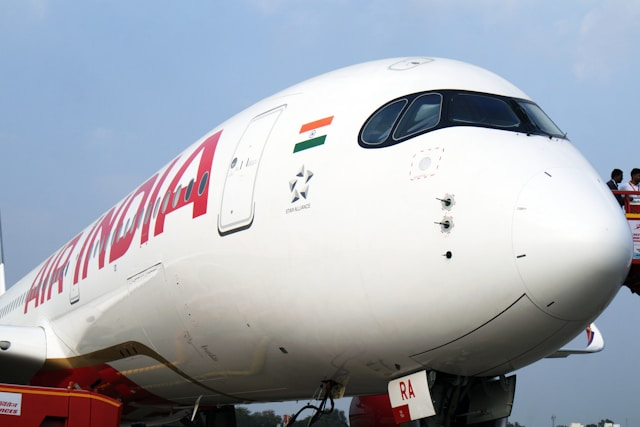
India’s aviation ministry said the pilot-in-command’s screening test in the Air India AI2379 turbulence case “indicated a result requiring confirmatory testing,” and the sample has been sent to a designated laboratory with the final report still awaited. The update comes as the DGCA continues its probe into the August 4, 2026 incident, including a review of whether a technical fault contributed to the sudden altitude loss that injured 17 people.
- The ministry said the pilot-in-command’s psychoactive-substance screening “indicated a result requiring confirmatory testing,” moving the case beyond the initial test stage and into lab verification.
- Air India said on Sunday that it has not received the results of the post-flight dope test and cannot comment on findings not shared with the airline.
- The DGCA investigation now includes whether a technical fault played a role in the AI2379 altitude loss, and the aircraft’s black box has been secured.
- The turbulence on the Phuket-Delhi flight reportedly caused a drop of about 300 feet and injured 17 people, including four cabin crew members.
- Air India flight AI-twenty-three-seventy-nine landed safely in Delhi after experiencing severe clear air turbulence during its Phuket-to-Delhi journey.
- The aircraft underwent a sudden altitude drop of up to four hundred twenty-five feet, injuring fifteen individuals.
- The DGCA has launched a formal investigation to determine if the cause was atmospheric conditions or a technical fault.
Air India flight AI-2379 landed safely in Delhi on Tuesday after sudden clear air turbulence injured passengers and cabin crew shortly before arrival. All 134 passengers and crew members disembarked at Indira Gandhi International Airport without a major incident.
Free toolB1/B2 Tourist Visa Stay Calculator onlineThe aircraft experienced a sudden altitude change during the Phuket-to-Delhi flight on Tuesday, August 4, 2026. Flight data indicated a drop of roughly 300 feet, while some readings showed a momentary loss of up to 425 feet.
Passengers said the jolt lasted 2–3 minutes. At least 15 people reportedly sustained minor injuries, including 11 passengers and four cabin crew members. Delhi airport sources said two crew members required treatment.
The airline described the episode as a “brief in-flight turbulence-related event.” It said there were no serious injuries as of its statement.
The aircraft stabilized and continued toward Delhi. It arrived at approximately 11:07 AM IST, 43 minutes ahead of its scheduled arrival.
An Airbus A320neo, registered as VT-EXO, operated the flight. The listed onboard figures included 134 passengers and 8 crew members, although some reports cited up to 137 passengers.
The altitude change has prompted a technical investigation
The Directorate General of Civil Aviation has launched a formal investigation into the event. Director General Vir Vikram Yadav is leading the regulator, which is examining whether atmospheric conditions, a technical problem or both contributed to the altitude loss.
A senior DGCA official said the pilot reported a severe injury to one cabin crew member, an injury to another and minor injuries to several passengers. The report linked those injuries to the sudden loss of approximately 300 feet.
The official also said investigators suspected a “transient technical fault.”
“Pilot-in-Command reported a severe injury to one cabin crew member, injury to another and minor injuries to a few passengers due to a sudden loss of approximately 300 feet altitude. a transient technical fault is also suspected.”
The reported turbulence likely involved clear air turbulence, a phenomenon that can occur without visible clouds or other weather indicators. Abrupt changes in wind speed or direction at high altitude can produce the effect.
Officials said the phenomenon is invisible to radar and often occurs between 30,000 and 40,000 feet. That can leave pilots with little or no advance warning before an aircraft encounters it.
The investigation will assess the flight data alongside the reported atmospheric conditions. The regulator is also examining whether a transient fault contributed to the momentary altitude change.
Medical teams treated passengers and crew after landing
Airline medical personnel examined affected passengers and crew at the airport as a precaution. Several hospitals also assessed people who reported injuries after the turbulence encounter.
Medanta Medical Centre, located at the airport, provided immediate assessment. Fortis Hospital, Vasant Kunj, activated a “Code Yellow” emergency response protocol.
Seven passengers were admitted there for radiological investigations, including CT scans and MRIs. The Indian Spinal Injuries Centre received passengers with neck and back complaints.
Dr. Ujjwal Vaid, head of the Emergency Department at Fortis Vasant Kunj, said the facility evaluated four crew members and three passengers. He said all seven were conscious, oriented and medically stable.
“We received 4 crew members and 3 passengers. We evaluated them clinically. All of them were conscious and oriented, and their vitals were stable. No passenger showed any major injury.”
At least five passengers had been discharged by the evening of August 4. One severely injured cabin crew member remained under observation for neck-related trauma.
The medical updates describe injuries requiring assessment but no confirmed major passenger injury. The airline said no serious injuries had occurred, while treatment and observation continued.
One passenger traveling with his family described the experience as a “rebirth.” He said his father was thrown into the air and hit the aircraft ceiling when the jolt occurred because the seatbelt sign was off.
The account illustrates the danger of an abrupt turbulence encounter inside an otherwise clear cabin. An unrestrained passenger can be lifted from a seat even when there is little visible warning outside the aircraft.
The aircraft will undergo inspection before its next operation
The aircraft will receive a routine post-flight inspection for possible minor damage. The inspection follows the reported altitude change and the injuries sustained during the flight.
The airline said it is cooperating with the relevant authorities during the investigation. Senjam Raj Sekhar, the carrier’s Global Head of Communications, said the company was providing support to affected families and cooperating fully with the inquiry.
The airline’s medical team examined passengers and crew after they disembarked. The carrier also continued coordinating care for those who required hospital assessment.
The event occurred during a leadership transition at the airline. Campbell Wilson, its CEO and managing director, is serving his final months and is set to leave in September 2026.
An interim committee including Chairman N. Chandrasekaran and Executive Advisor Pradeep Singh Kharola is overseeing operations during the transition. Yadav, who was appointed DGCA director general in early 2026, is overseeing the regulator’s response.
The airline spokesperson said the aircraft experienced a momentary change in altitude during cruise and landed safely in Delhi. The statement also confirmed that all passengers and crew had safely disembarked.
“Air India confirms that flight AI2379, operating from Phuket to Delhi on 4 August, experienced a brief in-flight turbulence-related event during cruise, resulting in a momentary change in altitude. The aircraft landed safely in Delhi, and all passengers and crew have safely disembarked. There have been no serious injuries as of now.”
Investigators will now review the altitude deviation, injury reports and the suspected technical fault alongside the weather conditions. The post-flight inspection will determine whether the aircraft sustained any minor damage before it returns to service.