The Supreme Court issued a final ruling in late June 2026 rejecting President Donald Trump’s birthright citizenship executive order, holding that the President cannot change the constitutional definition of citizenship by executive action. The decision leaves the 14th Amendment rule intact and confirms that children born in the United States remain protected as U.S. citizens regardless of their parents’ immigration status.
- The Court’s decision in Trump v. Barbara came after oral arguments on April 1, 2026, and it found the executive order unconstitutional and never legally valid.
- The order, titled “Protecting the Meaning and Value of American Citizenship” (Executive Order No. 14,160), had targeted children born after February 20, 2025 to mothers unlawfully present or on temporary visas if the father was not a citizen or lawful permanent resident.
- A federal court in New Hampshire also certified a nationwide class action protecting all babies born in the United States who would have been affected by the order.
- Despite the ruling, lawmakers continue pushing the Birthright Citizenship Act of 2025 (S. 304 / H.R. 569), which has 2 Senate and 51 House cosponsors.
The 25-day window for President Donald Trump to seek Supreme Court rehearing on the birthright citizenship case closed on July 27, 2026 without any petition being filed on the docket. That leaves the Court’s June 30 6-3 ruling striking down the executive order as the controlling decision.
- Under Supreme Court rules, the rehearing petition deadline fell on Monday, July 27, 2026, after the original 25-day period from the June 30 decision.
- No rehearing petition appeared on the Court’s electronic docket in Trump v. Barbara by the deadline.
- Trump said on July 8 that he would seek rehearing “IMMEDIATELY,” and called the decision “will destroy America,” but no filing followed.
- The Supreme Court has not agreed to rehear an argued case in more than 50 years, and a successful petition would have needed five votes.
1 earlier update
The Supreme Court issued a final ruling in late June 2026 rejecting President Donald Trump’s birthright citizenship executive order, holding that the President cannot change the constitutional definition of citizenship by executive action. The decision leaves the 14th Amendment rule intact and confirms that children born in the United States remain protected as U.S. citizens regardless of their parents’ immigration status.
Free toolSubstantial Presence Test Calculator- The Court’s decision in Trump v. Barbara came after oral arguments on April 1, 2026, and it found the executive order unconstitutional and never legally valid.
- The order, titled “Protecting the Meaning and Value of American Citizenship” (Executive Order No. 14,160), had targeted children born after February 20, 2025 to mothers unlawfully present or on temporary visas if the father was not a citizen or lawful permanent resident.
- A federal court in New Hampshire also certified a nationwide class action protecting all babies born in the United States who would have been affected by the order.
- Despite the ruling, lawmakers continue pushing the Birthright Citizenship Act of 2025 (S. 304 / H.R. 569), which has 2 Senate and 51 House cosponsors.
- U.S. Supreme Court justices signaled a likely rejection of the executive order targeting birthright citizenship during oral arguments.
- The administration’s legal theory faces a steep path with a potential 7-2 or 8-1 ruling against the government.
- Chief Justice Roberts emphasized that while the world changes, the Constitution remains the same regarding long-settled doctrine.
(UNITED STATES) — U.S. Supreme Court justices signaled at oral arguments on April 1, 2026 that a majority is likely to reject President Trump’s bid to end birthright citizenship through Executive Order No. 14,160, a move that would deny citizenship to some children born on U.S. soil to undocumented immigrants or parents on temporary visas.
The case, Trump v. Barbara, centers on whether a president can narrow the reach of the Fourteenth Amendment by executive order. Arguments suggested the administration faced a steep path, with the court’s questioning pointing toward a ruling against the order and legal analysis indicating a 7-2 or 8-1 lean against the government.
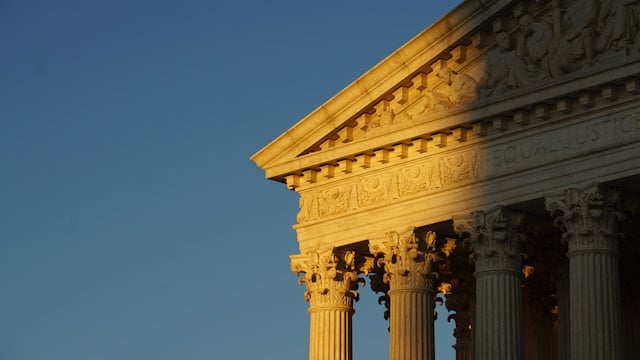
Chief Justice John Roberts framed the dispute in a line that cut through the administration’s effort to revisit long-settled doctrine. “It’s a new world. It’s the same Constitution,” Roberts said.
Trump signed the order on January 20, 2025, under the title “Protecting the Meaning and Value of American Citizenship.” It directed federal agencies not to recognize citizenship for children born after February 20, 2025 if the mother was unlawfully present and the father was neither a U.S. citizen nor a lawful permanent resident, or if the mother was on temporary lawful status and the father lacked citizenship or lawful permanent resident status.
The order rests on a narrower reading of the Citizenship Clause than the one courts have applied for more than a century. It argues that those children are not “subject to the jurisdiction” of the United States within the meaning of the Fourteenth Amendment because that phrase requires “complete” political jurisdiction, direct allegiance, and protection, and excludes children of undocumented immigrants or temporary visitors who allegedly lack permanent domicile.
Challengers told the court that the order collides with the amendment’s settled rule of citizenship by birth in the United States. Cecillia Wang, arguing for the families challenging the policy, said the order violates the Fourteenth Amendment’s “fixed bright-line” rule, longstanding precedent including United States v. Wong Kim Ark (1898), and 8 U.S.C. § 1401(a).
Wong Kim Ark sat at the center of the argument. In that case, Justice Horace Gray wrote that the Fourteenth Amendment affirms citizenship by birth within U.S. territory for children of resident aliens, a reading the challengers said leaves little room for the executive branch to carve out new exceptions for children born in the country.
Several justices pressed the administration on both history and doctrine. They returned repeatedly to the country’s long practice of recognizing birthright citizenship and to the force of Wong Kim Ark, asking how the White House could recast those authorities through presidential action alone.
Administration lawyer Sauer tried to distinguish the precedent by focusing on the status of Wong’s parents. Wong’s parents, he said, were domiciled in the United States, unlike undocumented parents in the case now before the court.
Justice Clarence Thomas highlighted that distinction during the hearing. The exchange exposed the administration’s central effort to separate children of resident aliens, who fell within the 1898 ruling, from children born to parents the government says lack the kind of enduring legal presence that brings them within the amendment’s command.
Even so, the questioning suggested that several justices saw the administration’s theory as difficult to square with the text and structure of the Citizenship Clause. Tough questions reached both sides, but the pressure on the government focused on whether any historical practice or Supreme Court precedent allows a president to redraw the constitutional line by executive order.
Lower courts have already rejected the order at every step. U.S. District Judge Joseph Laplante of the District of New Hampshire issued a preliminary injunction on July 10, 2025, blocking enforcement nationwide for affected children after finding that the order contradicted the Fourteenth Amendment and Wong Kim Ark.
That ruling did not stand alone. Other lower courts also struck down the policy, and the First Circuit appeal went against the administration before the Supreme Court stepped in and granted certiorari before judgment.
The case arrived at the justices with an unusual cast of parties and stakes measured in ordinary government documents. Families suing under pseudonyms including “Barbara” and “Mark” said their U.S.-born children were denied citizenship-linked benefits such as Social Security, SNAP, and Medicaid because of the order’s attempt to redefine who counts as an American citizen at birth.
Those families gave the case its name, but the legal fight reaches far beyond the named plaintiffs. Challengers told the court the order, if upheld, would undermine citizenship for millions across generations by allowing the government to deny formal recognition to children born in the United States based on their parents’ status.
The administration answered that the order restores the Fourteenth Amendment’s “original meaning.” Government lawyers pointed to decades of commentary that, in their view, exclude children of temporary visitors or illegal entrants from automatic citizenship at birth, even though that position runs against the reading challengers say the Supreme Court settled long ago.
That dispute over original meaning ran through nearly every stage of the hearing. The justices’ questions showed concern not only with the historical record the administration invoked, but also with the practical claim that agencies across the federal government could stop treating a class of U.S.-born children as citizens while the constitutional text remains unchanged.
Birthright citizenship has long been treated as one of the clearest guarantees in the Constitution, and the administration’s order tests whether that understanding can be narrowed without an amendment or a new act of Congress. By tying citizenship to the mother’s immigration status and the father’s citizenship or lawful permanent resident status, Executive Order No. 14,160 asked the court to accept a rule that would mark some children born in the United States as outside the Constitution’s protection from the first day of life.
The order’s deadlines sharpened that legal question into an immediate one. Because it applied to children born after February 20, 2025, the litigation quickly became a fight over whether federal agencies could refuse recognition at birth, affecting records, eligibility, and access to public benefits for children who challengers say fall squarely within the Fourteenth Amendment.
Trump attended part of the arguments, a historic first, bringing added attention to a case that combines constitutional text, presidential power, and immigration policy in a direct clash. Yet the hearing itself turned less on politics than on whether the Constitution’s citizenship guarantee can bear the weight the administration has placed on the phrase “subject to the jurisdiction.”
If the justices follow the direction their questions suggested on April 1, 2026, the court will leave intact the longstanding rule that birth on U.S. soil confers citizenship in the circumstances challenged here, and it will do so over an order titled “Protecting the Meaning and Value of American Citizenship” that opponents say would do the opposite.