- India’s Ministry of Home Affairs mandates disclosure of foreign passports for those seeking citizenship under the Citizenship Amendment Act.
- Applicants must surrender foreign travel documents within fifteen days of approval to comply with dual citizenship restrictions.
- Simultaneously, U.S. immigration agencies are tightening signature verification rules and moving back visa priority dates for Indian nationals.
(INDIA) — India’s Ministry of Home Affairs issued a gazette notification on May 18, 2026 amending the Citizenship Rules, 2009 and making disclosure of current or expired foreign passports mandatory for some people seeking Indian citizenship under the Citizenship Amendment Act, 2019.
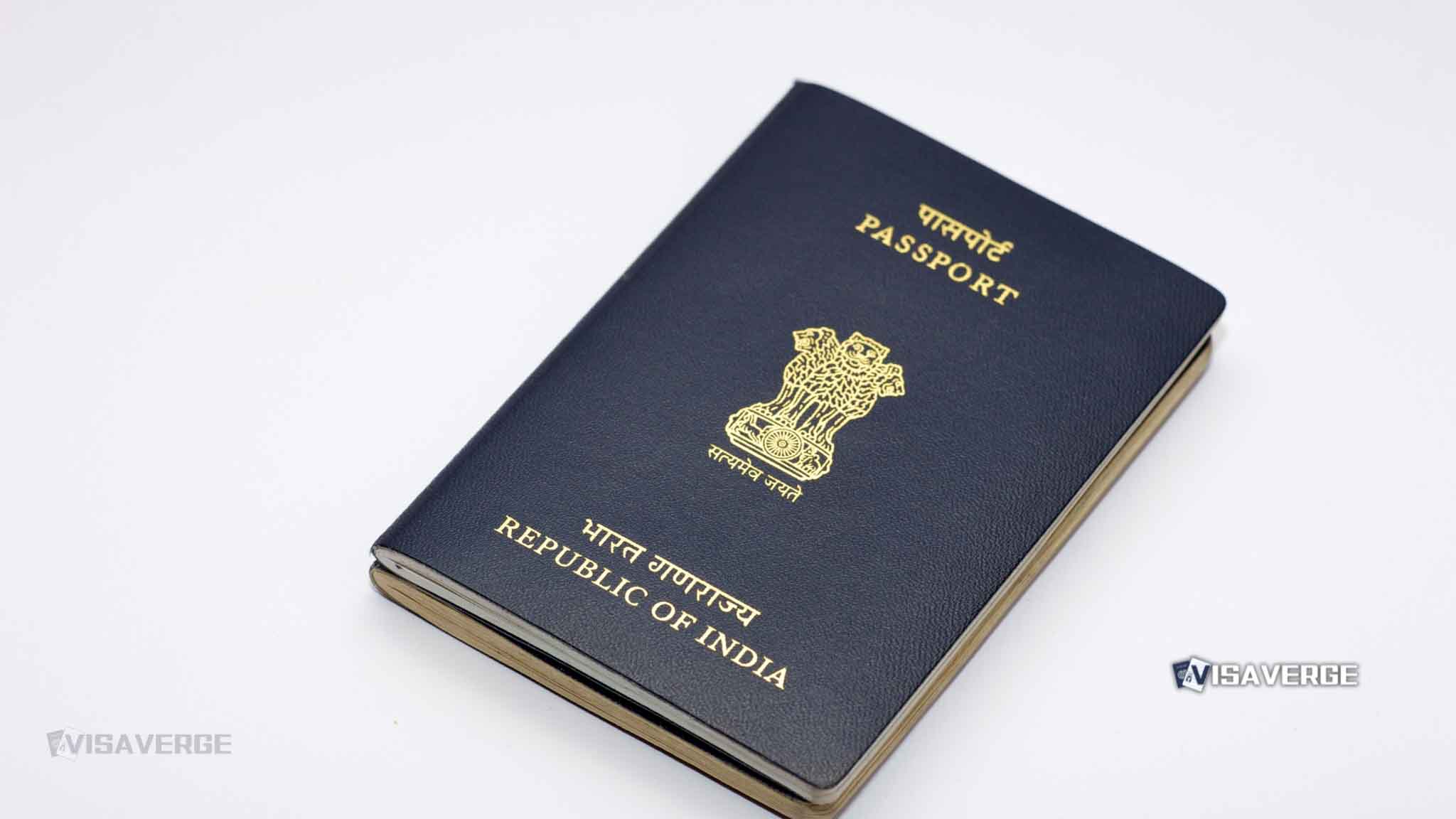
The new Citizenship (Amendment) Rules, 2026 require applicants to file an affidavit stating whether they hold, or have held, a valid or expired passport issued by Pakistan, Afghanistan, or Bangladesh. Anyone with such a document must provide the passport number, date and place of issue, and expiry date, then give an undertaking to surrender it within 15 days of citizenship approval.

MHA framed the change as a documentation and verification measure tied to India’s bar on dual citizenship. The ministry said the amendment provides “greater procedural clarity” and “strengthens document verification.”
Free toolSubstantial Presence Test CalculatorThe rule applies to non-Muslim minorities from the three neighboring countries, namely Hindus, Sikhs, Buddhists, Jains, Parsis, and Christians, who entered India before December 31, 2014. It marks a procedural change from the initial 2024 rollout, which had been more lenient toward undocumented migrants.
Applicants who possess those passports must surrender them to the concerned Senior Superintendent of Post after approval. The requirement covers expired passports as well as valid ones, widening the paper trail that citizenship applicants must account for.
An MHA official said on May 19, 2026 that “The amendment is intended to streamline documentation requirements and strengthen procedural clarity. it provides a practical safeguard that promotes transparency.” The ministry’s notification and related materials appear on [MHA’s website](https://mha.gov.in).
The timing coincides with a separate tightening of immigration procedures in the United States, where federal agencies published new rules and warnings this month on signatures, vetting and visa availability. Those measures do not govern Indian citizenship cases, but they affect Indian nationals dealing with U.S. immigration filings and employment-based visa queues.
The Department of Homeland Security published an interim final rule on May 11, 2026, effective July 10, 2026, that codifies immigration officers’ discretion to deny improperly signed requests. DHS said, “DHS is issuing this rule to codify the authority for immigration officers to exercise discretion to deny improperly signed requests. to reduce the risks that are presented by invalid signatures identified after a benefit request is accepted.”
That change means applicants can no longer fix a signature defect after filing if the problem surfaces later. A request with a copy-pasted or digitally generated signature that does not meet USCIS standards can be rejected or denied, with filing fees and priority dates lost.
USCIS had already signaled a harder line in a policy alert dated May 8, 2026. The agency said, “Deferred action is a limited and extraordinary form of prosecutorial discretion. individual’s reliance interests do not outweigh the government’s interest in ensuring the integrity of the legal immigration system.” USCIS posted those materials in its [newsroom](https://www.uscis.gov/newsroom).
Another pressure point opened on May 13, 2026, when the U.S. State Department released the June 2026 Visa Bulletin and moved cutoff dates backward for Indian nationals in two employment-based categories. EB-2 India retrogressed by more than 10 months to September 1, 2013, while EB-1 India retrogressed by three and a half months to December 15, 2022.
The State Department warned that “further retrogressions. or making the categories unavailable, may be necessary before the fiscal year ends on September 30, 2026.” The bulletin is available on [travel.state.gov](https://travel.state.gov).
Taken together, the Indian and U.S. changes point to a month of tighter procedural control over citizenship and immigration records. In India, the focus falls on identity history, documentary consistency and the surrender of prior nationality documents; in the United States, the focus falls on filing integrity and shrinking availability in some visa categories.
The Indian rule is narrow in who it covers but exacting in what it asks. A person applying under the CAA route now has to disclose whether a passport from Pakistan, Afghanistan, or Bangladesh exists at all, even if it expired long ago, and then commit to handing it over within the stated deadline once Indian citizenship is approved.
That affidavit requirement gives the government a more detailed record of prior nationality documents at the point of adjudication. It also reinforces the long-standing rule against dual citizenship by tying approval to a written undertaking to surrender the old passport promptly.
The notification identifies a clear sequence: declare the document, provide its details, and surrender it within 15 days after approval. Missing or inconsistent information could carry weight in the verification process because the rule specifically centers document disclosure as part of the application itself.
People affected by the MHA change include applicants who may have entered India years ago and no longer use those passports for travel. Under the amended framework, the age of the document does not remove the duty to report it.
The practical effect reaches beyond citizenship paperwork. A foreign passport often acts as both an identity record and a travel document, and once citizenship is approved the applicant must move quickly to surrender it, leaving little room for delay in handling personal records.
In the United States, the signature rule carries its own immediate risks for immigrants, employers and attorneys preparing benefit requests. A filing that once might have been salvaged after acceptance now faces outright rejection or denial if the signature does not satisfy agency standards from the start.
Priority dates matter most in backlogged categories because they determine place in line. Losing one after a defective filing can reset a case’s position at the same time that visa bulletin dates for Indian nationals move backward.
That combination is especially sharp in EB-1 and EB-2 cases, where the June 2026 bulletin pushed Indian cutoff dates to December 15, 2022 and September 1, 2013. The State Department’s warning about further retrogression or category unavailability before September 30, 2026 adds another layer of uncertainty for pending and planned filings.
Indian applicants dealing with both systems now face stricter documentation trails on two fronts. One side demands disclosure and surrender of past nationality papers under the Citizenship Amendment Rules; the other demands near-perfect filing execution while visa availability tightens.
The official federal rule on signatures appears in the [Federal Register](https://www.federalregister.gov). Its publication date, May 11, 2026, and effective date, July 10, 2026, leave a short window for applicants and representatives to review filing practices before the standard hardens.
The Indian notification lays out a similarly direct timeline. MHA published it on May 18, 2026, and the core compliance step after approval is surrender of the passport within 15 days.
Much of the policy thrust rests on records. India’s amendment seeks a fuller account of nationality documents linked to applicants from Pakistan, Afghanistan and Bangladesh, while U.S. agencies are pressing for stricter authentication of benefit requests and signaling that discretionary relief will remain narrow.
Those shifts arrive at a moment when citizenship and immigration systems are leaning more heavily on paperwork discipline than post-filing flexibility. A disclosed passport number, a matching issue date, a valid handwritten or accepted signature, and a current priority date can now shape outcomes as much as the underlying eligibility itself.
The month’s official language reflects that approach. MHA spoke of “greater procedural clarity” and stronger verification, while USCIS said “the government’s interest in ensuring the integrity of the legal immigration system” outweighs reliance interests, a phrase that captures the harder edge applicants now face on both sides.