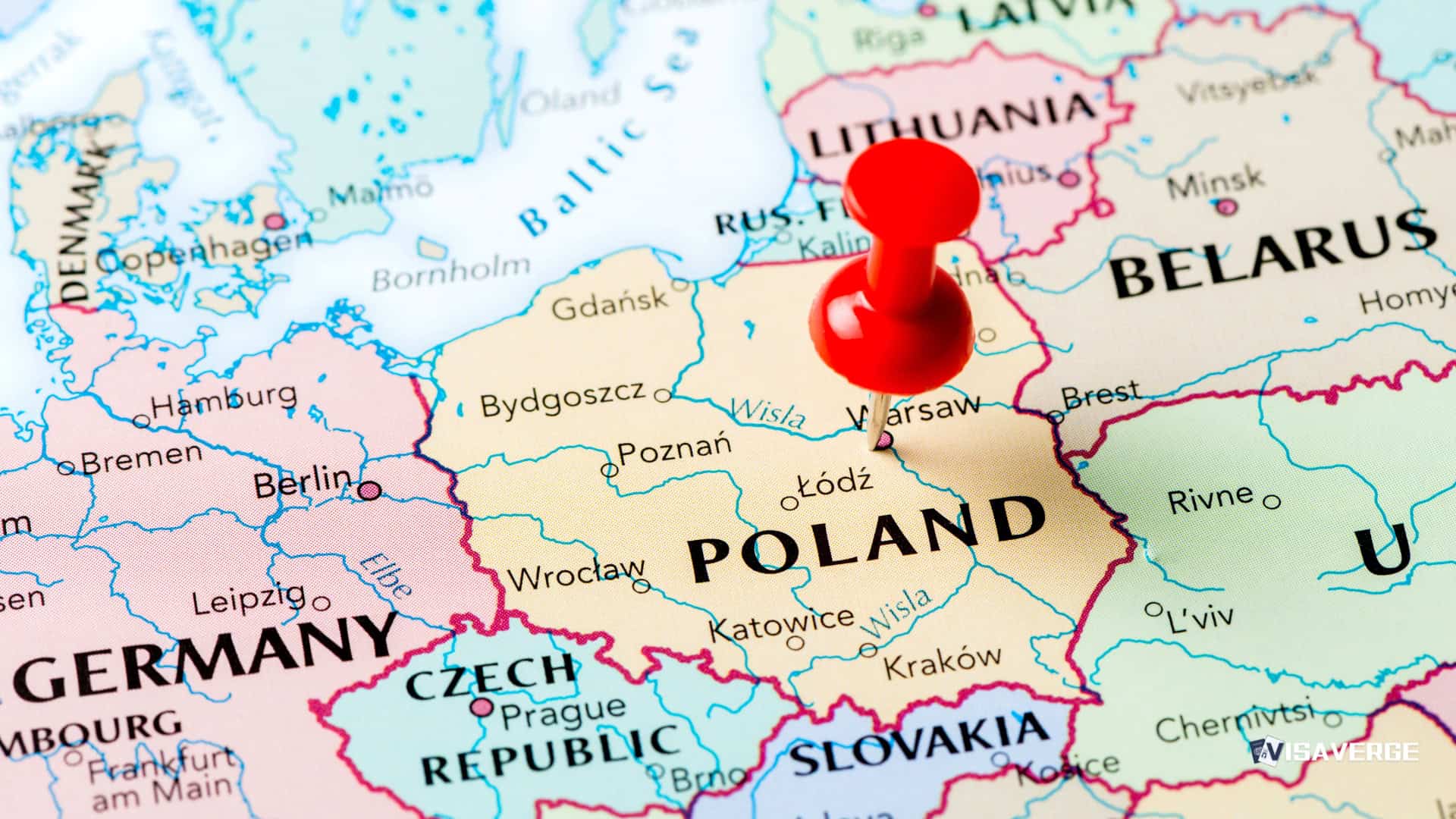
- Poland is extending the minimum residency for citizenship from 3 years up to 10 years.
- New rules include a mandatory civic exam and a formal declaration of loyalty to the state.
- Language proficiency requirements may rise from B1 to C1 for certain naturalization applicants.
(POLAND) – Poland’s Ministry of the Interior and Administration said on May 12, 2026 that it is tightening citizenship rules for foreigners, recasting naturalization as a status tied to longer residence, stronger language skills and formal loyalty to the state.
The ministry framed the change as part of a harder line on immigration and security during a period of wider European efforts to curb irregular migration. In a statement issued on its official channels, including X, it called the change a basic reset of naturalization policy.
Free toolSubstantial Presence Test Calculator
“Polish citizenship is a privilege that one must earn. It is more than just a document; it is a sense of belonging to a community based on shared values, history, and constitutional principles.”
New requirements described by the government lengthen the minimum period of continuous legal residence from 3 years to 8-10 years, depending on the applicant’s status. Applicants also face a higher language threshold, with some proposals raising the requirement from B1 to C1.
Authorities also introduced a mandatory civic exam covering Polish history, culture and the constitutional system. Candidates must sign a formal declaration of loyalty to the Polish state, and eligibility now ties citizenship to long-term economic participation through Polish tax residency.
Another procedural change has already taken effect. Since May 4, 2026, all residence and citizenship applications must go through the Case Management Module, MOS II, and Poland no longer accepts paper filings.
The package marks a sharper turn toward selective migration, with citizenship reserved for applicants the state views as integrated into public life, the economy and the constitutional order. Officials placed the overhaul within the Polish Migration Strategy 2025-2030, which links migration policy to pressure at the country’s eastern frontier.
That strategy cites what Polish authorities describe as “hybrid aggression” by Belarus and Russia, accusing both countries of weaponizing migration at the border. Poland has also extended temporary border controls with Germany and Lithuania until October 1, 2026, part of an effort to monitor routes used by migrants and smugglers.
The ministry’s announcement arrives as immigration vetting has become a louder political theme well beyond Europe. In the United States, USCIS Director Joseph Edlow said on November 28, 2025: “USCIS has halted all asylum decisions until we can ensure that every alien is vetted and screened to the maximum degree possible. The safety of the American people always comes first.”
Edlow issued another statement on March 30, 2026 describing “strict screening and vetting of foreign nationals seeking entry or immigration benefits.” He also referred to “American lives come first” and a “rigorous reexamination” of immigration benefits for people from high-risk regions.
DHS Secretary Markwayne Mullin took a similar line on May 1, 2026 in an announcement on the supplemental cap for H-2B visas. Mullin said the administration was “taking action against those who help others enter the country illegally,” tying visa policy to national security and vetting integrity.
Those U.S. statements do not address Poland’s internal law directly, but they mirror a broader official vocabulary around screening, border control and state security. Poland’s revised citizenship rules sit inside that same wider shift, where governments present naturalization less as an administrative step and more as proof of long-term attachment to the state.
The longer residence requirement stands out because it changes the timeline for applicants who had expected a far shorter route to citizenship. A person who once could qualify after 3 years of continuous legal stay may now need as long as 8-10 years, depending on status, before even reaching the application stage.
The language change carries its own effect. Moving from B1 to C1 in some proposals raises the bar from functional communication to a far more advanced command of Polish, a level that can shape access to work, education and public life long before a citizenship decision arrives.
The new civic exam also shifts Poland’s citizenship rules toward a fuller test of assimilation. Applicants will have to show knowledge not only of daily language use but also of national history, culture and the constitutional system, making the naturalization process more demanding in substance as well as time.
The loyalty declaration adds another formal test. By requiring candidates to sign a statement of loyalty to the Polish state, the government has turned allegiance into an explicit condition of citizenship rather than an implied one.
The tax residency rule pushes the process further toward measurable economic attachment. Citizenship eligibility now depends on long-term participation in Poland’s tax system, linking naturalization to sustained residence and contribution rather than residence alone.
Ukrainians living in Poland under special protection until 2027 remain in a separate humanitarian position, but the route from temporary protection to permanent status and citizenship has become longer and more exacting. The revised framework requires deeper integration over a longer period before naturalization becomes possible.
Dual nationals also face practical consequences. The U.S. Embassy in Poland says Americans of Polish descent whom Poland regards as Polish citizens must enter and leave the country on a Polish passport, a rule that now intersects with stricter citizenship maintenance requirements and the wider tightening by the ministry.
Procedurally, the shift to mandatory electronic filing through MOS II closes off a long-used paper route and puts the entire process onto a digital platform. That affects first-time applicants and residents already in the system, because every residence and citizenship filing now has to move through the same electronic channel.
Poland’s position places citizenship at the far end of a long integration track, not at the end of a relatively short legal stay. Residence, language, civics, loyalty and tax participation now operate as a cumulative test, each one adding another filter before the state will confer nationality.
Applicants seeking to verify the new rules can find the ministry’s notices at [gov.pl/web/mswia](https://www.gov.pl/web/mswia). Related citizenship guidance for U.S. nationals appears at the [U.S. Embassy in Poland](https://pl.usembassy.gov/u-s-citizen-services/citizenship-services/), while wider statements on vetting and screening are available through the [USCIS newsroom](https://www.uscis.gov/newsroom), [DHS press releases](https://www.dhs.gov/news) and [Presidential Proclamation 10998](https://www.whitehouse.gov/briefing-room/presidential-actions/2025/12/16/proclamation-on-restricting-and-limiting-the-entry-of-foreign-nationals/).
What emerges from the Polish changes is a citizenship system built to admit fewer people, after a longer wait, on narrower terms. In Warsaw, the Ministry of the Interior and Administration has made clear that under Poland’s new citizenship rules, a passport will follow years of scrutiny rather than simply years of residence.