- Multiple European nations extended internal border checks through mid-2026 to manage migration and security.
- Travelers face identity document inspections at land frontiers, ferry ports, and some intra-Schengen air borders.
- The new Entry/Exit System (EES) has already logged millions of crossings and thousands of overstays.
(EUROPE) – European governments kept or expanded temporary checks inside the Schengen Area on May 12, 2026, extending a patchwork of controls that now reaches from Germany’s land frontiers to Norway’s ferry ports and is reshaping how people move across what was built as a passport-free zone.
Most of the measures now run through mid-2026 or later. They allow police and border guards to stop travelers at internal frontiers, verify identity documents and, where needed, consult the Schengen Information System for alerts, entry bans and visa validity.
Free toolSchengen Short-Stay Visa Calculator
Under the Schengen Borders Code, revised in mid-2024, member states can reintroduce internal border controls on grounds that include irregular migration, terrorism threats, sabotage risks and major events. The result is a system in which free movement still exists in law, but travelers on many routes now face inspections, delays and the need to carry valid ID at all times.
Germany’s current controls run from March 16, 2026 to September 15, 2026 at land borders with France, Luxembourg, Belgium, Netherlands, Denmark, Austria, Switzerland, Czech Republic and Poland. Berlin cited high irregular migration and smuggling, strain on the asylum system, and wider security pressures linked to Russia’s war on Ukraine and the situation in the Middle East and Central Asia.
Poland is checking land borders with Germany and Lithuania from April 5, 2026 to October 1, 2026. Warsaw linked the move to migratory pressure, irregular migration and migrant smuggling from Belarus, along with an increase in illegal migrants on the German-Polish border.
Denmark began a fresh period of checks on May 12, 2026, due to run until July 11, 2026, at land and sea borders with Germany. Danish authorities cited threats to public policy and security from Russian sabotage, terrorism tied to the Israeli-Iran conflict, radicalization by Islamic State and Al-Qaida, and possible attacks on Jewish or Israeli targets.
Norway also started a new control period on May 12, 2026, lasting until November 11, 2026, covering all ports with ferry connections to the Schengen Area. Oslo pointed to threats against the energy sector and sabotage by Russian intelligence targeting logistics and civilian infrastructure.
The Netherlands plans checks from June 9, 2026 to September 30, 2026 on land borders with Belgium and Germany, as well as intra-Schengen air borders. Dutch authorities described a continuous serious threat to public policy tied to high asylum applications, irregular migration, migrant smuggling, secondary movements and overburdened reception capacity.
Switzerland will impose controls from June 10, 2026 to June 19, 2026 on land borders with France, including Lake Geneva, with attention focused on the Lake Geneva basin. The trigger is the G7 Summit, scheduled for June 15-17, 2026 in Evian, France.
Austria kept checks on land borders with Czech Republic, Slovakia, Hungary and Slovenia until June 15, 2026. Vienna cited irregular migration threats, strain on the asylum system, the Russia-Ukraine war and terrorism linked to the Middle East.
Slovenia extended controls on land borders with Croatia and Hungary until June 21, 2026. Ljubljana tied the decision to the Winter Olympics in Italy, terrorism and organized crime, migrant infiltration from the Western Balkans, hybrid threats from Russia and Belarus, and instability linked to Ukraine, the Middle East and Africa.
Italy and Portugal have also extended internal checks through 2026 under national announcements. France and Sweden have prolonged their own controls into September-November 2026.
These checks are no longer an isolated measure. Variants of them have continued since late 2015, with governments repeatedly prolonging controls and the European Union’s institutions accepting extensions after national notifications.
The practical effect is uneven across the bloc. Some crossings remain fast and lightly monitored; others now involve document inspections on roads, at ports or before intra-Schengen flights.
Travelers crossing affected frontiers need valid identity documents even when moving between countries that normally permit movement without routine passport checks. Visa-exempt nationals still face the standard Schengen rule of 90 days in any 180-day period.
Border guards checking documents can search the Schengen Information System, the shared database used for alerts on people and objects. That means a routine roadside or terminal stop can involve checks on entry bans, visa validity or other flags recorded in the system.
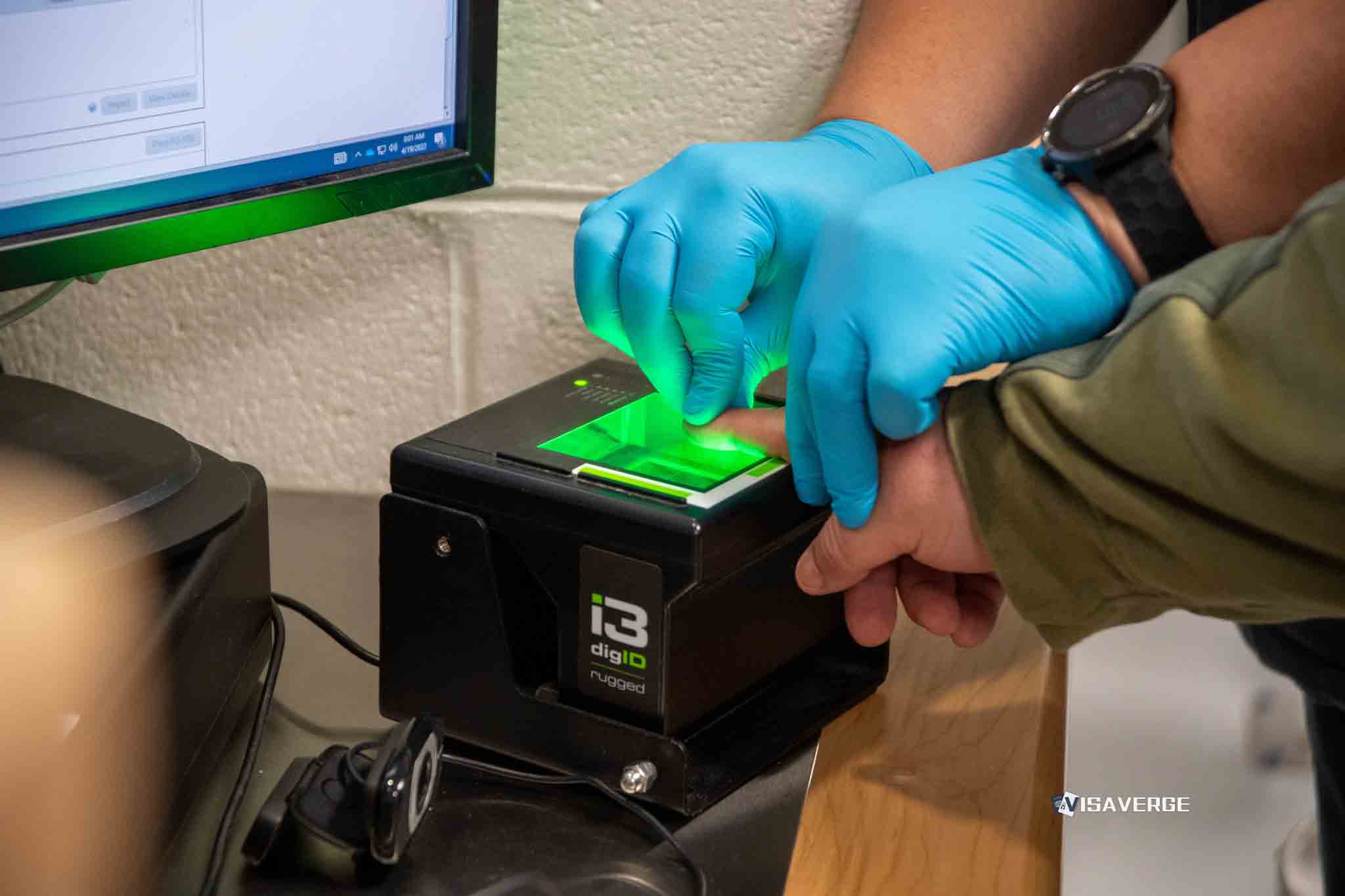
At the same time, the external border system surrounding the Schengen Area has changed. The Entry/Exit System, known as EES, launched in October 2025 and completed its phased rollout by March 2026 at all external Schengen borders, replacing passport stamps for non-EU travelers with biometric registration.
Managed by eu-LISA, EES records personal data, facial images, fingerprints, entry and exit details, and overstays. Authorities keep data for 3 years for legal stays and 5 years for overstays, and the system is integrated with the Visa Information System.
The figures from the first months show the scale of the shift. EES has logged 61 million+ crossings, detected 4,000 overstays and recorded 16,000 entry refusals linked to fraudulent documents or identity issues.
European officials have presented those numbers as evidence that the new digital border model is functioning, even as it adds new pressure at busy terminals. Henrik Nielsen, European Commission Director for Schengen, Borders and Visa, said the system had identified 1 suspected trafficking victim.
Delays have remained a problem at crowded crossing points, particularly where biometric capture adds time to boarding or arrival flows. Tillmann Keber, eu-LISA Executive Director, confirmed stable operations by March 2026, but the European Commission still introduced a temporary relief measure days later.
On May 4, 2026, the Commission authorized a waiver of biometric collection at external borders during high passenger volumes, allowing officers to revert to manual passport stamps to prevent queues. Airports including Paris-CDG and Amsterdam-Schiphol were cited as examples of the kind of pressure the waiver aimed to ease.
That flexibility did not suspend carrier data requirements. Airlines must still submit Advance Passenger Information and Passenger Name Records, keeping pre-arrival screening in place even when officers temporarily stop taking fingerprints or facial images at the booth.
Two more systems are due later this year. ETIAS, the travel authorization for visa-waiver visitors, and an updated Eurodac database remain slated for rollout in later 2026, adding another layer to a border regime that now combines internal checks, biometric registration and shared watchlists.
The political rationale differs by country, but the map shows a broad pattern: migration pressure remains one driver, while security concerns tied to sabotage, war spillover and terrorism now feature heavily in official notices. In northern Europe, governments have explicitly cited Russian intelligence threats; elsewhere, they have pointed to smuggling routes, reception capacity and the risk of attacks linked to Middle East tensions.
That leaves the Schengen system operating in two modes at once. The legal framework still presents internal free movement as the norm, yet on many routes the lived experience now resembles a lighter version of the old frontier regime, with random stops, queue management and document screening returning to journeys that once required none of it.
People moving within Europe face the most disruption on land corridors and ferry links where controls are active for months at a time, but the impact reaches air travel as well. The Dutch decision to include intra-Schengen air borders shows how checks once associated with external arrivals can migrate into flights that many passengers still treat as purely domestic-style travel.
Officials have advised allowing extra time at affected borders, ports and airports, with 30-45 minutes cited for connections. National rules can change with little notice as governments renew or adjust measures, and the European Union maintains the current list of temporary controls on its EU Home Affairs page.
For now, the promise of movement without interruption still exists on paper across much of Europe. On the ground, a traveler driving from Germany into Poland, boarding a ferry to Norway or flying between Schengen states increasingly meets a system in which free passage depends on having the right document ready when the officer asks for it.