- Turkish Airlines flight TK726 caught fire in its landing gear during landing at Kathmandu airport.
- Emergency crews evacuated 288 people via slides, with only two passengers reporting minor finger injuries.
- A technical malfunction in a hydraulic pipe is the suspected cause of the landing gear blaze.
(KATHMANDU, NEPAL) — Turkish Airlines flight TK726 from Istanbul caught fire in its right main landing gear as it landed at Tribhuvan International Airport in Kathmandu at about 6:34-6:35 a.m. local time on May 11, 2026, forcing an emergency evacuation and shutting Nepal’s main airport for 98 minutes.
Airport fire crews put out the blaze with extinguishers and fire engines, and all passengers and crew left the Airbus A330 on emergency slides. Two passengers suffered minor finger injuries. No deaths were reported.
Free toolB1/B2 Tourist Visa Stay Calculator online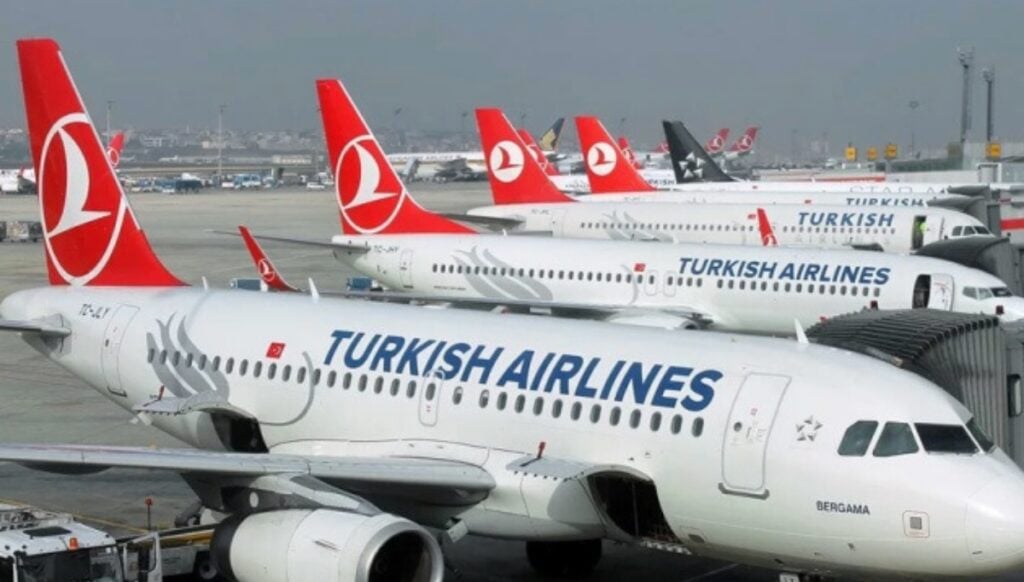
Gyanendra Bhul, Civil Aviation Authority of Nepal assistant spokesperson and information officer, said: “Fire was visible during the landing. Investigations are ongoing. All passengers are safe.”
Turkish Airlines said smoke appeared during taxi after landing and the crew began an evacuation. The carrier also scheduled an additional flight for the return leg after the aircraft was grounded in Kathmandu.
CAAN said the aircraft carried 277 passengers and 11 crew, for a total of 288 people on board. Initial passenger counts varied in early accounts, but authorities said the flight included four children and some United Nations officials.
Witness images and airport accounts showed fire and smoke coming from the right rear, or right main, landing gear tire. Officials and the airline pointed to several possible causes under review, including a hard landing, tire pressure problems, friction, and a malfunction in a hydraulic line.
Yahya Ustun, a Turkish Airlines spokesperson, said initial examinations showed “smoke was caused by a technical malfunction in a hydraulic pipe.”
The airport’s single runway remained closed from 6:34 a.m. until 8:12 a.m., halting all domestic and international flights during the response. Operations resumed after crews secured the aircraft and cleared the runway area.
Airport workers then towed the jet to Taxiway Bravo bay. Baggage was unloaded, hotel rooms were arranged for departing passengers, and alternative flights were arranged for travelers with urgent onward plans.
SP Rajkumar Silawal of airport security said crews contained the fire before it spread. The aircraft stayed at the airport for a technical inspection by Turkish Airlines’ authorized teams and a maintenance, repair and overhaul team based at Tribhuvan International Airport.
CAAN’s Flight Safety Standard Department opened a separate detailed investigation. That inquiry will run alongside the airline’s technical checks on the Airbus A330 involved in the incident.
The event marked the second reported Turkish Airlines incident at Tribhuvan International Airport in the past decade. On March 4, 2015, one of the airline’s flights skidded off the runway in fog, closing the airport for days, though no one was injured and the aircraft later became a museum piece.
Monday’s fire again put attention on the operational strain at Kathmandu’s only international gateway, where a runway closure quickly disrupts all traffic. Tribhuvan International Airport handles both domestic and international movements on a single runway, leaving little room for error during an emergency.
Turkish Airlines operates five weekly flights from Istanbul to Kathmandu. The route gives Nepal one of its few long-haul links through a carrier that connects onward to Europe, the United States and Canada.
That network role meant the disruption reached beyond passengers bound for Nepal. Travelers connecting through Istanbul for North America and Europe faced delays while the airline worked to rebook urgent cases and prepare the extra return service.
Images from the tarmac showed responders clustered around the right side of the aircraft soon after touchdown. Smoke from the landing gear area appeared while the plane was still on the runway environment, before crews brought the situation under control.
Authorities did not report any cabin fire, and the injuries remained limited to hands and fingers during the evacuation. Emergency slides carried all 288 occupants off the aircraft in the only exit operation described by officials.
Turkish Airlines and airport authorities gave matching accounts on the immediate sequence after landing: smoke was observed, the evacuation began, firefighters moved in, and the plane was later repositioned away from the runway. By mid-morning, flights had resumed, but the aircraft remained out of service for inspection.
The inquiry now centers on what triggered the smoke and flames in the landing gear area during one of the most vulnerable phases of flight. Bhul said the investigation was still active, while Turkish Airlines pointed to the hydraulic pipe malfunction as the airline’s initial finding.
At Tribhuvan International Airport, the visible signs of the emergency had faded by the time operations restarted. The grounded Turkish Airlines Airbus A330, with its passengers already moved to hotels or other flights, remained as the clearest evidence of how quickly a routine landing turned into an airport-wide shutdown.