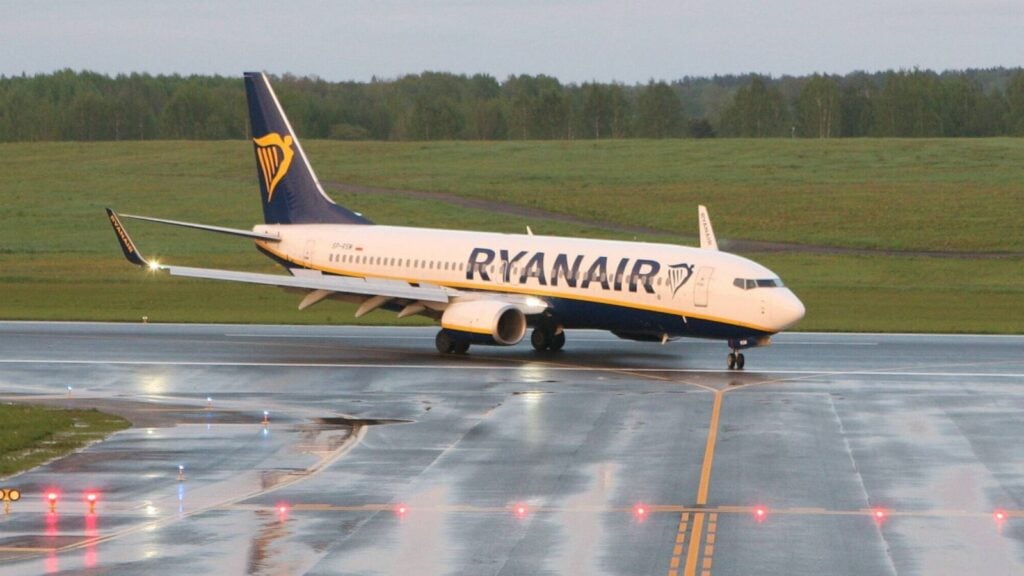
- A Kenya Airways Boeing 737 suffered multiple tire failures during landing at Cape Town International Airport.
- The incident blocked the main runway for four hours, forcing twenty-one inbound flights to divert.
- Normal operations resumed by August 5, though airlines continue to manage a small flight backlog.
A tire failure on a Kenya Airways Boeing 737-800 forced Cape Town International Airport to close its main runway Tuesday, diverting inbound flights and suspending international departures. Everyone aboard flight KQ784 from Nairobi disembarked safely.
The aircraft suffered the failure during landing at about 15:25 local time on August 4, 2026, or 13:25 GMT. It remained disabled on the runway at 18:00 local time.
Free toolB1/B2 Tourist Visa Stay Calculator online
Airports Company South Africa said arriving aircraft were sent to other airports during the closure. Domestic departures continued, while international departures temporarily could not operate.
The disruption reached at least 21 inbound aircraft. One operational update counted that many diversions while recovery teams worked to clear the runway.
The return service was also canceled. Kenya Airways scrapped flight KQ785 while its engineers inspected and repaired the aircraft.
Passengers from KQ784 reached the terminal by shuttle. No injuries were reported.
The runway reopened after the aircraft was recovered and safety inspections were completed. Some delays remained as airlines worked through the schedule disruption.
Recovery reopened the runway, but schedules needed time to catch up
Airports Company South Africa confirmed the reopening in an official update after the recovery operation and inspections.
"Following the successful recovery of the aircraft and the completion of all required safety inspections, the runway has been reopened."
The reopening occurred on the evening of August 4, after the aircraft was removed and the required checks were completed. The next morning, August 5, 2026, normal flight operations had resumed, although a small backlog was still being cleared.
"While flight operations have resumed, some delays may still be experienced as airlines work to recover their schedules."
The airport operator advised passengers to check their flight status before traveling. That warning applied even after runway operations returned to normal.
| Operation | Effect during the closure |
|---|---|
| Inbound flights | Diverted to alternative airports |
| Domestic departures | Continued, with some delays and intermittent operation |
| International departures | Temporarily suspended |
| KQ785 return service | Canceled while the aircraft underwent inspection and repair |
| Runway operations | Resumed after recovery and safety inspections |
The disabled jet blocked Runway 19 for about four hours
The aircraft carried registration 5Y-CYC and was operating the scheduled Nairobi-to-Cape Town service. The incident involved multiple tire failures during the landing roll.
The primary runway, identified as Runway 19, remained closed for approximately 3.5 to 4 hours. That closure prevented normal arrivals and forced aircraft to use other airports.
Gqeberha was among the alternative destinations used by diverted inbound flights. Chief Dawid Stuurman International in Gqeberha was specifically identified as one airport receiving diverted traffic.
Flight-tracking data indicated that KQ784 had earlier diverted to Port Elizabeth, also known as Gqeberha, before continuing its final leg to Cape Town. The reason for that intermediate stop was not publicly disclosed by the airline.
The airport depends primarily on one main runway for large commercial aircraft. A disabled jet therefore affected the arrival flow well beyond its own flight.
Domestic flights continued where possible. International departures faced a temporary halt while the runway remained occupied.
Engineers inspected the aircraft after passengers left safely
The airline said its engineers and technical team were working on the aircraft. Their task included inspecting and repairing the jet after the landing incident.
The work kept the return service out of operation. Passengers booked on KQ785 were contacted by the airline for rebooking and assistance.
The people aboard KQ784 left the aircraft safely and were transported to the terminal by shuttle. The airline said all passengers and crew were safe.
The incident caused no reported injuries. Its main immediate effect was operational, with diversions, a canceled return flight and delays spreading through later schedules.
Travelers heading through the airport on August 5 were told to verify their individual flight status before leaving for the terminal. Reopened runways do not instantly restore every aircraft to its original timetable.
Aviation authorities are expected to examine the tire failure
The South African Civil Aviation Authority is expected to conduct a routine investigation into the incident. The stated purpose is to determine the root cause of the tire failure.
Possible contributors identified in the research include high temperatures, heavy loads and foreign object debris. None has been established as the cause of this event.
Tire bursts present a recognized operational hazard, but the available incident details do not assign responsibility or identify a confirmed mechanical explanation. The investigation is expected to address that question.
The airport is South Africa’s second-busiest and serves as an important gateway for tourism. A closure lasting approximately four hours can therefore disrupt flights arriving later, as well as departures scheduled after the initial incident.
By the morning of August 5, the runway had returned to normal use and the remaining work had shifted to clearing the backlog. Passengers still traveling through the airport were advised to check their flight status before setting out.