1 earlier update
- Federal courts have kept birthright citizenship intact while the Supreme Court reviews President Trump’s executive order.
- Children born in the U.S. remain automatic citizens under the Fourteenth Amendment regardless of their parents’ status.
- A final Supreme Court ruling on Executive Order 14156 is expected by June 2026.
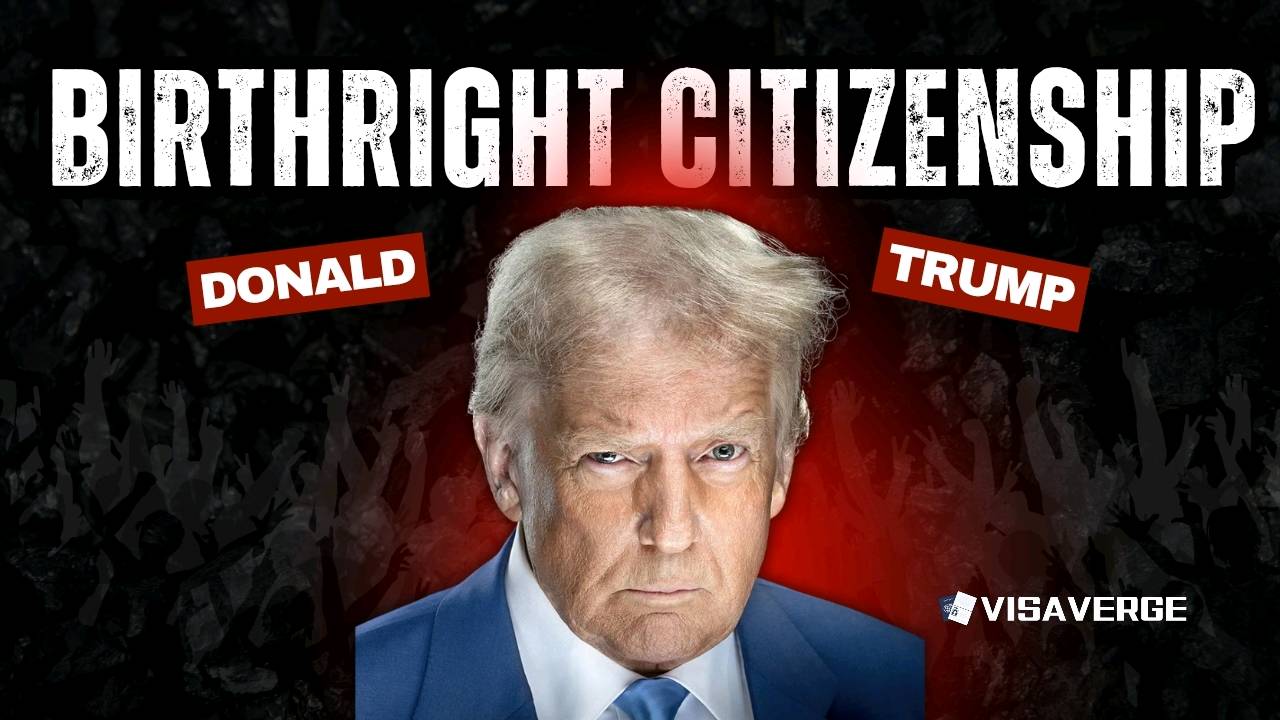
(UNITED STATES) — Federal courts have kept Birthright citizenship in place despite President Donald Trump’s Executive Order 14156, and the Supreme Court heard arguments on April 1, 2026, without changing the current practice.
Children born in the United States remain U.S. citizens at birth under the Fourteenth Amendment, except for children of foreign diplomats, as of April 2026. No ruling has issued in the case now before the high court, consolidated as Trump v. CASA Inc.
Executive Order 14156, signed by Trump on January 20, 2025, sought to deny automatic citizenship to children born on U.S. soil to parents who are undocumented immigrants or who hold temporary visas, including tourist, student, or work visas. The order said it would apply only to children born on or after February 19, 2025.
Federal agencies including the Department of State, USCIS, and the Social Security Administration have continued their standard procedures while the order remains blocked. Families can still obtain birth certificates, Social Security numbers and U.S. passports for children born in the country.
The order marked the sharpest direct challenge in years to the long-settled reading of the Citizenship Clause of the Fourteenth Amendment. Ratified in 1868, the amendment says: “All persons born or naturalized in the United States, and subject to the jurisdiction thereof, are citizens of the United States and of the State wherein they reside.”
That language has long anchored Birthright citizenship in the United States. The 1898 Supreme Court decision in United States v. Wong Kim Ark held that children born in the country to non-citizen parents legally residing in the United States were citizens at birth, and it interpreted “subject to the jurisdiction” narrowly, excluding children of foreign diplomats or invading armies.
Trump’s order argued for a different reading. Supporters said the policy would deter irregular migration and preserve the “value” of American citizenship for people with deeper ties to the country.
The administration’s move quickly ran into court orders. On January 23, 2025, U.S. District Judge John C. Coughenour in Seattle issued a 14-day temporary restraining order and called the measure “blatantly unconstitutional.”
Less than two weeks later, on February 5, 2025, U.S. District Judge Deborah L. Boardman in Maryland imposed a nationwide preliminary injunction. She found the order conflicted with the Fourteenth Amendment and with Wong Kim Ark, blocking implementation indefinitely.
The Ninth Circuit upheld that block in mid-2025. The Supreme Court then declined an emergency stay request in late 2025, leaving the injunctions in place while the litigation continued.
When the justices heard oral arguments on April 1, 2026, they appeared divided over whether a president can reinterpret the Constitution’s citizenship guarantee through executive action. Conservative justices questioned the scope of executive power, while liberal justices pressed the constitutional text.
No decision has been released. Legal experts expect a ruling by June 2026.
For now, the practical position remains unchanged for families. Nearly all children born in the United States are citizens at birth regardless of their parents’ immigration status, including children of undocumented parents, children of temporary visa holders and children in mixed-status families.
That reach is broad. The affected groups under Trump’s order would have included children of people on H-1B visas, F-1 student visas and B-1/B-2 tourist visas, along with children born to undocumented parents.
The order directed agencies to withhold citizenship documents from children covered by the policy. That included passports, Social Security numbers and Consular Reports of Birth Abroad.
Because courts have blocked the order, hospitals, state agencies and federal agencies have not changed their procedures. Families still secure a state-issued birth certificate after birth, apply for a Social Security card using the birth certificate and request a U.S. passport as proof of citizenship for travel.
No parental status disclosure is required for a child’s automatic citizenship under current law. Hospitals issue certificates within days, and parents in home-birth or midwife settings can file with vital records offices.
The stakes in the legal fight are large. An estimated 4.5 million U.S.-born children of undocumented parents were living in the country as of 2025.
The annual number of births that could be affected is also large. Estimates in the policy debate put the figure at about ~250,000–300,000 births each year to undocumented parents and ~100,000–150,000 births to temporary visa holders.
The Migration Policy Institute projected that ending Birthright citizenship for children of two undocumented parents alone would add 4.7 million people to the unauthorized population by 2050. The institute said the change would raise pressure on schools, healthcare and welfare systems.
Those projections have fueled warnings from civil rights advocates that such a change would create a long-term class of children born in the country without citizenship. In the policy debate, advocates including the ACLU and NILC have argued that the order is unconstitutional and would create stateless children.
The debate also carries a racial dimension. Policy analyses cited in the dispute said the effects would fall most heavily on Latino communities, which would account for 65% of those affected, followed by Asian communities at 20% and Black immigrant communities.
Schools already serve 5.5 million children with at least one undocumented parent. Opponents of the order say stripping citizenship from newborns would deepen the strains already facing mixed-status families.
Trump’s executive action did not attempt to revoke citizenship retroactively. It focused on future births, a choice that avoided immediate upheaval for people who already hold U.S. citizenship by birth.
That narrower approach did not spare it from constitutional objections. The order revived arguments that the Fourteenth Amendment was aimed chiefly at formerly enslaved people and people with permanent allegiance to the nation, not transient foreigners.
Those arguments have circulated for years in conservative legal and political circles. But the order was the first direct attempt in Trump’s second term to put that interpretation into federal policy.
Congressional allies have also tried to narrow citizenship by statute. The Birthright Citizenship Act of 2025, filed as S. 304 and H.R. 569, would limit citizenship to children with at least one U.S. citizen or lawful permanent resident parent.
Sen. Lindsey Graham and Rep. Brian Babin sponsored that measure. As of April 2026, it had 2 Senate and 51 House cosponsors but had stalled in committees amid Democratic opposition and constitutional concerns.
Even if Congress passed such a bill, it would almost certainly face immediate lawsuits. The central legal question would be whether Congress can narrow the Fourteenth Amendment’s guarantee without a constitutional amendment.
Amending the Constitution sets a far higher bar than either legislation or executive action. It would require support from 2/3 of Congress and 38 states.
Birthright citizenship remains one of the few immigration rules untouched in practice during a period of wider policy upheaval. Since January 21, 2026, immigrant visa pauses have applied to 75 countries, while other immigration changes have included H-1B reforms and expanded ICE enforcement.
Those broader moves have heightened anxiety for many immigrant families, especially parents in temporary status. But on the citizenship question, agencies continue to treat children born in the United States as citizens from birth.
That matters in mixed-status households. Citizen children can petition for parents at age 21 through Form I-130, though visa backlogs remain part of that process.
Families with children born in the country also continue to benefit from other settled rules. K-12 schools do not conduct immigration status checks for enrollment, and the Supreme Court’s 1982 ruling in Plyler v. Doe requires access to education.
Employers do not verify a child’s work authorization until the person reaches working age and completes Form I-9. Until then, the citizenship dispute remains mainly a matter of identity documents, long-term legal status and access to future rights.
Public opinion has split. A Pew survey in June 2025 found the country divided 50/50 on limits to Birthright citizenship, with 60% of Republicans supporting restrictions and 80% of Democrats opposing them.
The United States is one of 35 countries that still grant unconditional jus soli, or citizenship by place of birth. Other countries, including the UK and Australia, have moved toward systems tied more closely to parental citizenship or residency.
That international contrast has figured in the political debate, though the constitutional setting in the United States is different because the Fourteenth Amendment places citizenship language directly in the Constitution. That is why the legal fight has turned on the power of presidents and Congress to alter a rule that many scholars view as fixed by text and precedent.
For families waiting on the Supreme Court, the message from the courts so far is plain. Birthright citizenship remains intact, and the ordinary steps after a child’s birth have not changed.
Parents can still document a birth, apply for a Social Security card and seek a passport without any new federal barrier tied to immigration status. Unless the Supreme Court says otherwise, the Fourteenth Amendment continues to govern.
The final answer may come within months. Until then, Executive Order 14156 remains blocked, and children born in the United States continue to receive the citizenship that the Constitution says belongs to “All persons born or naturalized in the United States, and subject to the jurisdiction thereof.”