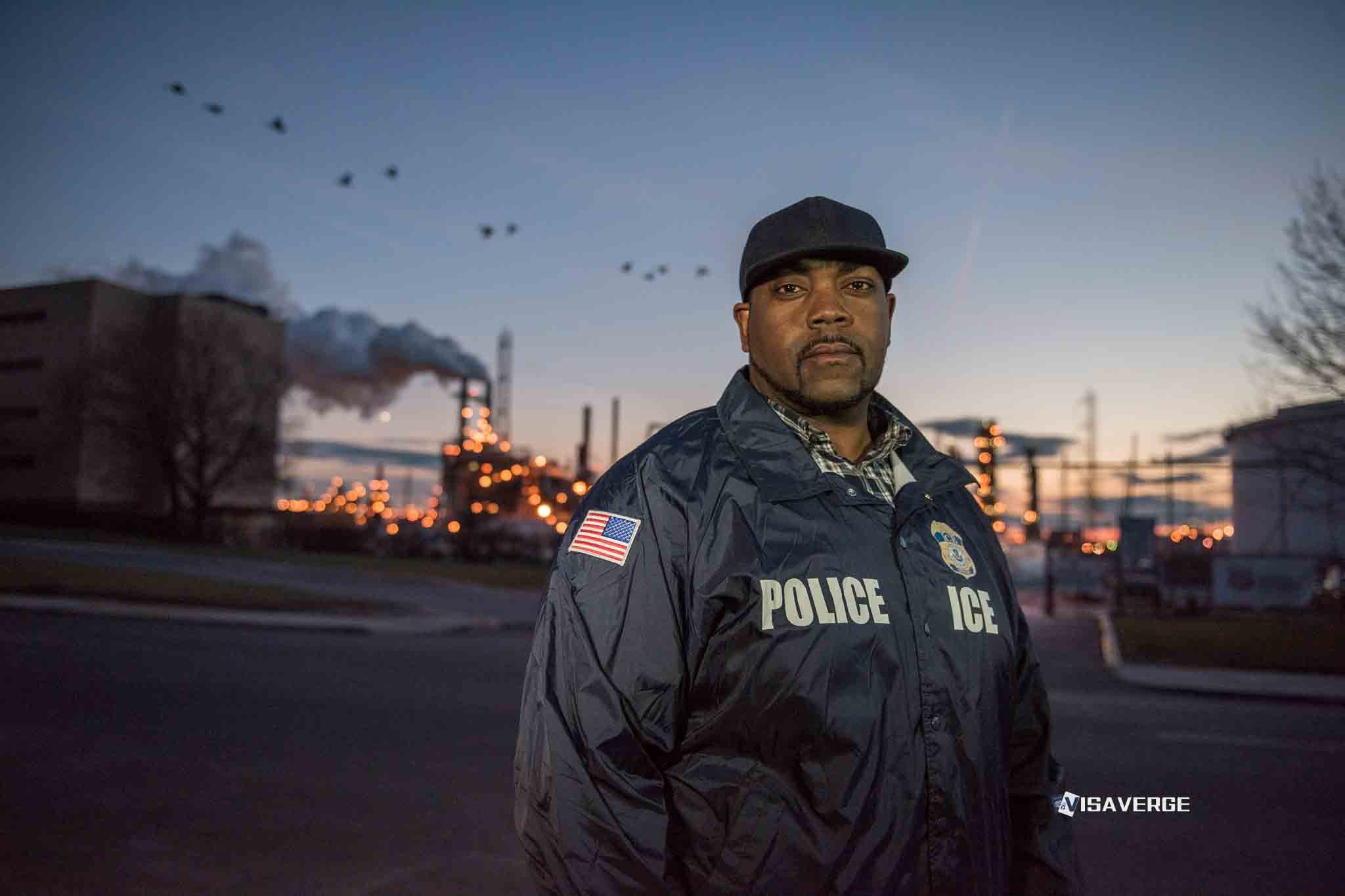
New York Governor Kathy Hochul signed a broader immigration-enforcement package into the FY27 Enacted Budget, expanding the state’s limits beyond the original cooperation agreements discussed in the article. The law requires existing agreements with ICE to be ended within 90 days, creating a late August deadline for termination.
- The enacted budget bars state and local police, corrections agencies, and local governments from entering into 287(g) agreements or similar agreements that support civil immigration enforcement.
- The Assembly said the law also bans formal or informal agreements to perform immigration enforcement functions and prevents local governments from paying for or operating immigration detention facilities.
- The package restricts ICE access to sensitive locations — including schools, hospitals, libraries, public parks, polling places, and houses of worship — unless agents have a judicial warrant.
- New York’s LETech Grant Program now requires police departments and sheriffs’ offices applying for the second round of grants to comply with the state’s immigration-enforcement restrictions, and applications are not considered if an agency is operating a 287(g) agreement or similar agreement.
- Governor Kathy Hochul signed the Local Cops, Local Crimes Act to end 287(g) agreements in New York.
- The new law restricts local resources from assisting ICE in federal civil immigration enforcement activities.
- Local jails are now prohibited from contracting with ICE to hold civil immigration detainees across the state.
(NEW YORK) The Local Cops, Local Crimes Act took effect after Governor Kathy Hochul signed it on May 27, 2026, ending New York’s use of 287(g) agreements and sharply limiting how local agencies may assist U.S. Immigration and Customs Enforcement in civil immigration enforcement. The law changes the legal ground immediately for counties, sheriffs, jail officials, and immigrants whose contact with local police previously carried a direct risk of transfer into federal custody.
The practical holding is statutory, not judicial. New York has barred local and state resources from supporting federal civil immigration enforcement, terminated all existing 14 active 287(g) agreements across nine counties, and added state-law restrictions on federal civil operations in sensitive locations. In similar disputes, the central question will now be preemption: whether New York may withdraw its own personnel and facilities from civil immigration work while still leaving criminal enforcement channels intact.
Free toolUSCIS Receipt Number Decoder
The relevant federal authority is INA § 287(g), codified at 8 U.S.C. § 1357(g). That provision allows the Department of Homeland Security to enter written agreements with state or local officers, train them, and delegate limited federal immigration functions. It does not require states to participate. That distinction matters. New York has not nullified federal immigration law; it has revoked state participation in one of the main cooperation structures Congress authorized.
The Supreme Court’s preemption framework points in the same direction. In Arizona v. United States, 567 U.S. 387 (2012), the Court held that the federal government retains primary authority over immigration enforcement, but it did not require states to furnish manpower or detention space. Anti-commandeering doctrine, developed in cases such as Printz v. United States, 521 U.S. 898 (1997), generally bars the federal government from compelling state officers to execute federal regulatory programs. That doctrine may shape any challenge to New York’s decision to step away from civil immigration partnerships.
The facts behind the law are straightforward. State lawmakers described it as an effort to untangle local policing from civil immigration enforcement after stepped-up federal activity in 2025 and 2026. The statute voids all active 287(g) agreements, bars taxpayer-funded personnel, equipment, and technology from assisting federal civil immigration enforcement, and prohibits local jails from contracting with ICE to hold civil immigration detainees. It also permits continued communication tied to criminal investigations, preserving a line Hochul has repeatedly emphasized.
That criminal-civil distinction is the law’s core defense and its most likely litigation fault line. Hochul said on January 30, 2026 that the policy concerns civil immigration enforcement, “not criminals, not people who are committing crimes, not serious offenders.” She repeated on February 2, 2026 that the state would not “weaponize local police officers against their own communities.” Those statements align with the bill text’s structure, which restricts civil cooperation while leaving ordinary state criminal policing in place.
The statute reaches beyond 287(g). Federal agents conducting civil enforcement in New York now face state-law limits at sensitive locations, including schools, hospitals, houses of worship, and playgrounds, absent a judicial warrant. The law also includes what state officials described as Melt Act provisions, authorizing state civil actions against federal officers accused of violating constitutional rights. Separate identification rules require visible uniforms and name badges during civil enforcement actions, with masks generally prohibited.
DHS has attacked the measure in unusually sharp terms. On January 30, 2026, the department said New York’s approach would make communities less safe and released figures it said reflected the effect of reduced cooperation. DHS said that since January 20, New York policies had resulted in the release of 6,947 noncitizens it described as “criminal illegal aliens.” The department’s breakdown listed 29 homicides, 2,509 assaults, 199 burglaries, 305 robberies, 392 drug offenses, 300 weapons offenses, and 207 sexual predatory offenses. DHS also said 7,113 people in New York custody had active ICE detainers, including 148 charged with or convicted of homicide.
Those numbers will almost certainly appear in future litigation and political messaging, but they do not answer the legal question by themselves. The issue is not whether the federal government prefers more local assistance. The issue is whether New York may refuse to provide it. Under current constitutional doctrine, states typically may decline to administer or fund federal civil enforcement programs. A challenge would become stronger only if the law were read to obstruct federal officers directly, rather than deny them state help.
That leaves several provisions more vulnerable than others. The 287(g) termination, the funding restrictions, and the jail-contract ban fit comfortably within state control over employees, facilities, and budgets. The sensitive-locations rules and civil-liability provisions may draw closer scrutiny if the federal government argues they interfere with federal operations or attempt to regulate federal officers directly. Federal supremacy analysis in those sections will likely turn on how New York courts construe the statute and whether enforcement targets federal conduct or simply creates state remedies for constitutional violations.
No clear circuit split controls this statute yet, because the law is new and the likely lawsuits have not produced appellate rulings. Still, litigation over sanctuary policies in other states offers a rough map. Federal courts have often upheld state and local decisions not to honor civil immigration detainers or not to share resources absent a clear federal command. At the same time, courts have been more skeptical when state rules appear to penalize federal agents or condition access to places where federal law grants entry authority. The Second Circuit has not issued a definitive ruling on every feature New York just enacted.
The immediate effect on daily enforcement may be uneven. People in county jails may see fewer transfers from local custody into ICE custody through formal cooperation channels. ICE may respond with more at-large arrests in the community, a shift DHS itself has forecast. That usually creates different legal issues, including warrant questions, consent to enter homes, and the distinction between an administrative immigration warrant and a judicial warrant signed by a judge.
Community groups and defense lawyers will also watch whether crime reporting changes. Supporters of the law argue that separating local police from civil immigration work may increase trust and lead witnesses and victims to contact police without fearing deportation consequences. That claim is difficult to quantify quickly, but it has been central to similar legislation in California, Illinois, New Jersey, and Washington, all of which have limited or barred 287(g) arrangements in different ways.
Warning: A federal immigration detainer is not the same as a criminal arrest warrant. Detainers are civil requests to hold a person for ICE. Their validity and local enforcement vary by jurisdiction.
Practice point: Anyone arrested in New York who may face immigration consequences should ask criminal defense counsel whether the case triggers ICE interest, bond issues, or removability grounds under the INA. Timing often matters.
Employers, local agencies, and noncitizens should read the law with precision. It does not stop federal immigration enforcement in New York. It withdraws local participation in civil enforcement, limits detention contracts, and creates new state-law protections and litigation risks. Counties with former 287(g) programs will need revised policies, training, and jail intake procedures. Noncitizens with prior ICE contact should not assume the risk has disappeared; the enforcement setting may simply move from the jail to the street.
Official materials are available through the New York Governor’s pressroom, the DHS newsroom, and the New York State Senate bill page for S.9005-C/A.10005-C. People with pending criminal cases, prior removal orders, ICE detainers, or prior reentry issues should speak with a qualified immigration attorney promptly, because the interaction between state protections and federal enforcement remains highly fact-specific.
⚖️ Legal Disclaimer: This article provides general information about immigration law and is not legal advice. Immigration cases are highly fact-specific, and laws vary by jurisdiction. Consult a qualified immigration attorney for advice about your specific situation.
Resources: [AILA Lawyer Referral](https://www.aila.org/find-a-lawyer) | Immigration Advocates Network