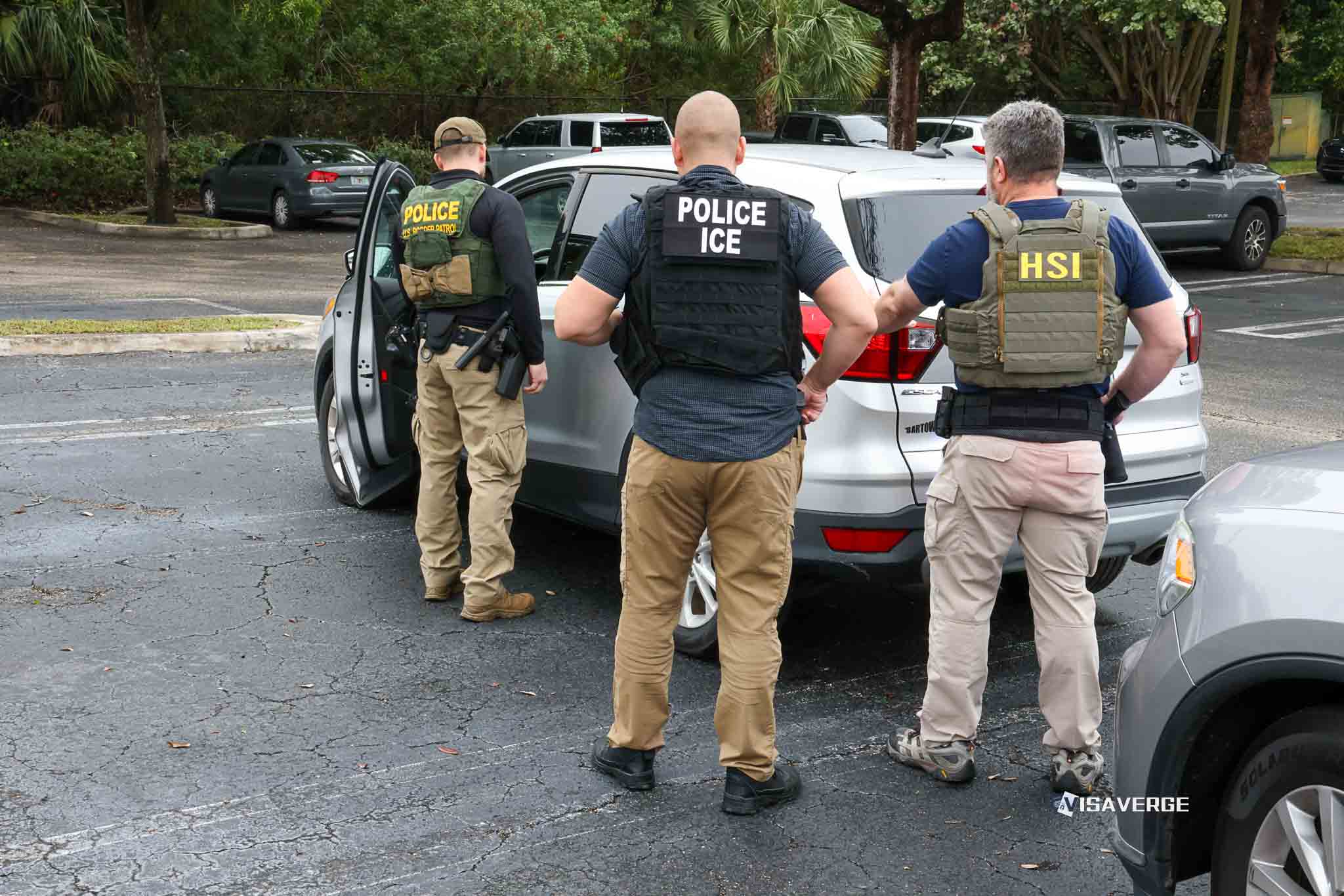
New York is moving closer to statewide limits on local police cooperation with ICE, but no statewide measure had been enacted as of March 25, 2026. You are most affected if you live in a county that works with ICE, especially through a 287(g) agreement, jail detention contracts, or local information-sharing practices.
The biggest shift came on January 30, 2026, when Governor Kathy Hochul proposed the Local Cops, Local Crimes Act. That bill would ban 287(g) agreements across New York, end several forms of local help with civil immigration enforcement, and keep cooperation for criminal cases involving violent crime, terrorism, guns, and gangs.
New York Eyes statewide limits on local police ICE cooperation
Immigration advocates, Democratic lawmakers, and local officials have spent months pushing Albany to set statewide rules for how police, sheriffs, jails, and other agencies interact with U.S. Immigration and Customs Enforcement.
The main demand remains the New York for All Act. Supporters want it to restrict local and state cooperation with ICE, ban 287(g) agreements, limit information sharing for civil immigration enforcement, and block ICE access to non-public government areas without a judicial warrant.
Hochul’s January 30, 2026 proposal changed the debate. She had previously stopped short of backing the full New York for All Act. Her new bill adopted one of the movement’s central goals by targeting 287(g) agreements statewide.
That shift matters because 287(g) agreements let ICE deputize local officers to perform certain federal immigration functions. Advocates argue those agreements pull local police into civil immigration enforcement and weaken trust between immigrant communities and law enforcement.
What Governor Hochul’s January 30, 2026 bill would do
Hochul’s Local Cops, Local Crimes Act would ban 287(g) agreements in New York while preserving local cooperation in criminal cases. The proposal would also void existing 287(g) agreements in eight counties.
One major focus is Nassau County, where local police currently check the immigration status of arrestees and hold suspected immigration violators for longer periods.
Statewide ban on 287(g) agreements
The bill would prohibit local law enforcement agencies from being deputized by ICE for civil immigration enforcement. That means local officers would not be allowed to carry out those civil immigration tasks under federal delegation agreements.
Limits on access to homes and other protected places
Hochul also expanded “sensitive locations” protections. Those protections had already been proposed for schools, houses of worship, and healthcare facilities.
Her January 30 plan extended them to private homes. Under the proposal, ICE would be barred from entering a home without a judge-signed warrant.
Restrictions on local jails and local technology
The proposal would also:
- Prevent ICE from using local jails for civil detentions
- Prevent local police technology from being used to track non-criminals
Criminal case cooperation would continue
Hochul and local police leaders made clear the bill would still allow cooperation on criminal matters. At the January 30, 2026 press conference, NYPD Commissioner Jessica Tisch and Albany Police Chief Brendan Cox affirmed continued cooperation involving violent criminals, terrorism, guns, and gangs.
How the New York for All Act goes further than Hochul’s proposal
Hochul’s bill is narrower than the New York for All Act. Supporters of the broader bill call the governor’s approach progress, but not enough.
State Sen. Andrew Gounardes and Assembly Member Karines Reyes, sponsors of the New York for All Act, called Hochul’s bill “a good first step”. They also urged Albany to go further.
Their bill seeks broader restrictions, including:
- A ban on 287(g) agreements
- Limits on information sharing with ICE
- Limits on ICE access to non-public government areas without judicial warrants
- Statewide rules to replace the current patchwork of county and city policies
Lt. Gov. Antonio Delgado also said Hochul’s proposal does not go far enough. He criticized the absence of a ban on immigration status inquiries and said it does not stop all information sharing with ICE.
That difference has become the sticking point in Albany. Many lawmakers support curbing local police involvement in federal immigration enforcement. The harder question is how broad those limits should be.
Why this fight intensified in 2025 and 2026
The issue gained momentum as federal enforcement actions sparked fear and anger across New York and nationally. Advocates say those events created a stronger opening for statewide legislation.
Key dates shaping the debate
- June 2025 — Earlier public messaging and policy positioning later cited in Albany debates
- July 2025 — Manhattan shooting of an off-duty CBP officer later cited in DHS announcements
- August 2025 — Additional public statements helped shape the policy fight
- December 2025 — Minneapolis shooting became a flashpoint for state proposals nationwide
- December 28, 2025 — Binghamton City Council approved limits on city participation in federal immigration enforcement
- January 7, 2026 — Renee Good was fatally shot by ICE agents during a protest in Minneapolis
- January 8, 2026 — Hochul signaled support for civil remedies against ICE agents for constitutional violations; DHS highlighted enforcement actions in New York City
- January 24, 2026 — Alex Pretti was fatally shot by ICE agents in Minneapolis
- January 30, 2026 — Hochul proposed the Local Cops, Local Crimes Act
- February 2026 — Mayor Eric Adams issued Executive Order No. 13 in New York City
- May 7, 2026 — Deadline for New York City agencies to report to the mayor under Executive Order No. 13
- March 25, 2026 — No statewide New York measure had been confirmed as enacted
Hochul’s January 8 and January 30 remarks
On January 8, 2026, Hochul said she supported legislation that would let New Yorkers sue ICE agents in civil court for constitutional violations tied to enforcement actions.
She said: “New Yorkers who have had their constitutional rights violated because of an ICE agent — whether you’re a member of the media who was beaten up or someone whose business has been ransacked because the ICE agents come in and make them lose money or someone whose mother is murdered — they would have recourse against these individuals.”
Hochul also condemned the death of Renee Nicole Good, a 37-year-old white American citizen, after the December 2025 Minneapolis shooting cited in earlier debate. She said: “I’m so sickened as a mom that there’s a child that woke up yesterday, a 6-year-old, who had a loving mother and goes to bed an orphan.”
By January 30, 2026, Hochul used even stronger language. She described ICE as a “rogue federal agency” creating “chaos, carnage, and fear” and called for the resignation of DHS Secretary Kristi Noem.
Local action in Binghamton and New York City
Even without a statewide law, local governments in New York have already acted. Those moves show how different the rules can be depending on where you live.
Binghamton barred use of city resources for federal immigration enforcement
On December 28, 2025, the Binghamton City Council unanimously passed a law prohibiting city funds, resources, or personnel from being used for federal immigration enforcement.
Mayor Jared Kraham let the measure take effect without signing or vetoing it. The ordinance matched his earlier position against local police involvement in immigration enforcement.
Advocates now point to Binghamton as a model for other parts of the state, especially in the Southern Tier. They say that region has drawn more attention as enforcement increased outside New York City.
Broome County remains central to that debate because the sheriff continues to maintain an ICE detainee-holding agreement, even with local restrictions in place.
New York City ordered agency audits in February 2026
In February 2026, Mayor Eric Adams issued Executive Order No. 13. The order directed city agencies to audit policies related to cooperation with immigration enforcement and report back by May 7, 2026.
The order applies to:
- NYPD
- Administration for Children’s Services
- Department of Correction
- Department of Health and Mental Hygiene
- Department of Probation
- Department of Social Services
That review matters because city policy often changes through executive orders and agency guidance before state laws pass.
How Lt. Gov. Antonio Delgado shifted his position
Delgado’s public position changed over time as supporters pushed for a wider Democratic coalition.
In June 2025, Delgado said he had concerns about a “blanket rule” banning these agreements. He pointed to existing executive orders, which apply to state agencies but not local governments, and to court decisions that already limit honoring some ICE detainers.
By August 2025, Delgado appeared at a rally supporting the New York for All Act and a special session. He said he had not opposed the bill outright.
He now supports banning specific contracts entered by some counties. But he also says Hochul’s January 30 proposal still falls short because it does not ban all immigration status questioning or all information sharing.
Supporters say a statewide law is needed because local rules are uneven
Advocates want one statewide standard because local practices differ sharply from county to county and city to city.
They argue that a patchwork system leaves immigrant families guessing about:
- Whether a sheriff honors ICE detainer requests
- Whether a jail holds people for ICE pickup
- Whether local police share release dates or personal data
- Whether ICE gets access to local facilities
- Whether public money or staff support immigration enforcement
If you live in a county where the sheriff’s office works with ICE, ask the agency in writing what cooperation policies are in place. Ask specifically about detainers, facility access, release notifications, and any 287(g) agreement. Keep copies of the response.
You should also track both Albany legislation and local council or sheriff announcements. Local practice often changes faster than state law.
Opposition from Nassau County and DHS
Opponents say these bills would interfere with public safety and force local law enforcement to step back from federal partnerships they view as important.
Nassau County Executive Bruce Blakeman, who is running against Hochul for governor, criticized her proposal as pro-criminal and said it would make communities less safe.
DHS Assistant Secretary Tricia McLaughlin said the proposal would increase ICE’s visible presence because officers would need to make more arrests directly in communities. She also said ICE had over 7,000 detainers tied to what she called “heinous criminals” in New York.
McLaughlin also sharply criticized rhetoric comparing current enforcement to Nazi Germany. She called that rhetoric “gross” and said: “From comparisons to the modern-day Nazi gestapo to glorifying rioters, the vilification of ICE must stop.”
That rebuke came after New Jersey State Sen. Britnee Timberlake, who sponsored a bill to codify police non-cooperation, said: “Anyone who is an ancestor of a Holocaust survivor will tell you, this is how it starts. just ask the children of the 37-year-old woman from Minnesota.”
Federal officials defended aggressive enforcement
Federal officials have publicly defended current immigration enforcement and highlighted arrests to support that position.
On January 8, 2026, DHS Secretary Kristi Noem visited New York City and announced 54 arrests tied to a July 2025 Manhattan shooting of an off-duty CBP officer.
Noem said: “If you lay a finger on one of our officers, we will catch you, we will prosecute you, and you will feel the full extent of the law.”
Supporters of New York for All argue these federal announcements show why state law should reduce local involvement in civil immigration enforcement. Opponents say the same announcements show why local-federal cooperation should continue.
Where the Dignity Not Detention Act fits in
Another major proposal in Albany is the Dignity Not Detention Act. Hochul has supported that bill as well.
It would ban state prisons, county jails, and private companies from entering ICE detention contracts. That matters because detention contracts are a separate issue from 287(g) agreements, but both involve local or state support for federal immigration enforcement.
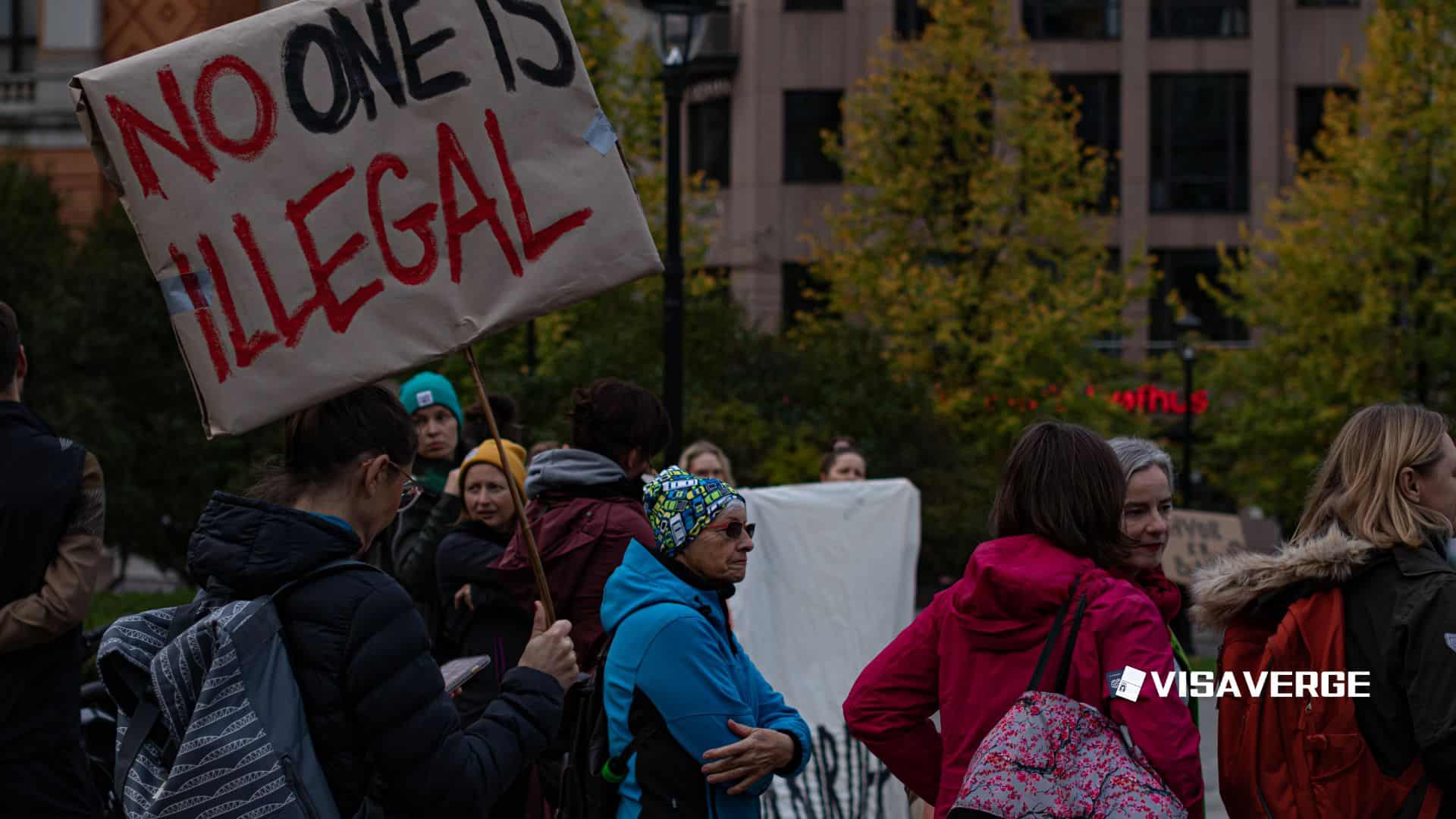
As of March 25, 2026, rallies and organizing continued around both issues. Supporters kept pressing for bans on 287(g), information sharing, inmate notifications, and detention contracts.
What has not changed yet as of March 25, 2026
No confirmed statewide law had taken effect by March 25, 2026 to impose all of these limits across New York.
That means:
- The New York for All Act had not been confirmed as enacted
- Hochul’s Local Cops, Local Crimes Act had not been confirmed as enacted
- Local practices still varied across counties and cities
- Nassau County remained active in ICE collaboration through jail-related arrangements
State Senate Majority Leader Andrea Stewart-Cousins endorsed the “goals” of New York for All and called Hochul’s steps “meaningful”. That signaled a real chance for further legislative action, including movement on a standalone program bill.
Murad Awawdeh of the New York Immigration Coalition described Hochul’s proposal as “great progress” while continuing to push for full passage of New York for All.
What you should watch next
If this issue affects your family, your workplace, or your community group, focus on three things.
- Check whether your county sheriff, jail, or police department has a 287(g) agreement, detainee-holding contract, or release-notification practice.
- Watch Albany for action on the New York for All Act, the Local Cops, Local Crimes Act, and the Dignity Not Detention Act.
- Track local executive orders and council actions, especially in places like New York City, Binghamton, Broome County, and Nassau County.
The next concrete date is May 7, 2026, when New York City agencies must report to Mayor Eric Adams under Executive Order No. 13. That deadline should provide a clearer picture of how city agencies are handling immigration-enforcement cooperation and where additional policy changes could follow.