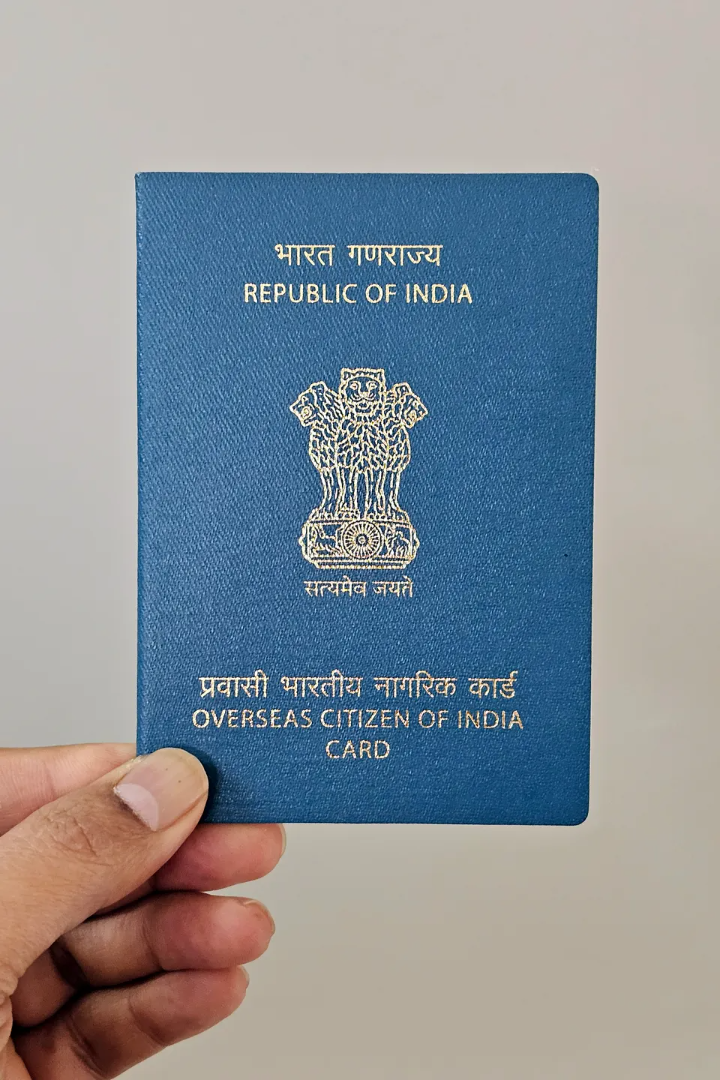
- Adults over twenty no longer need physical reissues of OCI booklets under the twenty twenty-six digital system.
- Holders must update new passport details online within three months to avoid travel friction and fees.
- Children under twenty still require frequent online record updates due to changing facial features and passports.
India launched the e-OCI Card system in 2026, removing the need in many adult cases to reissue a physical OCI card after passport renewal.
However, one rule remains firmly in place: holders must update new passport details online when a new passport is issued. That change answers a question many overseas Indians ask after renewing a foreign passport.
Free toolSubstantial Presence Test Calculator
A new physical booklet is often no longer required for adults after 20, but the digital record still has to match the current passport. Mismatch is the problem the updated system tries to avoid.
If the OCI record remains tied to an old passport while the traveller carries a new one, questions can arise at airline check-in, immigration counters or digital verification systems. The legal category also matters.
An NRI is generally an Indian citizen living outside India, while an OCI cardholder is usually a foreign citizen of Indian origin with Overseas Citizen of India status. Many families use the terms loosely in everyday conversation, but the passport-update rules discussed here apply to OCI cardholders.
OCI is not Indian citizenship, and holders remain foreign citizens who must travel with a valid foreign passport. Under the e-OCI Card system, existing cardholders can obtain a digital e-OCI card in most cases without a fresh application or physical verification.
The practical shift is most visible after age 20, when a new passport no longer generally triggers physical booklet reissue. Adults still have to upload passport-related details online after receiving a new passport.
India’s revised approach changed the physical document side of the process, not the duty to keep OCI records current. That distinction runs through the current system.
Physical reissue may no longer apply in many cases, but online update remains necessary because OCI records are expected to match the current foreign passport. Travel timing often turns that administrative step into an urgent one.
Many OCI holders renew passports shortly before a trip to India, and the gap between the new passport and the older OCI-linked record can create avoidable friction. The safer approach is to complete the online update before urgent travel or, better still, well before departure.
Travellers are advised to carry the current valid foreign passport, the OCI card or e-OCI record, the old passport if available, and proof of the online update such as acknowledgement copies.
Age-Based Rules Explain Confusion
Age-based rules explain why confusion persisted for years. Earlier guidance said OCI reissue was not mandatory every time a new passport was issued between ages 21 and 50.
It also required a one-time OCI reissue when a new passport was issued after completing 20 years of age, largely to capture adult facial features. Older guidance also required online upload of the new passport and latest photo for some age groups, including up to 20 years and once after completing 50 years.
The 2026 e-OCI system reduced the role of physical booklet reissue, but not the online passport-update requirement. Children remain a separate category because their passports change more often.
OCI cardholders below 20 are generally required to upload a copy of the new passport and the latest photograph online when a new passport is issued. Parents cannot assume a child’s OCI record updates automatically after passport renewal.
Families need to check the new passport number, issue and expiry dates, the child’s latest photograph, and the OCI record details, along with any additional documentation a local mission may ask for. That rule reflects a practical reality rather than a formal label.
Children’s facial features change quickly, and their passport renewals are more frequent, so the record has to be refreshed more often.
Adult Rules After Age 20
The most common confusion sits with adults who have crossed 20. Earlier instructions called for a one-time OCI reissue after a new passport was issued once the holder had completed 20 years of age.
Under the new system, that physical-booklet step has been removed for adults after 20. The action now is simpler: update passport details online and keep the OCI record current.
Holders between 21 and 50 generally fall into that streamlined category. Passport renewal in that age band normally requires an online update of passport details, not repeated OCI booklet reissue.
That applies across the group that includes working professionals, students, permanent residents abroad and naturalized citizens of other countries. They are expected to upload the new passport details and latest photograph through the OCI miscellaneous or update system.
People over 50 also still need to pay attention after passport renewal. Earlier guidance required online uploading of passport and photo once after completing 50 years when a new passport was issued, and under e-OCI the online update remains part of the process.
Spouse-Based OCI Registration
Spouse-based OCI registration carries an extra layer. A foreign-origin spouse of an Indian citizen or OCI cardholder may need to upload a copy of the new passport and latest photograph each time a new passport is issued.
They may also need to include a declaration that the marriage continues to subsist and relevant spouse documents. That requirement follows the basis of the registration itself.
Spouse-based OCI status depends on the continuing marital relationship, so marriage-related proof can remain part of the update process.
Documents and Fees
Applicants using the online update or OCI miscellaneous service may need the current foreign passport, the old passport if available, OCI card details, a latest photograph, and signature or thumb impression where required.
Some cases may also call for proof of address, spouse documents, or supporting papers if personal particulars changed. If the old passport was not returned by the passport authority, portal or mission instructions govern what happens next.
Loss or damage of an OCI card falls outside ordinary passport renewal and can require reissue or duplicate OCI service, sometimes with a police report or other evidence and, in some cases, a personal interview. Name and nationality changes also move the case out of the routine update track.
A passport renewal with the same name and nationality is simpler, but a new passport reflecting a change of name, nationality, date of birth, gender or other personal particulars can require the appropriate miscellaneous service and supporting documents.
Fees differ between a basic online update and a reissue application. Official FAQs treat miscellaneous services for updating details as free if completed within the allowed period, while late passport-detail updates or physical reissue services can attract a fee.
The recommended timeline is three months. OCI holders are generally advised to upload the new passport details and latest photo within three months of receiving the new passport, both to avoid fee issues and to reduce the chance of travel problems.
Common Mistakes After Passport Renewal
Delayed action is one of the most common mistakes after passport renewal. Another is assuming everyone needs a new OCI booklet, even though the e-OCI Card system ended that requirement for many adults after 20.
Parents who overlook children’s renewed passports create another recurring problem, because each person’s record has to be updated separately. A parent’s update does not automatically refresh a child’s OCI record.
Relying on old travel habits also carries more risk than before. Many OCI holders have travelled with a current valid passport and OCI card, and Indian missions have advised that OCI holders can travel with the OCI card and current valid passport.
Digital verification and e-OCI records now carry more weight. That is why travellers are advised to update online, save the acknowledgement, and carry supporting documents.
A current passport, OCI card or digital e-OCI proof, the old passport if it contains matching information, and copies of the submission record offer the strongest paper trail if questions arise.
The same principle applies across countries such as the United States, Canada, the United Kingdom and Australia. Renewing a foreign passport through local authorities does not update India’s OCI system, so the holder has to make that update separately through the OCI portal or the process used by the jurisdictional Indian mission.
The Practical Rule After Passport Renewal
The practical rule after passport renewal is now narrower than it once was and easier to state. Adults after 20 generally do not need a fresh physical OCI card under the 2026 e-OCI Card system, but they do need to keep the digital OCI record aligned with the new passport.
For travel to India, consistency matters more than the booklet itself. A valid current passport, an updated OCI record, saved acknowledgement and supporting documents can prevent the mismatch that turns a routine trip into a dispute at the counter.