- Home Minister Amit Shah launched the e-OCI card in New Delhi to digitize overseas citizenship services.
- The new system eliminates physical booklet re-issuance for cardholders over twenty years of age after passport renewals.
- Over fifty lakh OCI cardholders will benefit from simplified online application, document upload, and digital card downloads.
Union Home Minister and Minister of Cooperation Amit Shah launched India’s Electronic Overseas Citizen of India Card, or e-OCI Card, in New Delhi on June 30, 2026, opening a fully digital system that the Ministry of Home Affairs said will benefit more than 50 lakh OCI cardholders.
The most immediate change removes a paperwork step that had long followed passport renewal. After the age of 20, an OCI holder who receives a new passport will no longer need to seek re-issue of the physical OCI booklet, though passport details still must be updated online whenever a new passport is issued.
Free toolSubstantial Presence Test Calculator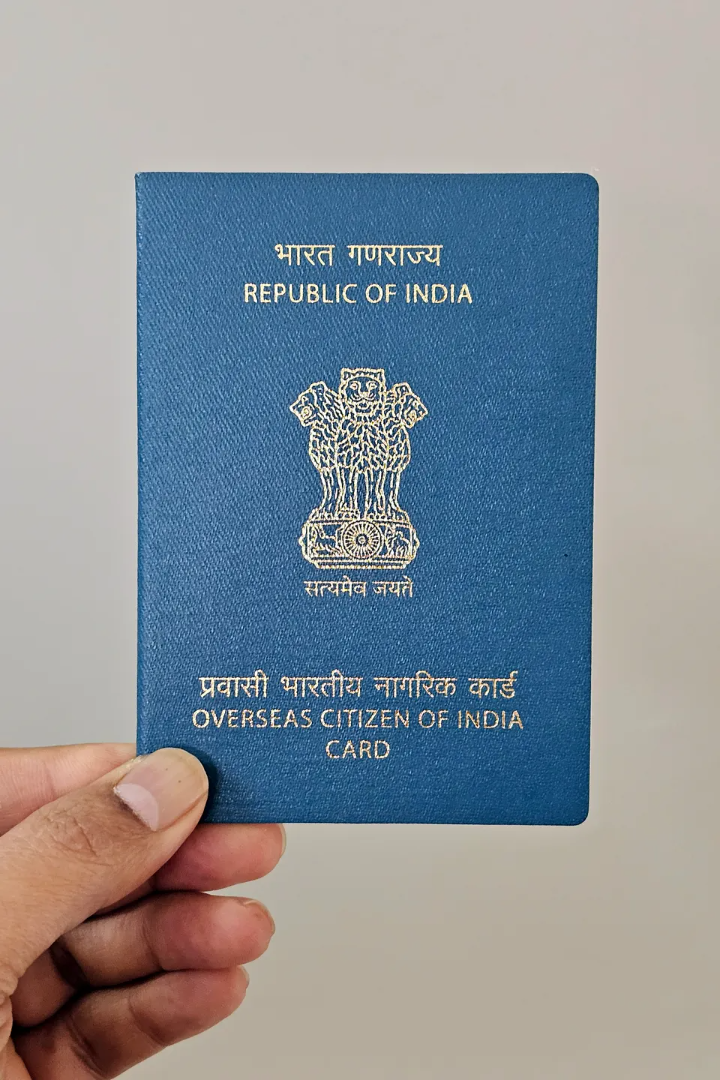
Under the new system, applicants can complete the OCI process online, including application submission, document upload and download of the digitally generated card after approval. Existing cardholders can also obtain the e-OCI Card digitally in most cases without filing a fresh application or appearing for physical verification.
That marks a clear break from the older booklet-based process, which often left OCI holders checking whether a fresh booklet was required after a new foreign passport arrived. The change is aimed at overseas Indians and persons of Indian origin who hold OCI status and regularly deal with passport renewals in countries such as the United States, Canada, the United Kingdom and Australia.
The government kept one compliance rule in place. OCI holders must continue to update passport-related details online after each new passport, even though booklet re-issue after age 20 has ended.
That distinction sits at the center of the new procedure. The relief is the removal of booklet re-issue, not the removal of passport-detail updates, and the government’s guidance ties that online update to keeping immigration records current before travel.
The e-OCI Card forms part of a wider digital push in immigration and citizenship-related services. The Ministry of Home Affairs said the system will reduce paperwork, lower administrative costs, improve centralized tracking and integrate with digital immigration systems for real-time verification at airports.
Officials also tied the digital shift to practical changes in day-to-day use. The ministry said the system should reduce repeated physical documentation steps in most cases, lower the risk of losing or damaging a physical OCI document, make OCI records easier to access online, speed up digital issuance after approval and smooth immigration verification during travel.
The government said the e-OCI system will also support better identity verification and reduce the risk of fraud. Those gains are administrative, but they reach travelers directly because OCI status often sits at the intersection of passport validity, immigration inspection and repeated travel to India.
OCI status itself has not changed. The Overseas Citizenship of India Scheme allows eligible persons of Indian origin who are citizens of another country to register as OCI cardholders, and it applies broadly to persons who were citizens of India on or after January 26, 1950, or who were eligible to become Indian citizens on that date, subject to exclusions under Indian law.
The status carries substantial travel and residence benefits. OCI cardholders generally receive a multiple-entry, multi-purpose, lifelong visa for visiting India and are exempt from registration with the Foreign Regional Registration Officer or Foreign Registration Officer for any length of stay in India.
Yet the launch of the e-OCI Card does not turn OCI into dual citizenship. The Ministry of External Affairs states that OCI should not be misunderstood as dual citizenship and that OCI does not confer political rights, including voting rights and eligibility for specified constitutional offices.
Existing cardholders now face a simpler set of tasks than before. They should check whether they are eligible to obtain the digital e-OCI Card, update passport details online after any recent passport renewal and keep a digital copy accessible on a phone or another device while retaining any physical documents they may still need during the transition.
That transition matters because the system change is digital, but travel routines still involve airlines, airports and immigration counters. The government’s guidance points cardholders toward matching passport and OCI records before departure rather than leaving document updates until the last moment.
New applicants will move through the same digital structure from the start. The government said the process covers online submission, online document upload and download of the digitally generated card after approval, replacing a sequence that previously relied more heavily on physical paperwork, booklet delivery and repeated documentation steps.
Applicants still must satisfy the same underlying checks. Digital processing reduces paper movement, but it does not remove eligibility review or document verification, and the government’s instructions require passport, citizenship and personal details to match exactly.
The practical importance of the new system lies in how often passport renewal interrupted OCI paperwork. Under the previous arrangement, a new foreign passport could trigger questions over whether an OCI booklet also had to be re-issued, creating uncertainty at precisely the point when travelers were trying to confirm they had current documents for an upcoming trip.
By ending booklet re-issue after age 20 and shifting access toward a digital card, India has reduced one of the most recurring procedural hurdles in the OCI process while preserving the requirement to keep passport information updated online. For the millions covered by OCI status, the e-OCI Card replaces a familiar paper chase with a record that lives in the digital system the Ministry of Home Affairs wants to use at the border.