- Sponsors must generally prove income at 125 percent of the 2026 Federal Poverty Guidelines to qualify.
- A joint sponsor must meet income requirements independently based on their own specific household size.
- New 2026 enforcement directives require strict reconciliation between tax returns and the reported household size.
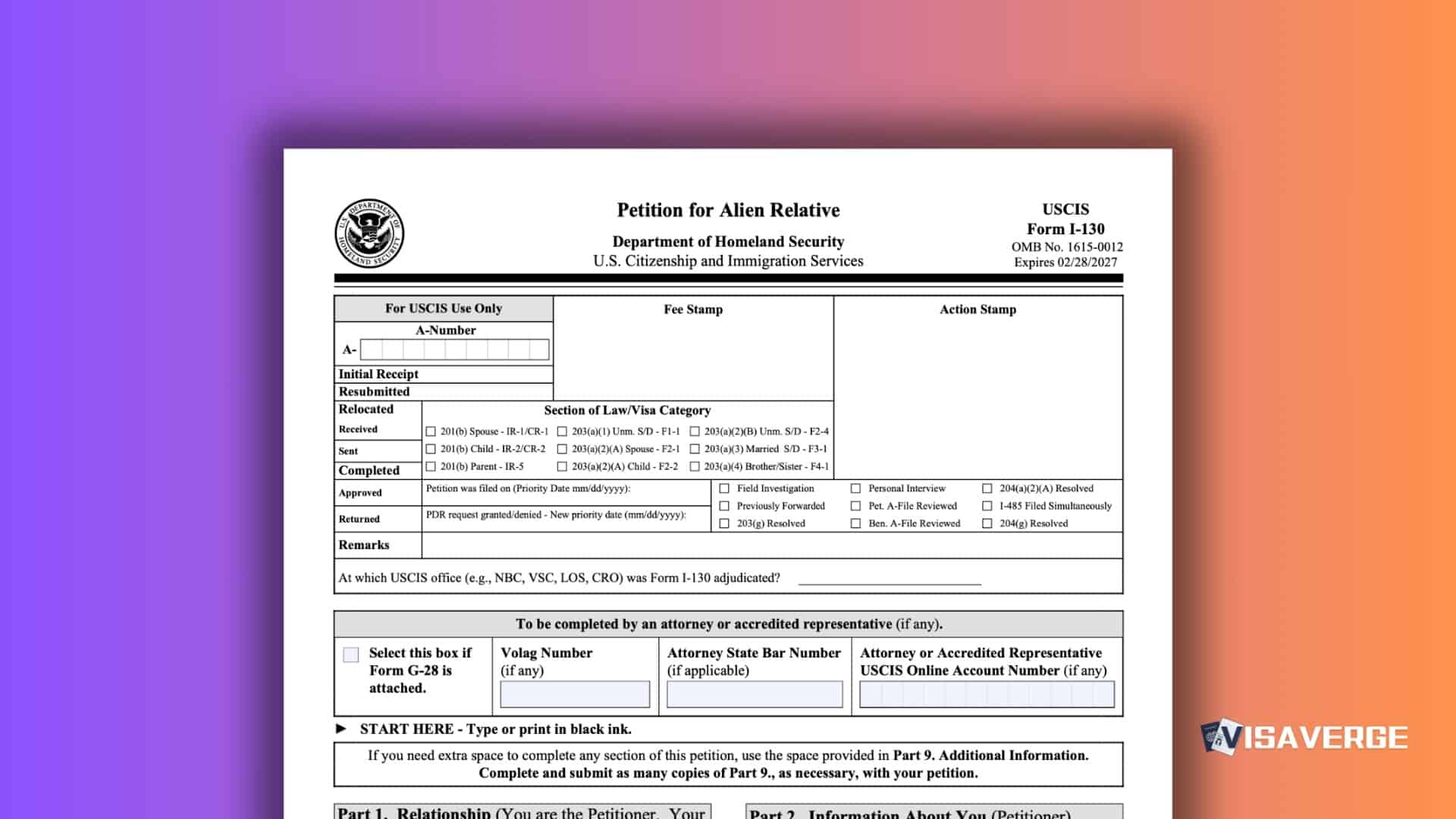
The petitioner generally must file Form I-864, Affidavit of Support when the affidavit requirement applies, even if another person earns more. A joint sponsor can add financial support, but usually cannot remove the petitioner’s own obligation.
The form creates a contract with legal consequences. U.S. Citizenship and Immigration Services describes it as a binding agreement between the sponsor and the U.S. government in many family-sponsored green card cases and certain employment-based cases involving qualifying relatives.

Most sponsors must show income equal to at least 125% of the applicable Federal Poverty Guidelines. Active-duty military members petitioning for a spouse or child may use the lower 100% standard.
Free toolI-94 Expiration Calculator OnlineThe income threshold depends on household size. The sponsor must count the intending immigrant, the sponsor, certain dependents, other immigrants being sponsored and other people listed in the form instructions.
A joint sponsor must meet the income test alone
A joint sponsor is another qualifying person who independently meets the sponsorship requirements. The calculation uses that person’s own household size and existing sponsorship obligations.
The arrangement does not work by adding a small contribution to the petitioner’s income. The additional sponsor generally must meet the applicable income level independently.
The petitioner still files when the law requires it. A household member whose income is being used follows a different process and may need Form I-864A, Contract Between Sponsor and Household Member.
That distinction separates two arrangements. A household member contributes qualifying income within the sponsor’s household, while a joint sponsor qualifies through a separate household calculation.
Household size sets the threshold
The required income rises as the household grows. An incorrect count can produce the wrong income requirement and create questions about the financial evidence.
USCIS adjudicators now reconcile the household size listed on the affidavit with the sponsor’s most recent tax return under a 2026 enforcement directive. A discrepancy, such as listing more dependents on the form than on the return, can trigger a Request for Evidence.
The 2026 poverty guidelines took effect on March 1, 2026. For the 48 contiguous states, the minimum annual income at the standard rate is:
| Household size | Minimum annual income at 125% |
|---|---|
| 2 | $27,050 |
| 3 | $34,150 |
| 4 | $41,250 |
| 5 | $48,350 |
| Each additional person | Add $7,100 |
An active-duty military sponsor petitioning for a spouse or child uses 100% of the guidelines. The 2026 figure for a household of two under that standard is $21,640.
USCIS updates the poverty tables periodically. Applicants should use the current Form I-864P poverty guideline table when preparing the filing rather than rely on older figures.
Assets and household income may offer alternatives
A sponsor below the income threshold may be able to use qualifying assets, income from an eligible household member or a joint sponsor. Each option has separate requirements.
The 2026 policy materials identify assets valued at five times the income shortfall as an important option in cases facing closer public-charge review. The applicable calculation can differ in some circumstances, including cases involving the spouse or child of a U.S. citizen.
Qualifying income from a household member generally requires that person’s participation through Form I-864A. That route differs from an independently qualifying joint sponsor.
USCIS strongly prefers IRS-issued tax transcripts over photocopies of tax returns for income verification. The financial evidence should match the household size and income reported on the affidavit.
A separate exemption procedure also changed. USCIS discontinued Form I-864W on February 10, 2025, and incorporated the exemption request into Form I-485, Application to Register Permanent Residence or Adjust Status.
The obligation can survive divorce
Signing the affidavit can create responsibilities that continue after the immigrant receives permanent residence. Divorce alone does not end the sponsor’s contractual obligation.
The obligation generally lasts until a statutory terminating event occurs. Possible events include the immigrant becoming a U.S. citizen, earning 40 qualifying quarters of work, losing lawful permanent resident status and departing the United States under applicable circumstances, receiving a new adjustment grant based on a new affidavit where applicable, or dying.
Forty qualifying quarters amounts to approximately 10 years of work. The precise circumstances depend on the statute and current USCIS rules.
The sponsored immigrant may enforce the contract. That makes the affidavit different from an informal promise between relatives.
A sponsor may also face reimbursement claims if the immigrant receives means-tested public benefits. Examples include SNAP, TANF, Medicaid and SSI. USCIS alerts dated July 24, 2026, say sponsors may be liable for benefit costs, legal fees and other associated costs if they fail to repay a benefit-granting agency.
Anyone signing should understand the agreement before submitting it. The petitioner and any additional sponsor can carry financial exposure.
Public-charge review has expanded beyond sponsor income
USCIS announced on July 16, 2026, that it had rescinded the 2022 Biden-era public-charge regulation. The change affects how the affidavit is considered within the totality-of-the-circumstances review for green card applicants.
The agency said:
“The Trump administration is upholding the rule of law and protecting American taxpayers from subsidizing aliens who may become dependent on public benefits. USCIS is committed to safeguarding the safety, security, and financial well-being of Americans.”
The Department of State announced a Public Charge Bonds pilot program for immigrant visa applicants on August 5, 2026. The department said:
“Immigrating to the United States is a privilege, not a right. Those who wish to obtain a U.S. immigrant visa must be capable of demonstrating that they will be a benefit – rather than a burden – to our nation.”
The updated review can consider factors beyond sponsor income, including the applicant’s age, health and skills. Meeting the affidavit’s income requirement does not guarantee approval.
Some immigrant categories are exempt
The affidavit is commonly required in family-sponsored cases and specified employment-based cases, but some immigrant categories do not require it. The applicable immigrant classification determines whether the filing is necessary.
When the requirement applies, the petitioner generally files even when an additional sponsor is available. The additional sponsor addresses a separate financial qualification issue and does not automatically take over the petitioner’s legal role.
Applicants should review USCIS affidavit guidance, the 2026 poverty guidelines, household-size instructions, tax evidence and exemption information before filing. Processing times and fees are subject to change; verify current requirements at uscis.gov.
This article provides general information and is not legal advice. Consult a qualified immigration attorney about your specific case.