Key Takeaways:
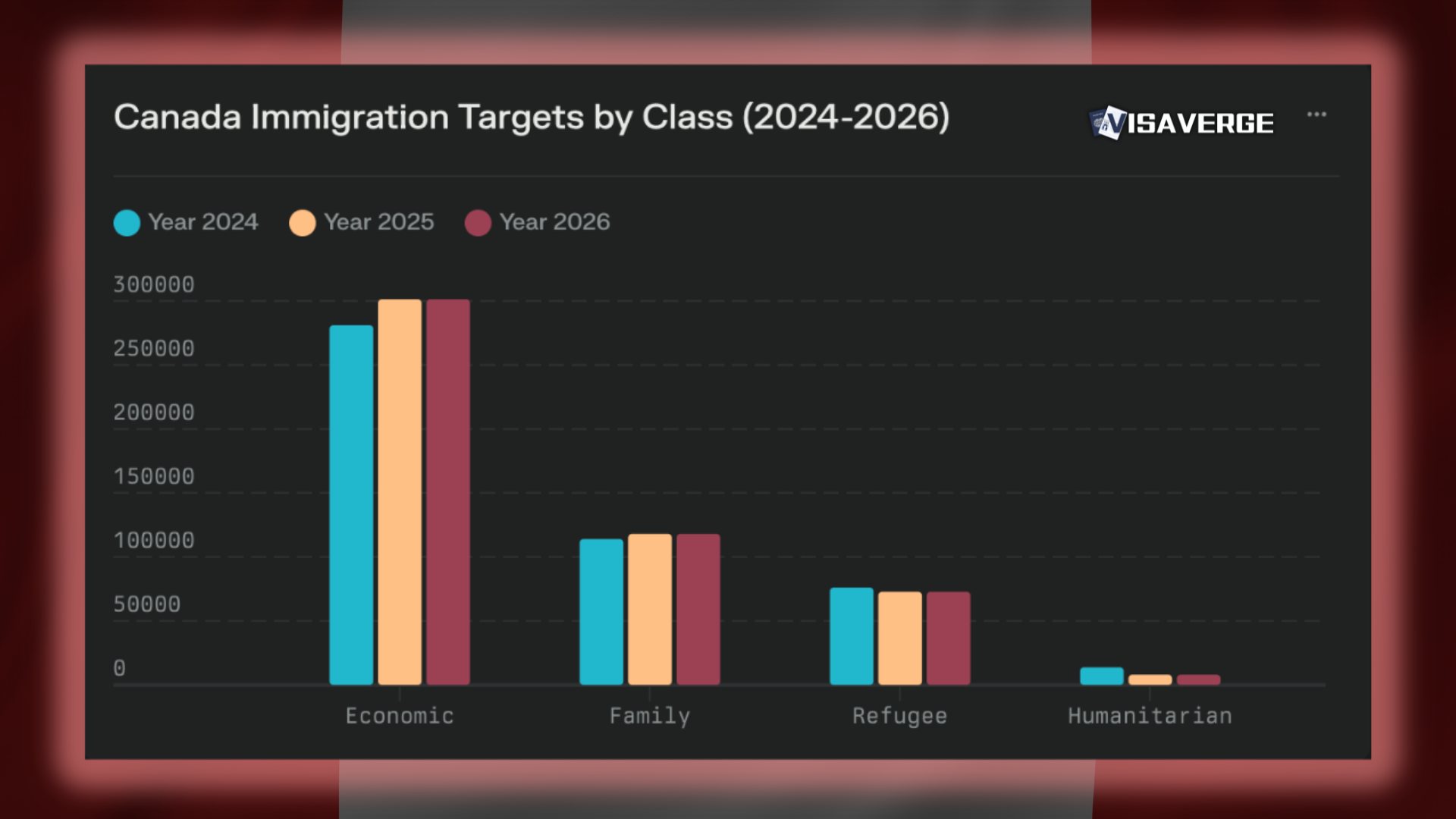
- Canada aims to welcome 485,000 new permanent residents in 2024, increasing to 500,000 in 2025 and 2026.
- Economic immigrants will make up 58% of total immigration targets, including Federal High Skilled Programs and Provincial Nominee Program.
- Family reunification, humanitarian immigration, and targeted programs address labor shortages in key sectors and promote regional economic growth.
How Much Has Immigration Increased in Canada in May 2024?
Immigration to Canada has seen a tremendous boost, increasing by 9.3% in May 2024 compared to the previous month. This rise puts Canada on the path to set a new record for annual immigration. According to VisaVerge.com, Canada aims to welcome 485,000 new permanent residents in 2024, with targets rising to 500,000 in both 2025 and 2026.

Why Is Economic Immigration a Focus?
Canada’s Immigration Levels Plan for 2024-2026 emphasizes economic immigration. Economic immigrants are expected to make up around 58% of the total immigration target for 2024. This category includes various programs:
What Are the Key Economic Immigration Programs?
- Federal High Skilled Programs: Canada plans to admit 110,770 immigrants through programs like Express Entry in 2024, a significant jump from 83,000 in 2023. This number is projected to rise to 117,500 for both 2025 and 2026.
- Provincial Nominee Program (PNP): The PNP is set to welcome 110,000 new immigrants in 2024, with goals to increase this to 120,000 in following years. This program allows provinces to nominate individuals based on specific economic needs.
- Economic Pilots: Various pilots, including the Agri-Food Pilot and Rural and Northern Immigration Pilot, aim to bring in 10,875 immigrants in 2024, with a target of 14,750 by 2025.
How Does Family Reunification Factor In?
Family reunification is another vital part of Canada’s immigration strategy. The country plans to welcome:
Free toolCanada Express Entry Points Calculator- 82,000 spouses, partners, and children in 2024
- 32,000 parents and grandparents in 2024
These numbers are expected to increase slightly in the following years.
What About Humanitarian Immigration?
Canada remains committed to humanitarian immigration, with plans to admit:
- 27,000 protected persons in Canada and their dependents abroad in 2024
- 21,115 government-assisted refugees in 2024
- 27,750 privately sponsored refugees in 2024
Are There Specific Targets for French-Speaking Immigrants?
As part of its bilingual strategy, Canada has specific goals for French-speaking immigrants outside of Quebec. The targets are set at:
- 6% of all immigrants in 2024
- 7% in 2025
- 8% in 2026
Which Provinces Are the Top Choices for Newcomers?
Ontario, British Columbia, and Alberta remain the top destinations for newcomers. However, there’s a growing effort to attract immigrants to smaller provinces and rural areas to address regional labor shortages. This move aims to promote economic growth across all regions.
What is the Labor Market Impact of Increased Immigration?
The rise in immigration is largely driven by the need to address critical labor shortages in several sectors, including:
- Healthcare
- STEM (Science, Technology, Engineering, and Mathematics)
- Trades
- Transportation
- Agriculture and food production
Canada is employing targeted Express Entry draws to invite candidates with the necessary experience in these high-demand sectors.
Why Are Immigrants Essential for Canada’s Economic Growth?
Immigrants play a pivotal role in fueling Canada’s economy. They help to:
- Fill labor market gaps
- Support the transition to a green economy
- Drive technological innovations
- Contribute significantly to the tax base and social programs
What Challenges Does Canada Face with Increased Immigration?
While immigration numbers soar, the government is addressing several challenges:
- Housing: Adequate housing for newcomers is a growing concern.
- Healthcare: Expanding healthcare to support population growth is crucial.
- Integration: Providing sufficient settlement services to help newcomers adapt to Canadian society.
- Regional Distribution: Encouraging immigration to less populated areas to promote balanced growth.
What is the Future Outlook for Canada’s Immigration?
If current trends persist, Canada is likely to meet or exceed its immigration targets for 2024. This could prompt further adjustments, potentially setting even higher targets for the coming years. However, from 2026 onwards, the plan is to stabilize immigration levels at 500,000 per year. This approach balances the need for newcomers with Canada’s capacity to integrate them successfully.
Canada’s strategy reflects a long-term vision to tackle demographic challenges, bolster economic growth, and maintain its status as a prime destination for global talent. As Canada moves towards these record-breaking immigration levels, it will be essential to monitor various societal impacts and make necessary adjustments to ensure successful integration and mutual benefits for both newcomers and long-term residents.
For more detailed information on immigration policies, you can visit the Government of Canada’s Immigration and Citizenship official website.
This comprehensive overview delves into the recent 9.3% increase in Canada immigration as of May 2024 and the broader initiatives aimed at expanding the number of permanent residents over the next few years. The focus on economic, family, and humanitarian immigration, along with the targeted inclusion of French-speaking immigrants, underscores Canada’s multi-faceted approach to addressing its demographic and labor market needs.
Learn Today:
Glossary of Immigration Terms
- Economic Immigration:
- Definition: A category of immigration focused on individuals who can contribute to a country’s economy, often through specific labor skills or investments.
- Context: In 2024, economic immigrants are set to make up approximately 58% of Canada’s total immigration target.
- Express Entry:
- Definition: A system used by the Canadian government to manage applications for permanent residence from skilled workers.
- Context: Canada’s Federal High Skilled Programs, including Express Entry, plan to admit 110,770 immigrants in 2024.
- Provincial Nominee Program (PNP):
- Definition: A Canadian immigration program allowing provinces and territories to nominate individuals who wish to immigrate to Canada and who have the skills to contribute to the economic growth of those regions.
- Context: The PNP aims to welcome 110,000 new immigrants in 2024, with an increase in subsequent years.
- Family Reunification:
- Definition: Immigration policies that allow family members of immigrants to join them in the new country, aiming to reunite families and support their new life in the host country.
- Context: Canada plans to welcome 82,000 spouses, partners, and children, and 32,000 parents and grandparents in 2024.
- Humanitarian Immigration:
- Definition: Immigration policies aimed at protecting individuals who are facing persecution, human rights violations, or other emergencies in their home countries.
- Context: Canada plans to admit 27,000 protected persons, 21,115 government-assisted refugees, and 27,750 privately sponsored refugees in 2024.
This Article In A Nutshell:
Immigration to Canada surged by 9.3% in May 2024, putting the country on track for a record year. Canada’s updated strategy aims for 485,000 new residents this year, emphasizing economic immigrants to address labor shortages and bolster growth, with targets rising to 500,000 annually by 2025 and 2026.
— By VisaVerge.com
Disclaimer: The information provided in this article is for informational purposes only. If you reference or use any content from this article, please attribute it to VisaVerge.com by including a link to the original source. We appreciate your adherence to our content usage policies and your commitment to giving proper credit.