The Trump DOJ pressure campaign reached Karen Donoso Stevens in Courtroom 15, where her supervisor told her on January 14 that he had been instructed to pull her from court. The Annandale Immigration Court judge said another supervisor had already directed her to reverse four rulings at the request of unidentified higher-ups. She called a recess. Then she went into the hallway.
The supervisor could not explain the order. When she asked why, he replied, “I don't know,” according to her first-person account, published by The Washington Post on October 24, 2026. She recalled thinking she was about to be fired. He told her only that he had been instructed to remove her from court.

A dozen attorneys had been waiting on video for hearings involving detained clients facing deportation. The judge said she had prepared for the cases days earlier. A Homeland Security attorney and her legal assistant watched as the hearing stopped.
She recalled thinking, “Here we go.” She had worn the same black robe for nearly a decade.
Her record included years as a prosecutor and decisions in line with national averages
The judge, 53, joined the bench in 2016 after spending a decade at Homeland Security, where she built a reputation as a formidable prosecutor. She was the most tenured detained judge in Annandale.
| India | China | ROW | |
|---|---|---|---|
| EB-1 | Feb 01, 2023 | Aug 01, 2023 ▲31d | Current |
| EB-2 | Nov 01, 2013 | Oct 01, 2021 | Apr 01, 2025 ▲90d |
| EB-3 | Jan 22, 2014 ▲21d | Jan 22, 2022 ▲14d | Jun 15, 2024 ▲31d |
| F-1 | Jan 22, 2021 ▲366d | Jan 22, 2021 ▲366d | Jan 22, 2021 ▲366d |
| F-2A | Oct 22, 2026 ▲30d | Oct 22, 2026 ▲30d | Oct 22, 2026 ▲30d |
Each year, she denied asylum in more than half the applications before her, a rate described as consistently in line with national averages. She had not resisted case quotas imposed during President Donald Trump's first administration, seldom took sick leave and kept her docket current.
Immigration courts operate inside the Justice Department, under the attorney general and ultimately the president. Their judges still must decide cases under the law and afford migrants due process. The department fired some 100 of the country's roughly 700 immigration judges in the first year of Trump's second term, and began replacing them with people it called “deportation judges.”
The courts entered the new administration with more than 4 million unresolved cases. The backlog had grown during a period of increased migration under President Joe Biden, and Trump had pledged to address it. The caseload did not erase judges' obligation to decide individual cases.
A Justice Department memo bars directed rulings but warns statistical outliers can draw scrutiny
The Executive Office for Immigration Review issued Policy Memorandum PM 25-42 on August 22, 2025, addressing judicial independence. The memo says no employee or officer can direct an adjudicator to reach a particular result, and that pressure from colleagues is not a proper factor in a ruling.
It also says unusual outcome metrics can prompt scrutiny. The memo states that “Adjudicatory outliers or statistically improbable outcome metrics” may indicate bias or failure to follow the law, warranting close examination and possible action. It reminds judges that the attorney general retains authority over adjudicators, whom it describes as inferior officers subject to appointment and removal.
The regulation governing immigration judges says they “shall exercise their independent judgment and discretion,” under 8 C.F.R. § 1003.10(b). The Supreme Court's 1954 decision in United States ex rel. Accardi v. Shaughnessy, 347 U.S. 260 (1954), held that officials must exercise discretion granted by regulation rather than simply follow a dictated outcome.
Shahid Haque, whose Border Crossing Law Firm analyzed the memo, summarized its tension this way: “No one may order a particular ruling. And rulings that depart from the average can end a career.”
A UN communication cited terminations, docket changes and new enforcement-oriented hires
Two UN Special Rapporteurs, covering the independence of judges and lawyers and the human rights of migrants, sent the U.S. government a communication dated 29 June 2026. The letter, reference AL USA 16/2026, described actions that it said were changing immigration courts from venues for individualized review into enforcement agencies serving executive policy.
The rapporteurs cited what they called a “climate of fear,” including terminations, threatened discipline linked to judges' records and immigration officers placed in or near courts. They also objected to procedural guidance that they said encouraged deportation outcomes and to administrative changes to judges' dockets.
The communication further criticized the hiring of “deportation judges” and the assignment of U.S. military lawyers as temporary immigration judges. Separately, an EOIR rule rescinded minimum qualifications for temporary judges, allowing the director to appoint attorneys without prior immigration experience.
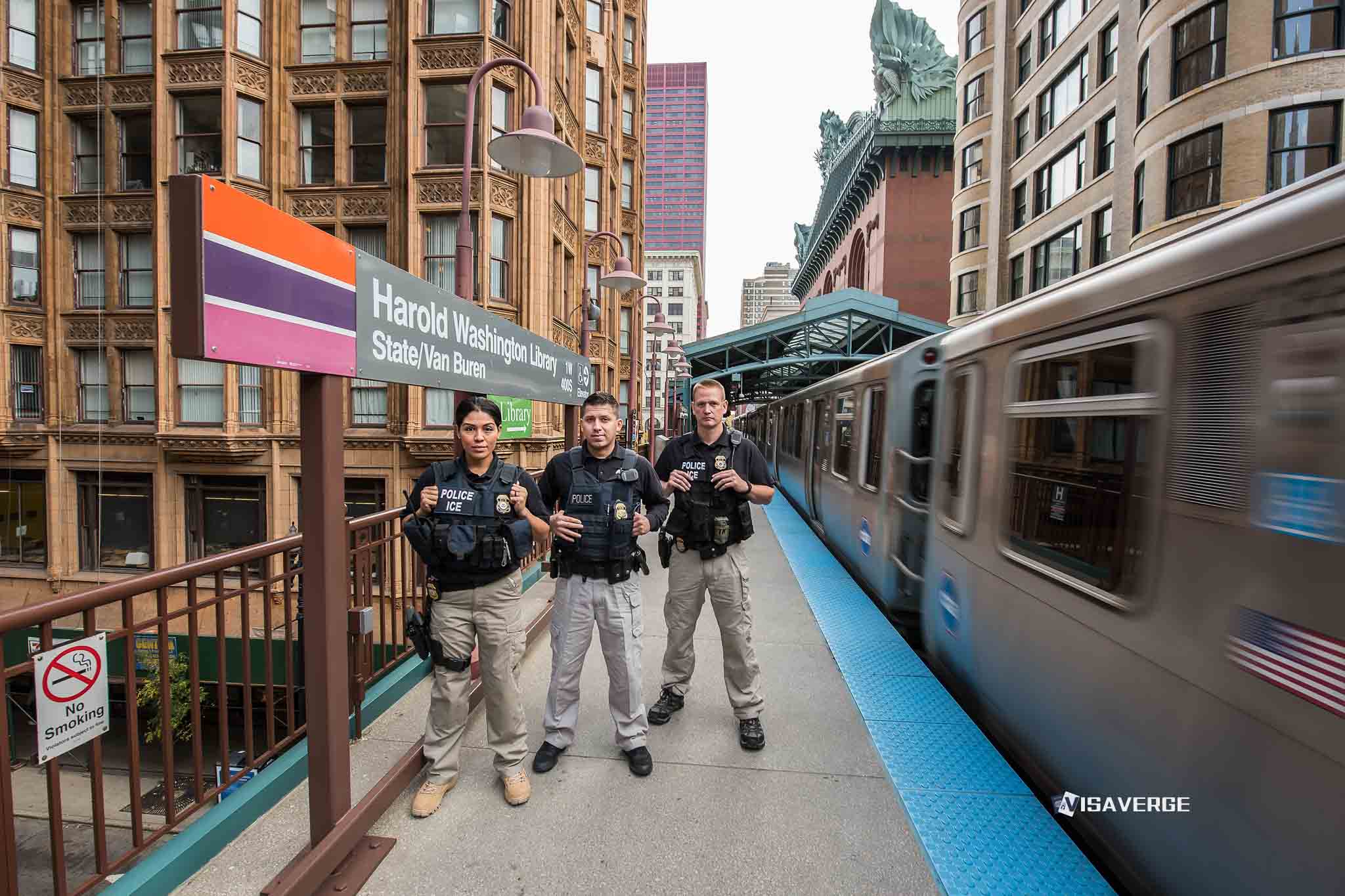
Other changes tracked by the Immigration Policy Tracking Project included rescinding protections against enforcement activity in or near court space, allowing oral motions from Homeland Security attorneys to dismiss cases, and ending guidance on translation for people with limited English. EOIR also circulated court flyers encouraging “self-deportation” and guidance warning that respondents might use continuances to delay proceedings.
A fired judge's whistleblower suit alleges retaliation over a detained child
Chloe Dillon, a former San Francisco immigration judge, sued after her August 2025 firing. Her complaint says she was dismissed about 48 hours after emailing her supervisor about “potential violations of statutory law and due process” in the detention of an unaccompanied minor who had left her courtroom.
Attorney Melanie Proctor filed the case in the U.S. District Court for the Northern District of California. The complaint alleges retaliation for whistleblowing, in violation of the Whistleblower Protection Act and First Amendment, and also raises Fifth Amendment, Appointments Clause and Article II claims.
Dillon's filing says the child could not be placed in expedited removal and had a pending asylum application that should first be considered by an asylum officer. It also says she had questioned a spring 2025 directive to grant all motions to change venue filed by Immigration and Customs Enforcement trial attorneys. Her supervisor, the complaint says, told her the White House was “watching the issue” and warned her against resisting.
Justice Department spokesperson Kiersten Pels said the allegation was “patently false.” Proctor said, “We look forward to the discovery process in litigation.” Dillon said judges should be able to discuss concerns without fear, adding that the administration's position was that “you can be fired for anything.”
The National Association of Immigration Judges told the Federal Circuit in a brief filed August 4, 2026, that the department had terminated “almost 40” judges who had completed probation by July 2026. The department invoked Article II and argued civil-service protections for those judges were unconstitutional, the brief said. The judges received no individual explanation, according to the filing.
A separate case, Jackler v. Merit Systems Protection Board, No. 26-1575, remains pending before the full Federal Circuit; argument is scheduled for December 10, 2026. EOIR Insights, a tracking project run by the Border Crossing Law Firm, counts 60 immigration judges fired or pushed out since January 2025.
This article provides general information and is not legal advice. Consult a qualified immigration attorney about your specific case.