Key Takeaways
- The 2025-2027 Immigration Plan reduces permanent and temporary resident targets, focusing on sustainable growth and societal well-being.
- The plan prioritizes in-Canada applicants, reforms student/work programs, and aligns targets with labor market needs.
- Projections show modest initial population decline, with economic growth, housing supply gap narrowing, and improved affordability.
Executive Summary
The Canadian government has released the 2025-2027 Immigration Levels Plan, offering a comprehensive roadmap for permanent and temporary resident targets. This long-term vision reflects a reduced number of permanent resident admissions starting in 2025, with a focus on sustainable economic growth and integration. For temporary residents, the plan presents defined targets aimed at a controlled decline to represent 5% of Canada’s population by the end of 2026. The framework underscores a preference for in-Canada applicants, particularly those transitioning from temporary to permanent status. Key strategic measures include reforms to student and work permit programs, focusing on economic needs and balancing demographic objectives with available resources.

Introduction
Free toolCanada Express Entry Points CalculatorAs countries worldwide contend with fluctuating immigration trends, Canada’s Immigration Levels Plan for 2025-2027 provides a strategic approach to harmonizing economic growth with societal well-being. The revised targets for permanent residents, along with the unprecedented inclusion of temporary resident metrics, underscore Canada’s commitment to managing immigration holistically. This approach considers economic, social, and geographic factors, setting targets that align closely with labor market demands and community needs.
Background
Formulated by the Immigration, Refugees and Citizenship Canada (IRCC), the Immigration Levels Plan is informed by the Immigration Refugee and Protection Act. It rests on comprehensive consultations involving provinces, stakeholders, and surveys across diverse populations, including Indigenous Peoples and Francophone communities. The plan addresses pressing demographic and regional priorities, international obligations, and systemic capacity constraints, ensuring the sustainable integration and retention of immigrants.
Analysis
Permanent Resident Targets
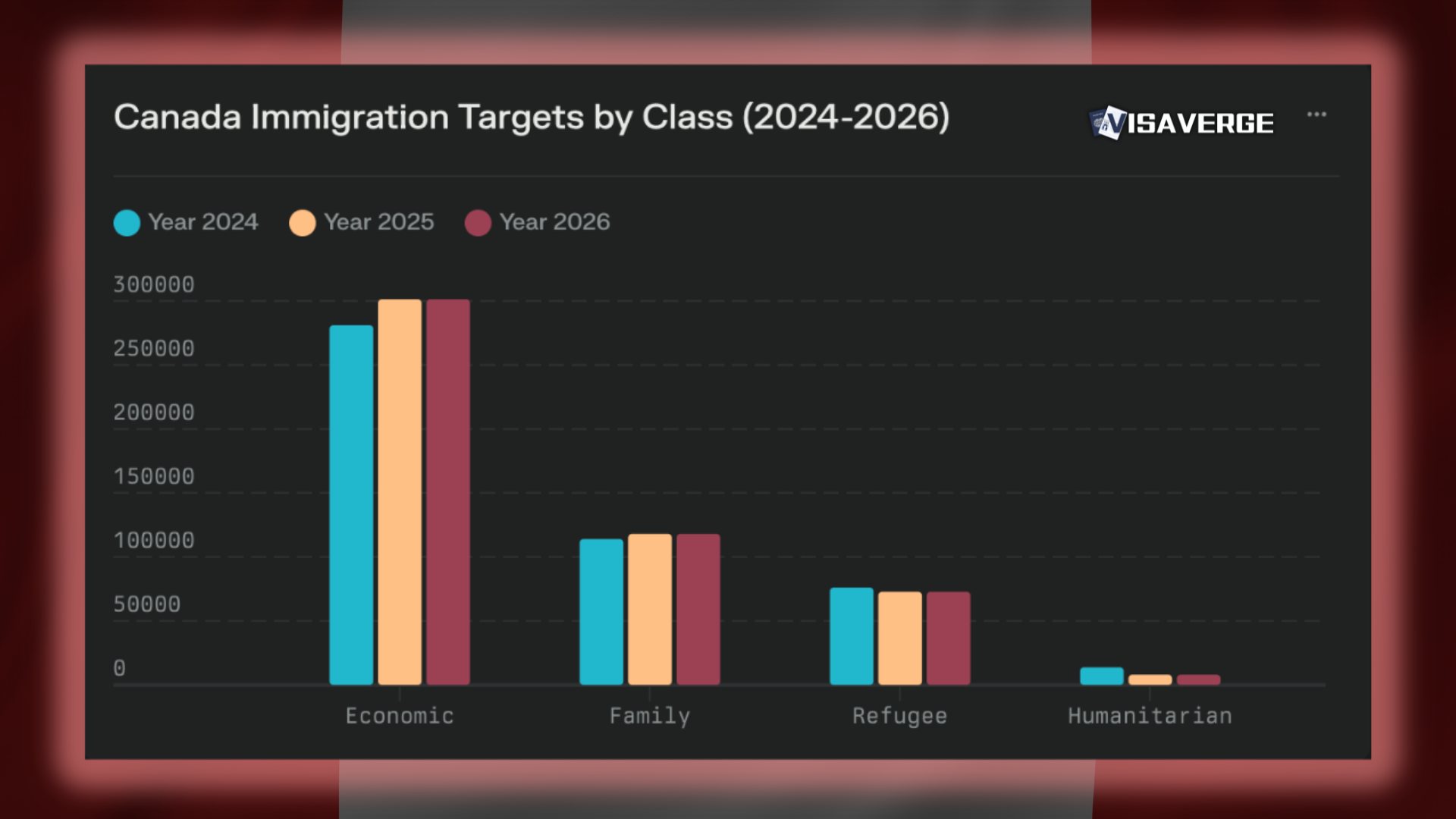
The plan articulates reduced permanent resident admissions with a forecast decrease of 105,000 in 2025. This anticipated reduction seeks to stabilize population growth while maintaining long-term economic prosperity. The focus is on candidates already residing in Canada, enhancing pathways for temporary residents to transition into permanent status. The economic class, expected to comprise 62% of permanent admissions by 2027, highlights sectors such as health care and trades, critical to sustaining the economy.
The family class remains pivotal, representing 24% of admissions in 2025, emphasizing family unity by facilitating the reunification of spouses, children, and seniors. Humanitarian commitments to vulnerable groups also persist, safeguarding Canada’s history of resettling those most in need, including LGBTQI+ and ethnic minority groups.
Canadian Francophone communities outside Quebec will see enhanced immigration targets, from 8.5% in 2025 to 10% in 2027, promoting cultural diversity and business growth. These measures aim to foster community vibrancy while counteracting the impacts of adjusted permanent resident levels.
Temporary Resident Targets
Canada’s innovative strategy introduces distinct targets for temporary residents, including foreign workers and students, aiming to steady the temporary populace to 5% of the national demographic by 2026. This strategy hinges on transitioning temporary residents to permanent status and tightening eligibility for newcomers.
Major reforms influence international students through a 10% reduction in study permits from 2024 benchmarks. The Post-Graduation Work Permit Program will be aligned better with market needs. Worker entries via programs like the International Mobility Program face constraints, with a 10% cap on low-wage stream employment and increased wages for high-wage positions, enhancing operational coherence with labor economics.
Immigration policies target fairness and integrity, addressing asylum demands and mitigating fraud through specific measures like partial visas for Mexican nationals. This ensures Canada’s obligations to displaced individuals are met equitably and pragmatically.
Policy Options
Three primary policy approaches were considered:
- Maintaining Current Levels: This pathway maintains existing immigrant numbers without strategic reduction but risks overburdening social and economic systems.
-
Incremental Admissions Increase: Gradual increases could stimulate economic growth modestly; however, these may exceed integration capacities.
-
Focused Reduction and Transitioning Strategy: The selected approach strategically reduces numbers, focusing on individuals already in Canada to ensure stable community growth and resource allocation.
Recommendations
The outlined plan effectively balances economic needs with integration capacity, ensuring high-caliber immigration that meets market demands. Therefore, it is recommended to:
- Maintain the strategic reduction approach for permanent residents.
- Continue emphasizing pathways for in-Canada residents to transition to permanent status.
- Balance temporary resident reductions with economic demands, especially in key sectors.
Successfully implementing these measures will depend on closely monitoring demographic impacts, continuous stakeholder engagement, and adapting policies as required, ensuring both social cohesion and economic resilience.
Conclusion
The 2025–2027 Immigration Levels Plan is comprehensive, embracing Canada’s cultural heritage and economic vitality. As reported by VisaVerge.com, this long-term framework will facilitate controlled, sustainable immigration, enhancing Canada’s resilience in a rapidly changing global environment. By prioritizing in-Canada residents and refining temporary resident programs, Canada positions itself to navigate future challenges adeptly, fostering robust communities and vibrant economies.
For a deeper understanding of the plan and current forms or processes, consult Government of Canada’s Official Immigration Website.
Impact and Future Outlook
Projected impacts include modest population declines of 0.2% in 2025 and 2026, transitioning to a 0.8% increase in 2027. Additional improvements include closing the housing supply gap significantly in the coming years. Economic projections indicate steady GDP growth and improved housing affordability, alongside decreasing unemployment rates.
By methodically targeting immigration levels, Canada aligns its demographic strategies with economic resilience and social integrity, promoting growth that is not merely sustainable but also inclusive and strategically advantageous.
Learn Today
Permanent Resident Targets: Specific goals set for the number of foreign nationals allowed to remain permanently in a country.
Temporary Resident Targets: Goals for the number of foreign nationals residing temporarily, including workers and students, within a country.
Economic Class: A category of immigrants selected based on their potential economic contribution, such as skills and ability to work.
Study Permits: Official documents allowing foreign nationals to study at designated educational institutions in a country.
International Mobility Program: Canadian initiative allowing employers to hire foreign workers without a Labor Market Impact Assessment.
This Article in a Nutshell
Canada’s 2025-2027 Immigration Levels Plan prioritizes sustainable growth by reducing permanent resident admissions and managing temporary visas. Emphasizing pathways for existing residents and prioritizing economic demands, the plan enhances integration and community vibrancy. This strategy ensures Canada’s resilience, balancing economic, social, and geographic factors for sustainable development in a fluctuating global landscape.
— By VisaVerge.com
Read more:
• Upcoming Changes to Canada’s Immigration System Explained
• Canada’s Ambitious Immigration Plan: What It Means for Newcomers
• Canada’s Immigration Support Hits Historic Low: What’s Behind the Shift?
• Facing the Facts: Immigrant Underemployment on the Rise in Canada
• Indian Students Protest in Canada: Work Permits Ending Soon