Key Takeaways
- Canada plans to admit 500,000 immigrants by 2025, aiming to boost economic growth and support humanitarian goals.
- Over 60% of admissions target skilled workers to address labor shortages, with programs like Federal High Skilled emphasized.
- Public consultations highlight immigration’s economic benefits but stress challenges in housing and healthcare, influencing integration strategies.
Canada ?? is poised to welcome 500,000 new immigrants in 2025, marking a pivotal juncture in its immigration policy as part of its 2024-2026 Immigration Levels Plan. As this plan was tabled in Parliament on November 1, 2023, it not only outlines ambitious goals for permanent resident admissions but also sets the tone for the nation’s economic and humanitarian strategy. The plan stabilizes at 485,000 targets for 2024, scaling up to 500,000 for both 2025 and 2026. This strategic increase from the 2022 figure of more than 437,000 new permanent residents underscores Canada’s commitment to remain an attractive destination for immigrants, acknowledging their significant contribution to the economy and societal fabric.
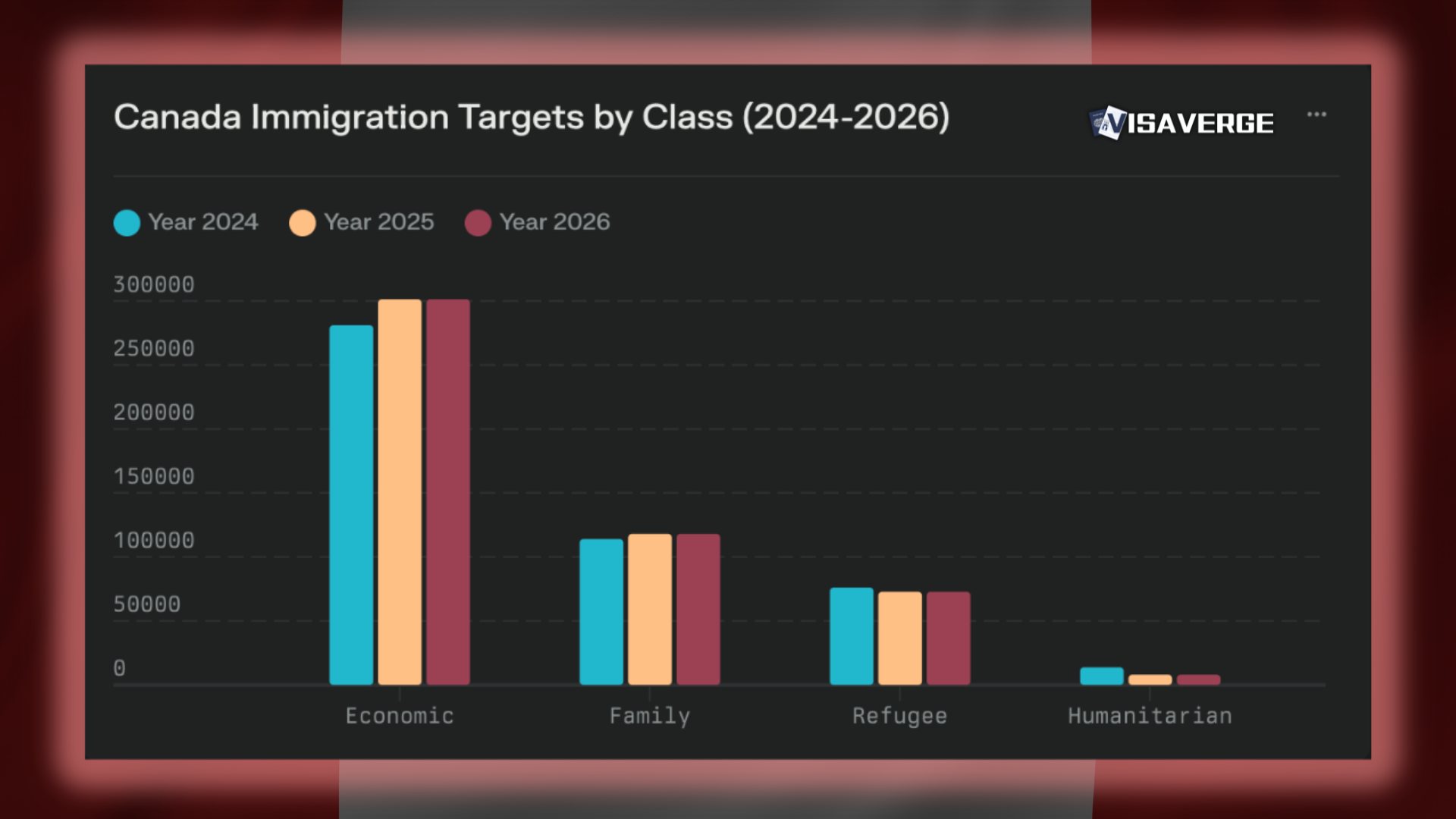
A central tenet of the 2024-2026 Immigration Levels Plan is the focus on skilled workers. By assigning over 60% of all admissions to the economic class by 2025, Canada seeks to address labor market shortages and stimulate economic growth. Within this category, several programs operate with precise targets. For instance, the Federal High Skilled program aims for 117,500 admissions in 2025, a slight rise from 110,770 in 2024. Additionally, the Provincial Nominee Program’s target is poised to grow from 110,000 to 120,000, illustrating the demand for skilled labor across various provinces as these programs directly respond to regional labor market needs.

While the economic class makes up the majority of admissions, the plan comprehensively includes family reunification and humanitarian efforts. The family class is projected to stabilize at around 118,000 admissions by 2025, maintaining Canada’s commitment to keeping families together. Moreover, Canada continues to demonstrate its humanitarian values through refugee resettlement. Although refugee admissions will decrease slightly, Canada remains resolute in meeting its previous obligation of resettling 40,000 vulnerable Afghans by 2024, guaranteeing that the total will stabilize post-fulfillment of this pledge.
Free toolCanada Express Entry Points CalculatorThe implementation of this plan does not occur in a vacuum. The government of Canada actively engages with provinces, territories, and stakeholders to ensure a well-rounded approach that supports both newcomers and the communities they join. This coordination is epitomized by the Canada-Québec Accord, granting Quebec ?? the authority over the selection of immigrants for the province, reflecting the distinct cultural and linguistic priorities. Informed public consultations have highlighted the dual perception of immigration: beneficial for economic prosperity but challenging concerning healthcare and housing access. This sentiment underscores the need to balance admissions to sustain social infrastructure effectively.
As reported by VisaVerge.com, the integration of such a large number of immigrants is anticipated to have nuanced impacts. On one hand, it is a boost to the labor force, crucial for industries grappling with shortages. On the other, it elevates pressures on housing and healthcare. These concerns have fueled discussions around temporary resident intake and international student rates, particularly regarding absorptive capacity issues in urban centers. The business community, however, advocates strongly for increased economic immigration, highlighting the positive correlation between immigrants and economic dynamism.
The 2025 projection of 500,000 newcomers includes precise categories and supports a diversified strategy. By nurturing diverse entries spanning federal high skilled, economic pilots, and the Atlantic Immigration Program, Canada aims to foster both urban and rural economic revitalization. In 2025, the Atlantic Immigration Program’s numbers are set to rise from 6,500 to 8,500, signaling targeted regional development. Meanwhile, federal business pathways, categorized separately, look to attract 6,000 individuals, indicating the importance placed on entrepreneurial skillsets.
Though ambitious, this plan is cognizant of existing societal dynamics. Immigration, while a fundamental pillar of growth, intersects with public services provisioning. September 2023 data revealed growing public concerns linking high immigration rates with constraints in healthcare access and housing affordability. Thus, setting a ceiling at 500,000 stabilizes growth, allowing systems to adjust while immigrants continue to contribute to economic vigor.
The meticulous structuring of categories and their respective target ranges upholds rigorous planning, reflected in admissions such as French-speaking permanent residents outside Quebec. Projected at 31,500 by 2025, this target encourages linguistic diversity and reflects Canada’s bilingual tapestry. However, the precise formulation of target ranges (e.g., 442,500 to 550,000 in 2025) reveals a flexible approach in response to changing demographic and economic conditions.
Canada’s 2024-2026 plan exemplifies its enduring tradition of welcoming diverse populations while attending to national priorities. Indeed, immigrants remain instrumental to the country’s socio-economic landscape, displaying how thoughtful policy design can harmonize growth with community stability. For further details about Canada’s immigration processes and official forms, consult the Government of Canada Immigration and Citizenship website.
In summary, Canada’s approach towards admitting 500,000 immigrants in 2025 is not merely a matter of figures but a detailed orchestration aiming to safeguard the nation’s economic future while honoring its humanitarian commitments. Balancing these intensifies the focus on comprehensive integration strategies ensuring that immigration continues to be a driver for prosperity and societal enhancement.
Learn Today
Immigration Levels Plan: A policy framework detailing targets for immigrant admissions over a set period, reflecting economic and humanitarian goals.
Economic Class: A category of immigration prioritizing skilled workers contributing to the labor market and economic growth.
Provincial Nominee Program: A Canadian program allowing provinces to nominate individuals for immigration based on regional labor needs.
Canada-Québec Accord: An agreement enabling Quebec to independently select immigrants, respecting its cultural and linguistic priorities.
Atlantic Immigration Program: A Canadian initiative aimed at attracting skilled immigrants to Atlantic provinces to stimulate regional economic growth.
This Article in a Nutshell
Canada’s ambitious 2025 immigration plan targets 500,000 new arrivals, emphasizing skilled workers to address labor shortages and drive economic growth. Balancing economic needs with familial and humanitarian commitments, this plan fosters integration while mindful of societal dynamics, ensuring Canada’s immigration policy remains a cornerstone of prosperity and compassion in the global landscape.
— By VisaVerge.com
Read more:
• Canada’s Anti-Immigration Sentiment and Its Impact on the Temporary Foreign Worker Program
• Closure of Final Applications for Canada’s Rural and Northern Immigration Pilot
• Challenges for Indian Students as Canada Becomes Less Accessible
• Threat to University Revenue Due to Canada’s International Student Visa Cap
• Concerns Over Future Growth Following Closure of Canada’s Rural Immigration Pilot