- ICE recorded about 50,000 arrests in August 2026, matching July’s pace.
- July’s final total reached 49,571 arrests, the highest monthly count of Trump’s second term.
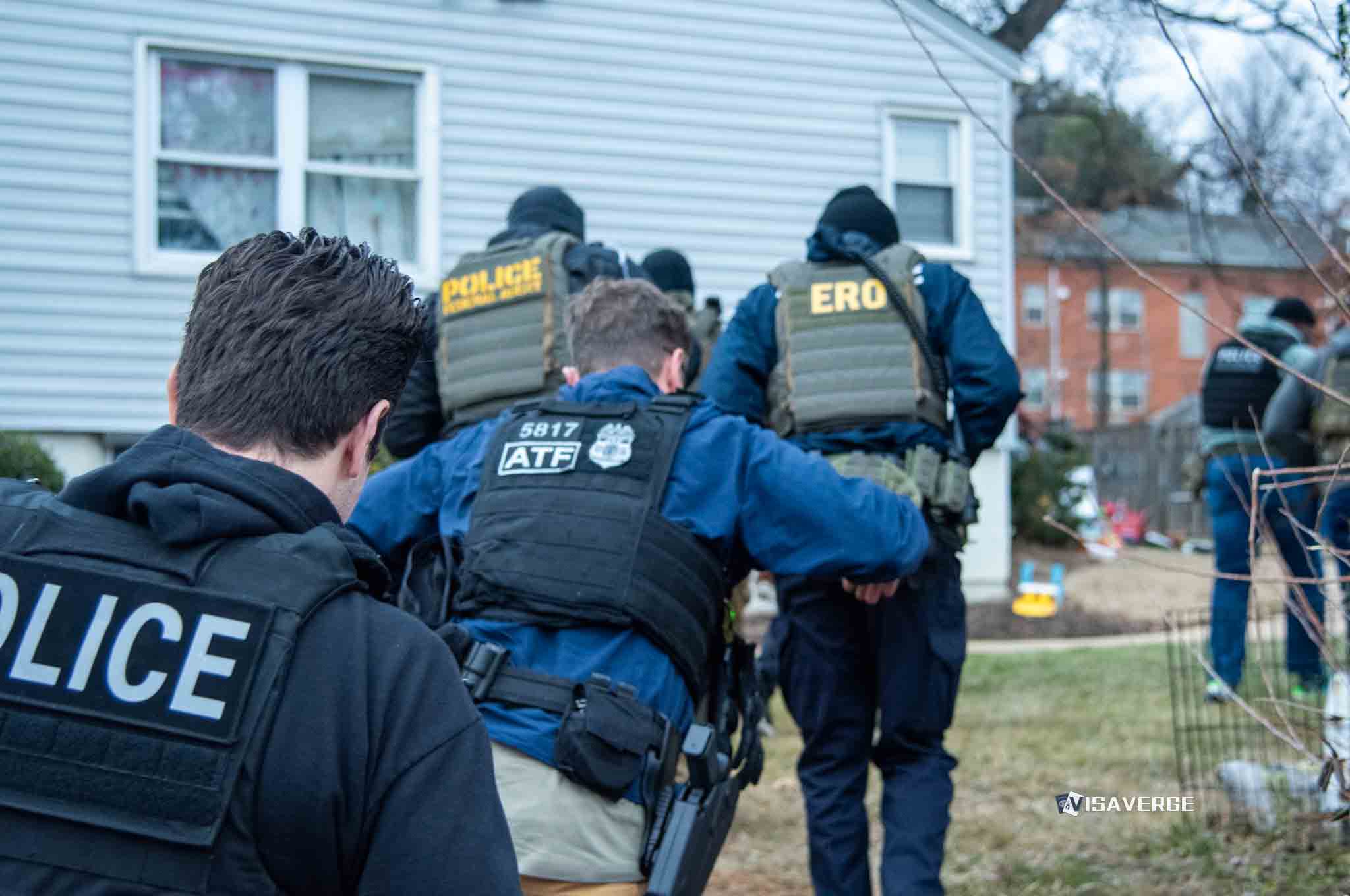
- Arrests increasingly happened at airports, courthouses, and check-ins as public operations became less visible.
U.S. Immigration and Customs Enforcement (ICE) arrested 50,000 people in August 2026, extending a nationwide enforcement surge at roughly the same pace as July. Preliminary government data supplied the figure, and final August numbers have not been released.
The August total follows July’s record pace under President Donald Trump’s second term. The campaign has become less visible than the city-by-city operations that drew attention earlier this year.

Arrests now increasingly occur at airports, courthouses and immigration check-ins. The agency has also pulled back from some of its most publicized tactics after public backlash, including actions in Minneapolis.
July produced the previous high. Its total reached 49,571, according to the preliminary data, while federal figures showed more than 1,580 arrests per day.
July arrests set the pace August matched
The monthly figures show how quickly enforcement grew during 2026:
| Month or period | Arrests or pace |
|---|---|
| February 2026 | 29,241 arrests |
| June 2026 | 43,021 arrests |
| July 2026 | 49,571 arrests |
| August 2026 | Roughly 50,000 arrests, preliminary |
| July daily average | More than 1,580 arrests per day |
July’s total stood about 15% above June and 70% above February. More than 800 people without criminal records were arrested each day on average that month.
The pace made July the highest monthly arrest total of Trump’s second term. August then held near that level.
Civil immigration arrests crossed half of the July total
July also marked the first month of the second Trump administration in which people accused only of civil immigration violations represented more than half of those arrested. The monthly total neared 50,000.
The strongest increases occurred in Democratic-led states. Texas and Florida together accounted for nearly 20,000 July arrests, placing the two states at the center of the campaign.
The White House was pushing the agency toward a daily target of 2,000 arrests. July’s average exceeded 1,580, but remained below that stated goal.
A data project at U.C. Berkeley and UCLA obtained the underlying figures. The Deportation Data Project provided the data for analysis.
Local partnerships are helping the campaign operate more quietly
The administration has increasingly relied on local law enforcement through 287(g) partnerships. Those arrangements have helped shift activity away from highly visible operations and into routine encounters with government systems.
The pattern appeared in Virginia and Maryland, where more than 1,300 people were arrested over just two weeks. Enforcement has affected daily routines and local behavior in communities where arrests increased.
The campaign’s reach has produced what observers described as “economies of fear.” People encounter the enforcement effort not only during major operations, but also around court appearances, airport travel and immigration appointments.
The change in visibility has not reduced the arrest pace. It has altered where people see it.
The August count came as the administration pursued broader interior enforcement nationwide. The agency’s preliminary figures now place two consecutive months near 50,000 arrests, with the final August tally still pending.
This article provides general information and is not legal advice. Consult a qualified immigration attorney about your specific case.