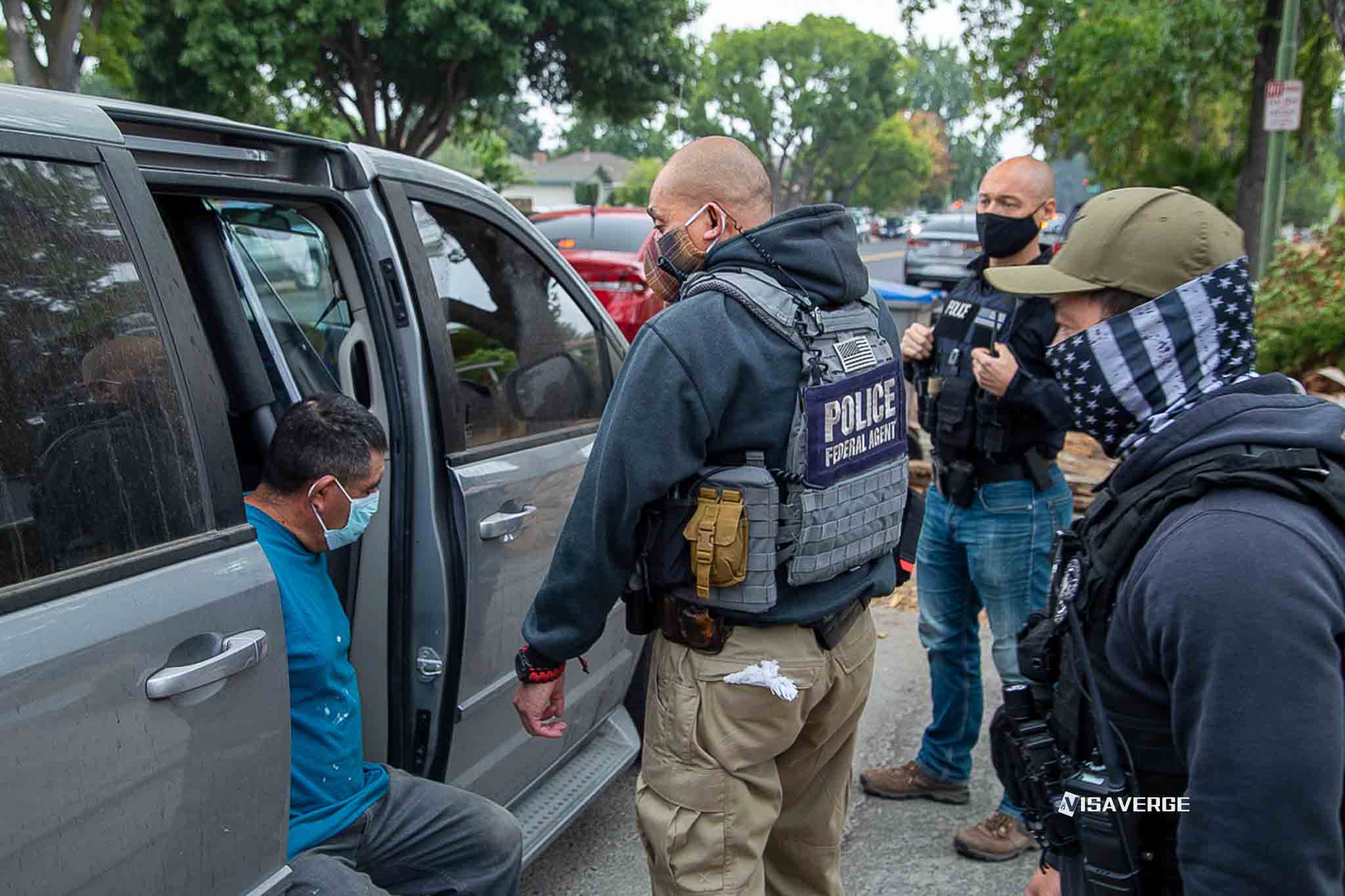
- ICE leaders reportedly set a goal of 3,000 arrests daily, up from about 2,000, alongside a weekly objective.
- The reported instruction also seeks 19,000 arrests per week; DHS says there are no arrest quotas.
- The enforcement push includes people without criminal convictions and is increasing pressure on detention and processing capacity.
ICE leaders told agents nationwide on October 6 to pursue 3,000 arrests daily, up from roughly 2,000, while also seeking 19,000 arrests per week. The instruction was verbal.
Two people described the directive as an oral order, not a written one. The stated aim was to arrest people ICE believes can be deported and placed in removal proceedings, including people without criminal convictions.
Free toolI-94 Expiration Calculator Online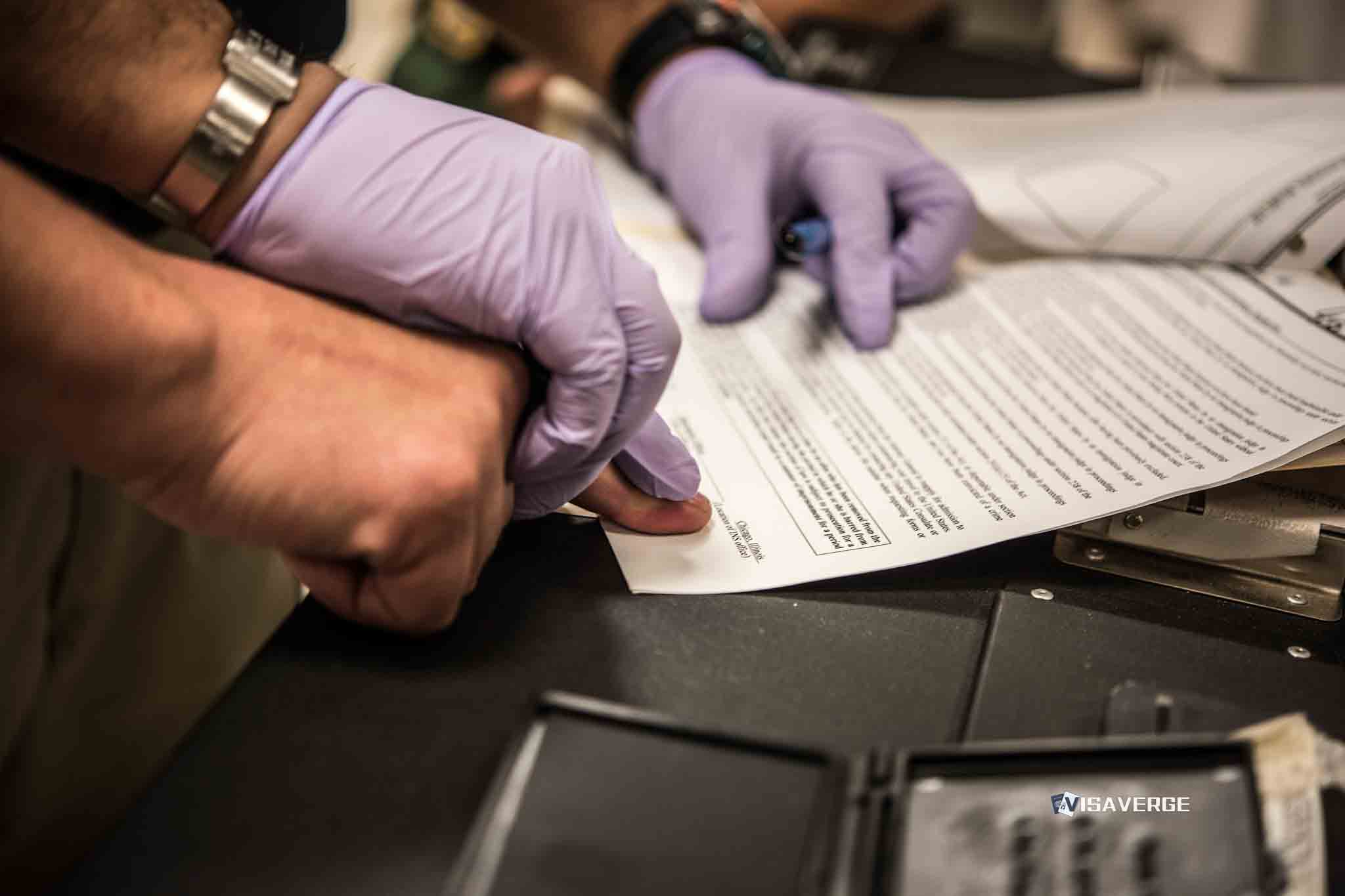
The Department of Homeland Security disputed the characterization of the instruction as a quota. A spokesperson said: “There are NO quotas on arrests.”
The administration calls the figure an enforcement goal and says agents face no discipline for missing it. The dispute leaves a clear divide between reported numerical instructions and DHS’s public description.
Recent arrest totals show the size of the proposed increase
ICE averaged about 2,000 arrests a day immediately before the reported change. A 3,000-a-day pace would exceed that recent rate by about 1,000.
The agency took approximately 51,000 people into custody in August 2026, its highest monthly total at that point. A separate account put the month’s total at 50,925 arrests.
The weekly figure would also mark a rise over recent recorded activity. The Deportation Data Project counted about 12,500 arrests during one week in June 2026.
A full seven days at 3,000 a day would exceed the stated weekly objective. The weekly figure appears to account for fewer operations on weekends.
A 2025 push established the same daily number
The latest reported instruction echoes an earlier drive for the same daily figure. On May 21, 2025, White House Deputy Chief of Staff for Policy Stephen Miller and then-Homeland Security Secretary Kristi Noem met ICE field-office directors and special agents in charge at the agency’s Washington headquarters.
People who attended said Miller pressed leaders to raise arrests and deportations, with officials fearing for their jobs if they missed the goal. Corey Lewandowski, an adviser to Noem and special government employee, attended.
Miller had publicly described the figure the previous year. “We are looking to set a goal of a minimum of 3,000 arrests for ICE every day,” he said in 2025.
At the May meeting, he reportedly asked officials: “Why aren’t you at Home Depot? Why aren’t you at 7-Eleven?” ICE made approximately 2,200 arrests on June 3, 2025, compared with an average of approximately 1,600 per day during the preceding week.
The Justice Department later told the U.S. Court of Appeals for the Ninth Circuit that “neither ICE leadership nor its field offices have been directed to meet any numerical quota or target for arrests.” Abigail Jackson, a White House spokeswoman, defended the administration’s agenda, saying: “Keeping President Trump’s promise to deport illegal aliens is something the administration takes seriously.”
Republican critics warn about arrests beyond criminal cases
The current push comes weeks before the 2026 midterm elections. Some Republicans have criticized enforcement involving immigrants with no criminal convictions or long-standing ties to their communities.
Rep. Maria Elvira Salazar, a Republican representing a heavily Hispanic South Florida district, criticized parts of the campaign in an advertisement. “Some of your immigration enforcement efforts have gone too far,” she told President Donald Trump.
Sen. Jim Justice of West Virginia warned that officers could sweep up people who had lived in their communities for years. “Before you know it, you get people that get carried away in their job and whatever it may be, and all of a sudden, then you’re dragging people away that have lived on your street corner for 15 years, and I don’t know that we need to be doing that stuff.”
Justice added: “To get better, the first thing you got to do is admit you’re doing something wrong.” Rep. Chellie Pingree of Maine also criticized the reported target: “Human beings are not numbers to satisfy a political agenda.”
Mullin, meanwhile, rejected claims that officials were increasing enforcement for political reasons. At an October 9, 2026, press conference, he said, “We do our job every day,” and denied that officials were “ramping up” arrests before the midterms. In September, he said he had not discussed an arrest quota with anyone at the White House.
An October shooting added scrutiny to enforcement operations
An ICE agent shot and wounded Oscar Belgal, a 28-year-old Dominican immigrant, in Manhattan on October 8, 2026. A five-year-old boy was in Belgal’s vehicle.
DHS and the New York Police Department alleged Belgal had a prior grand-larceny conviction, a pending drug case and ties to the Trinitarios gang. The agent went on administrative leave while the FBI and Homeland Security Investigations conducted a joint investigation.
Mullin defended targeted operations in places DHS identifies as “sanctuary cities and states.” He said the department uses surges when officials perceive a high-level threat that could spread into surrounding areas.
Detention and processing capacity face added pressure
ICE has sought additional detention capacity as arrests rise. The agency solicited contractor bids for temporary space at its offices, citing an “exceptionally high operational tempo with increased arrests.”
Another account described ICE as citing a “significantly high operational tempo due to increased arrests.” Reports also described detention and processing bottlenecks as the agency handled more people.
The reported instruction concerns enforcement volume, not changes to visa eligibility, filing fees, deportability rules or the statutes governing removal. The detention requests point to the next operational pressure point: where the agency can hold and process people it arrests.