- Form
- Form I-130; Form N-400 for naturalization; Form I-485 may be available for adjustment; Form I-864 for financial sponsorship
- Time
- About seven months for naturalization and another 12 to 18 months for the parent process, estimates as of October 2026
- Where
- File Form I-130 with USCIS
A parent petition requires a petitioner to be a U.S. citizen aged 21 or older. Green card holders cannot petition for a parent at any age, and USCIS’s I-130 training material describes that existing restriction, not a newly established rule with a new effective date.

Age alone does not let a permanent resident file for a parent
The eligibility test has two parts: citizenship and age. A petitioner must meet both before filing Form I-130 for a mother or father. Reaching age 21 does not make a permanent resident eligible.
USCIS states the rule in its guidance on bringing parents to the United States. The agency’s I-130 training presentation repeats the citizenship and age limits.
The rule reflects the parent-petition provision identified as INA section 201(b)(2)(A)(i). A permanent resident may petition for certain family members, but parents are not among the relatives covered by that route. Naturalization is the step that changes the petitioner’s eligibility.
| Person considering a parent petition | Can this person file Form I-130 for a parent? | Why |
|---|---|---|
| 30-year-old permanent resident | No | Permanent residents cannot petition for parents, regardless of age. |
| 20-year-old citizen | No | The petitioner has not reached age 21. |
| 21-year-old citizen | Yes, if the relationship and other filing requirements are met | The petitioner meets the citizenship and minimum-age conditions. |
The comparison separates age from immigration status. For example, a 30-year-old permanent resident remains ineligible to petition for a parent. A 20-year-old citizen must wait until turning 21. A citizen who has turned 21 can file, provided the required relationship evidence and other case requirements are satisfied.
There is no age at which permanent-resident status by itself permits a parent petition. USCIS has not set a future effective date for a new age rule for permanent residents; the guidance describes the current citizenship-based eligibility rule.
Permanent residents must naturalize before filing for a parent
A permanent resident who wants to petition for a parent must first qualify for and complete naturalization. The general eligibility route is based on five years as a permanent resident, or three years for some people married to a citizen. Marriage alone does not establish eligibility; applicants must meet the other naturalization requirements as well.
The usual sequence is:
- Check naturalization eligibility. Review the applicable residence period and other requirements before applying.
- File Form N-400, Application for Naturalization. This is the application for citizenship.
- Complete the required interview and tests. The process includes an English test and a civics test.
- After becoming a citizen, file Form I-130 for each parent. A naturalized citizen has the same right to petition for parents as a person who was a citizen at birth.
The naturalization timeline is an estimate, not a promised decision date. One estimate is about seven months as of October 2026, and some cases take longer. The time needed to become eligible to apply is separate from the time USCIS takes to decide an application.
File a separate Form I-130 for each parent
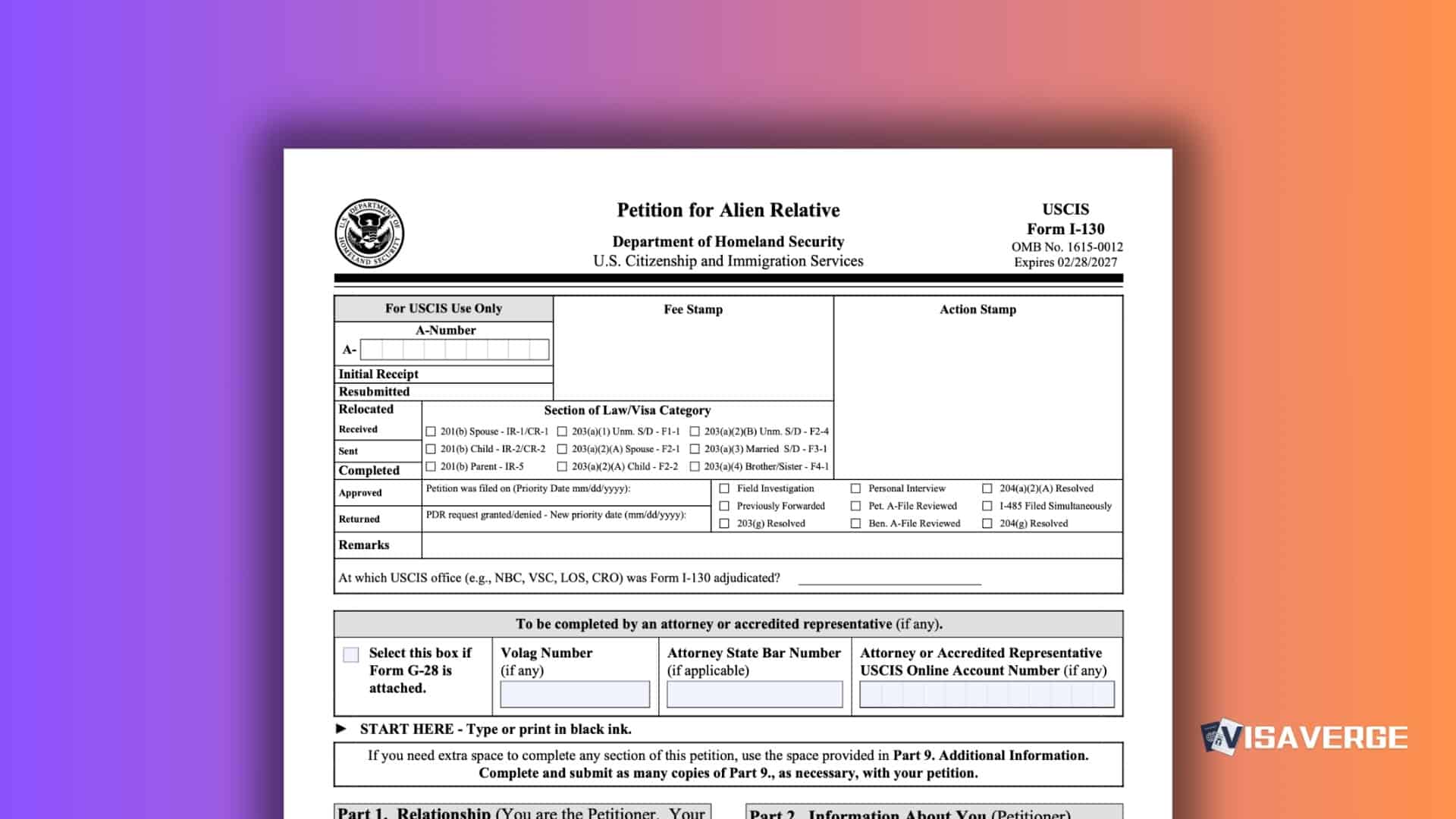
Once eligible, the petitioner files Form I-130, Petition for Alien Relative, with USCIS. The form establishes the qualifying parent-child relationship. If you are petitioning for both parents, prepare a separate petition for each one.
For a mother living abroad, USCIS identifies the petitioner’s birth certificate showing the names of both the petitioner and the mother as relationship evidence. If the petitioner was not born in the United States, the evidence can also include a Certificate of Naturalization or a U.S. passport to establish citizenship. The agency’s parent-petition guidance describes the evidence for other parent relationships as well.
The documents differ for some cases. USCIS provides separate evidence guidance for fathers when the petitioner was born out of wedlock, and for stepparents and adoptive parents. Check the category that matches your relationship rather than assuming the same birth-certificate evidence applies to every case. Include documentation of a legal name change where it affects the records or the claimed relationship.
An I-130 petition for one parent does not include that parent’s minor children as beneficiaries on the same petition. A separate petition is needed for each parent being sponsored.
A parent abroad and a parent in the United States follow different routes
The next step depends partly on where the parent is and whether the parent can use adjustment of status. A parent outside the country generally completes consular processing after USCIS acts on the petition. A parent already in the United States may be able to file Form I-485 at the same time as Form I-130, but only if eligible to adjust status.
| Parent’s situation | Process after or alongside Form I-130 | Result if the case is approved |
|---|---|---|
| Parent lives abroad | The case proceeds to the National Visa Center and then consular processing. | The parent applies for an immigrant visa and, after admission, becomes a lawful permanent resident. |
| Parent is in the United States | Concurrent Form I-485 filing may be available, subject to eligibility. | The parent may seek adjustment of status without following the abroad-based consular route. |
For an overseas case, USCIS sends an approved petition to the National Visa Center for the next stage. The parent then follows the consular-processing steps, including the immigrant-visa process. The visa category for a parent of an eligible adult citizen is IR-5.
IR-5 is an immediate-relative category, so it has no annual numerical cap or priority-date backlog. That does not mean immediate approval, immediate admission, or a fixed processing time. USCIS, the National Visa Center and the consular stage still have to process the case.
A parent already in the United States may file Form I-485 concurrently with Form I-130 only if the parent meets the adjustment requirements. USCIS says this option may be available, not that every parent in the country qualifies. If adjustment is not available, the correct next step depends on the individual case.
Relationship evidence and the I-864 are separate requirements
The I-130 answers whether the petitioner has established a qualifying family relationship. Financial sponsorship is a separate part of the process. The petitioning sponsor must submit a signed Form I-864, Affidavit of Support, even if a joint sponsor also submits an affidavit.
As of November 2026, the general income standard is 125% of the Federal Poverty Guidelines, or 100% when applicable. A qualifying joint sponsor may help when the petitioner cannot meet the standard. The joint sponsor’s financial role does not change who may file the I-130: a permanent resident cannot use a joint sponsor to become eligible to petition for a parent.
USCIS’s I-864 guidance addresses the affidavit and joint-sponsor requirements. The relevant income calculation depends on the case, so historical guideline figures should not be substituted for the applicable current guideline.
Check the current fee schedule because the listed 2026 amounts conflict
The I-130 fee cannot be stated confidently from the conflicting amounts. One listed fee is $625 online or $675 paper as of 2026; another gives $535 as of April 2026. Check the current USCIS fee schedule before filing rather than choosing between those figures. The I-130 costs $625 online or $675 by paper in 2026, and additional fees apply at the green-card stage.
The timeline also has separate stages. As of October 2026, an estimate for naturalization is about seven months, with some cases taking longer. After naturalization, bringing parents may take another 12 to 18 months. Those are estimates, not guarantees, and a visa category without a numerical backlog does not eliminate processing time.
Avoid filing before you meet the citizenship and age rules
Before preparing the petition, check these points:
- Confirm the petitioner is a citizen and has reached the 21st birthday. A permanent resident cannot file a parent petition, and a citizen under 21 must wait.
- Prepare a separate Form I-130 for each parent.
- Use the relationship-evidence instructions for the specific case, including the rules for fathers, stepparents or adoptive parents where relevant.
- Decide whether the parent’s case follows consular processing or whether concurrent Form I-485 filing may be available. Do not assume the parent qualifies for adjustment simply because they are already in the United States.
- Review every form and supporting record for missing or inconsistent information. Incomplete evidence can lead USCIS to issue a Request for Evidence and add time to the case.
The absence of a visa-number backlog in the IR-5 category does not guarantee a quick decision. Check the petitioner’s eligibility first, then use USCIS’s parent-petition guidance and current fee schedule to prepare the appropriate Form I-130.
Frequently asked questions
Can a green card holder petition for a parent?
No. A lawful permanent resident cannot petition for a parent using Form I-130, regardless of the resident’s age. A joint sponsor does not change this eligibility rule. The permanent resident must first qualify for and complete naturalization. After becoming a U.S. citizen, the person must also be at least 21 to petition for a parent.
What age and status must I have to petition for a parent?
You must be a U.S. citizen and at least 21 years old. Both requirements apply: a citizen who is 20 must wait until turning 21, while a permanent resident who is older than 21 remains ineligible until becoming a citizen. Once eligible, you can file a separate Form I-130 for each parent, with the required evidence of the relationship.
What documents are needed for a parent’s Form I-130?
You generally need evidence of your U.S. citizenship and documents establishing the qualifying parent-child relationship. For a mother, USCIS identifies a birth certificate showing the petitioner’s and mother’s names as relationship evidence. Requirements can differ for fathers, stepparents, and adoptive parents. If names changed or records do not match, include relevant legal documentation and follow USCIS guidance for your specific relationship.