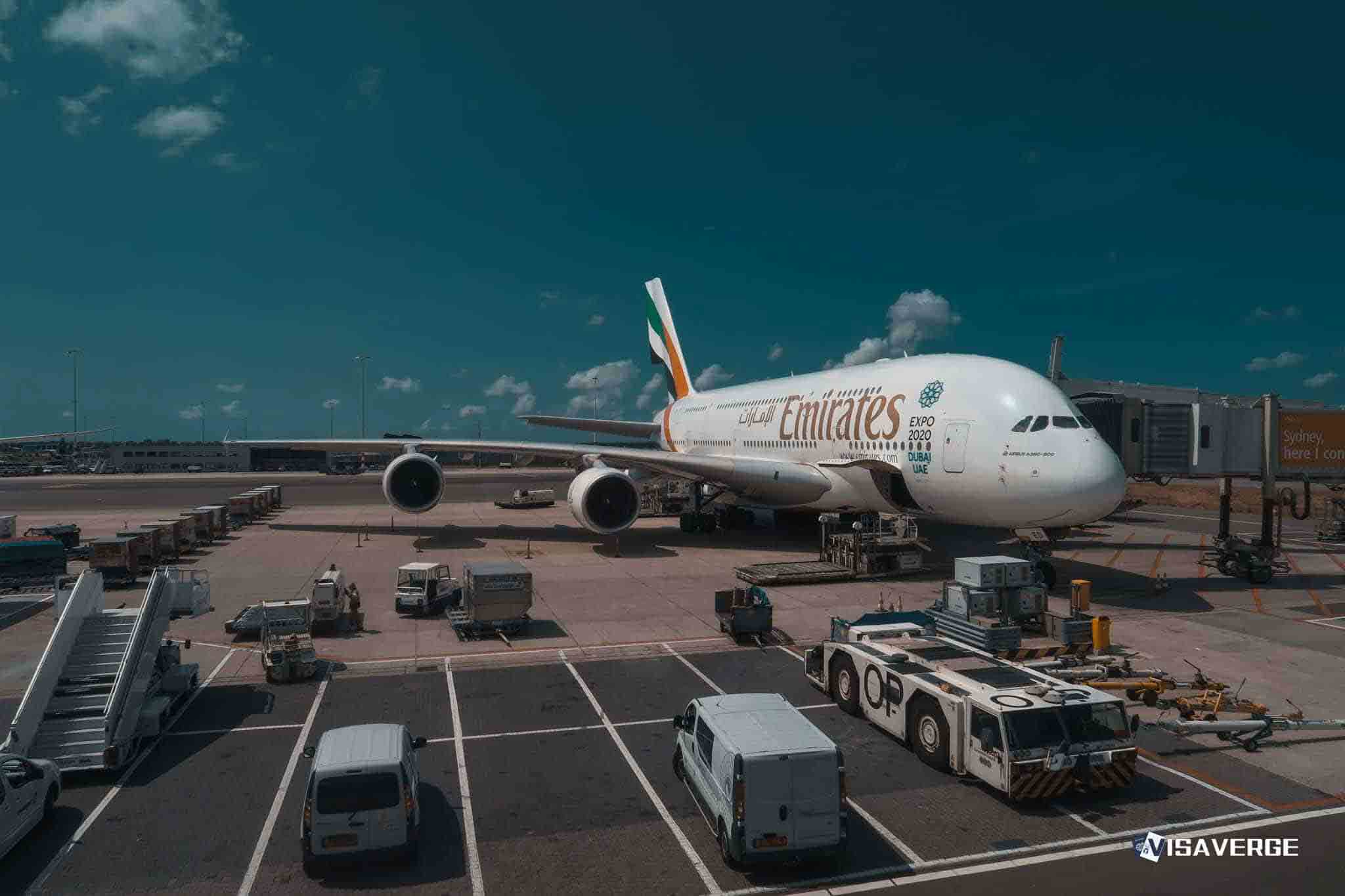
(MUSCAT, OMAN) Oman has become the main workable gateway for many travelers trying to reach the UAE while parts of Gulf airspace stay disrupted. Muscat International Airport (MCT) sits at the center of that shift, keeping India-and-Asia traffic moving when other routes face closures and long detours.
For passengers, the change is simple and urgent: getting into the region often means getting to Oman first, then continuing onward when seats and routing allow. That matters for families, workers, and students whose plans depend on stable flight paths, and for people who need a predictable place to land if schedules change mid-journey.
Oman as a transit lifeline during Gulf airspace disruptions

Oman remains a key transit hub for travelers from India and Asia amid regional airspace disruptions, with Muscat serving as the primary gateway. The pattern took hold as closures affected the UAE, Saudi Arabia, and other Gulf airspace, creating bottlenecks even where flights still operated.
Muscat’s role is not only about geography. It’s also about continuity. Airlines kept flights operating into Oman at high frequency, which gave travelers a realistic “Plan A” when direct access to the UAE became harder.
New connectivity also supports this role. Oman is tied into UAE travel flows, and Muscat is the place many passengers can reach first, then rebook or continue when onward options open up.
India-to-Oman flying: what the schedule looks like in early 2026
As of February 2026, 138 flights operate weekly from India to Oman, averaging 19 daily departures. The flights run every day, so travelers are not limited to a few weekly options during disruptions.
Fridays stand out. Friday accounts for 18% of weekly flights, making it the most frequent day for departures from India to Oman. That concentration matters when you’re trying to match a same-day connection, or when you expect crowds at check-in and immigration.
Flight times remain manageable for most of India. The fastest direct flight example is 2h 45m, such as Mumbai–Muscat. The average flight time is 3h 30m, which helps travelers who prefer short-haul hops before a longer onward journey.
Departure timing also shapes the experience. Popular departure times cluster around 03:00, and the data also points to 50% evening flights. That often means late-night airport arrivals, early-morning landings, and a higher chance you’ll need a hotel night if you miss an onward connection.
Airlines and sample fares: setting expectations before you buy
Ticket pricing moves quickly during airspace disruptions, but March 2026 searches gave travelers a clear picture of the market from India into Oman.
Here are sample one-way and round-trip prices that were available at that time:
- SalamAir: Mumbai (BOM)–Muscat (MCT) from 8,669 INR one-way; 9,052 INR round-trip, described in the searches as the cheapest option with daily direct flights.
- Air India: Delhi (DEL)–Muscat (MCT) from 9,815 INR for a date shown as Jun 11, 2026, with economy bookings open.
- Air India Express: Kozhikode (CCJ)–Salalah (SLL) from 177 USD round-trip, shown for Sep 2026, with direct service to Salalah.
- Etihad Airways: India–Muscat options listed from 17,187 INR, with free cancellation noted in the search snapshot.
- Air Arabia: India–Muscat options listed from 22,088 INR, reflecting pricing seen at that time.
These figures help travelers compare “get-in-now” tickets against flexible fares that allow changes when the region’s routing shifts again.
The Oman-to-UAE bridge: Dubai, Salalah, and seasonal demand
Onward routes are where Oman’s gateway role becomes real for many passengers heading to the UAE. One of the most concrete additions is a UAE-linked service tied to Dhofar’s peak travel months.
Oman Air launched direct Dubai (DXB)–Salalah (SLL) flights on July 3, 2026, operating 3x weekly, year-round. Bookings opened February 16, 2026, giving travelers time to lock plans ahead of summer travel.
The flight connects into demand driven by the Khareef season, which runs Jun 21–Sep 20. Seat growth shows how quickly demand builds. There was 20% seat capacity growth to Salalah in January 2026, reflecting how airlines position aircraft where travelers are actually going.
Meanwhile, UAE airspace partially reopened by March 3, 2026, allowing limited Emirates and Etihad flying from Dubai and Abu Dhabi to Asia, Europe, and Africa. Even with that partial reopening, Oman continued to handle rerouted traffic from India and Asia as bottlenecks persisted.
According to analysis by VisaVerge.com, this kind of partial reopening often creates a two-track reality: headline routes return first, while many everyday itineraries still depend on alternate gateways like Oman.
What the travel “process” looks like now: five stages, with timeframes
Most travelers experience the Oman gateway as a sequence of predictable stages. The details vary by airline, but the structure stays the same.
- Choose your first landing point in Oman (same day) Many travelers aim for Muscat (MCT) because it is the main hub. Others target Salalah (SLL) if it matches their end destination or seasonal plans.
- Book with realistic buffers (same day, then monitor daily) Start with airline sites like Oman Air or SalamAir, or use aggregators for comparisons. Fares fluctuate, and one example range shows Delhi–Muscat round-trip from 7,865 to 10,354 INR.
- Plan for late-night or early-morning movement (1–2 days before travel) With departures clustering around 03:00 and many evening flights, build rest time into your plan. If your onward flight leaves the next day, assume you’ll need a long layover plan.
- Arrive in Oman and complete standard entry or transit checks (travel day) Expect the usual document checks and screening on arrival, especially if flight routings change at the last minute. Travelers who need to confirm entry or transit rules should rely on official guidance from the Royal Oman Police eVisa portal at evisa.rop.gov.om.
- Continue onward to the UAE when seats and routings align (same day to several days) Some passengers move straight on if their connection is protected. Others rebook based on real-time seat availability, including options linked to Dubai and other UAE points as schedules stabilize.
Muscat’s wider network, and why rerouting keeps pointing here
Oman Air’s network supports the hub role. The airline serves 45+ destinations from Muscat, including UAE cities such as Abu Dhabi and Al Ain, plus links across Asia, Europe, and Africa.
Network growth also continues despite disruptions. A new Tashkent service starts June 2026, adding another option for travelers who must route around constrained airspace.
The broader airspace picture explains why Oman stays central. Post-conflict routing changes in late February 2026 funneled flights through corridors that included Oman, Egypt, Turkey, and Saudi routes. Air India’s Bombay–New York routings shifted as well, described as going via Oman and Saudi with stops such as Rome, reflecting how long-haul flying adjusted.
Oman’s open status also showed up in crisis movement. Evacuations via Oman, including Czech flights, highlighted that Muscat remained a workable airport when other paths tightened, and that stability is what travelers look for most when they are far from home.