- Boeing says a software fault can disconnect vertical guidance after a missed approach and route change on some 737 MAX aircraft.
- The autopilot remains available, and Boeing says existing procedures and pilot training cover landings without VNAV.
- The FAA is reviewing the issue; Boeing is preparing a software fix, first expected in early 2028.
Boeing warned airlines in late August 2026 that a software fault on some 737 MAX aircraft could disengage vertical navigation guidance after a missed approach and a change to the programmed route. The company said pilots could lose automated guidance in a specific landing scenario. The autopilot itself continues to function.
The Federal Aviation Administration is reviewing the issue with the manufacturer and airlines. It plans to convene a Corrective Action Review Board, the agency said.
Free toolB1/B2 Tourist Visa Stay Calculator online
The potential fault appears during a demanding sequence. Pilots fly a precision approach, abort the landing, then alter the aircraft’s pre-programmed flight path; under those conditions, the flight management computer can disconnect vertical guidance, known as VNAV.
That can happen at low altitude. Boeing said existing pilot procedures address the situation, and pilots train to land without that guidance.
“We shared information with operators that reinforced existing pilot procedures for safely handling such cases. Our engineers are working on a software update to permanently address the issue.”
The company tied the problem to versions 14 and 14.1 of the flight management computer operating system. It has told operators about the issue and is preparing revised pilot guidance alongside a software correction.
A route change after a missed approach can drop vertical guidance
The fault concerns vertical navigation, not a complete loss of aircraft control. The autopilot remains available, according to Boeing, while the crew may have to fly without the automated vertical guidance function during the affected scenario.
The sequence involves a crew changing the programmed flight path after going around from an approach. The flight computer can then cause vertical guidance to disengage. Boeing described the risk as limited to a specific landing scenario, rather than a problem present throughout a flight.
The company’s initial bulletin characterized the glitch as not an immediate safety risk. Boeing said pilots already have procedures for handling such cases, and flight crews are trained to land without VNAV.
The FAA also said it is monitoring the problem and working with the company and airlines. The agency’s review could lead to further action if it identifies a safety concern.
“The FAA is aware of a potential issue in a software update for the flight computers on certain Boeing 737 MAX airplanes and is working closely with Boeing and the airlines.”
The agency said it would convene a Corrective Action Review Board (CARB) and take immediate action if it identifies a safety concern. That review is now part of the response alongside Boeing’s software work.
Four U.S. carriers say their current aircraft avoid the affected software
The carriers’ statements distinguish aircraft already in service from future deliveries. Their current fleets, they said, are not operating with the affected software versions.
| Airline | Current fleet position | New-aircraft position |
|---|---|---|
| Southwest | Says its fleet is not affected; none is equipped with Version U.14 | Will not accept aircraft with the affected software and wants an earlier version |
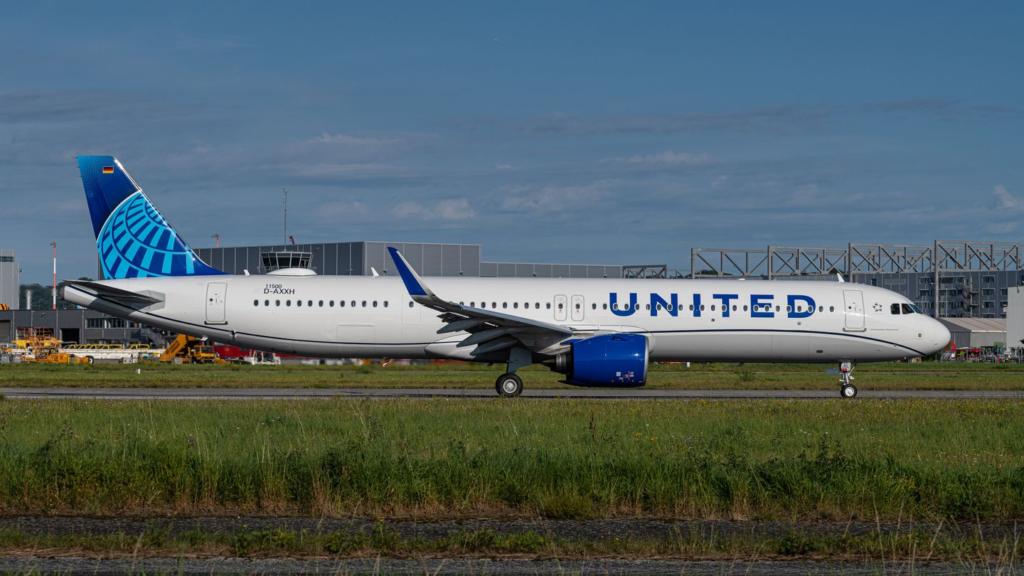
| United | Says its current fleet is not affected | Will not accept aircraft with the affected software and wants an earlier version |
| Alaska | Says its current fleet is not affected | No additional delivery position stated |
| American | Says its current fleet is not affected | No additional delivery position stated |
Southwest and United have told the manufacturer they want new aircraft delivered with an earlier software version rather than the affected one. Alaska and American also said their current aircraft are not affected.
The statements address those airlines’ fleets, not every aircraft in service worldwide. The software issue is linked to particular computer-system versions, rather than being reported across all aircraft of the type.
The company learned of the problem in 2024 and first targeted 2028 for a fix
Boeing said it learned of the glitch in November 2024. In February 2025, it determined the issue was not a safety concern, according to the company’s account.
After receiving additional feedback from airlines, Boeing began a formal review in September 2026 and shared its findings with the FAA. The manufacturer informed all 737 operators in late August 2026, nearly two years after first learning about the problem.
The permanent software fix had originally been expected in early 2028. Boeing is now working to accelerate the correction, while preparing updated pilot guidance for operators.
The longer timetable gives the FAA’s review and the manufacturer’s revision work a role in the next steps. The agency has said it will act immediately if its review identifies a safety concern.
The issue could also affect certification timing for the 737 MAX 10 and the introduction of the MAX 7. Those aircraft programs add a separate schedule concern as Boeing works on the navigation software fix.