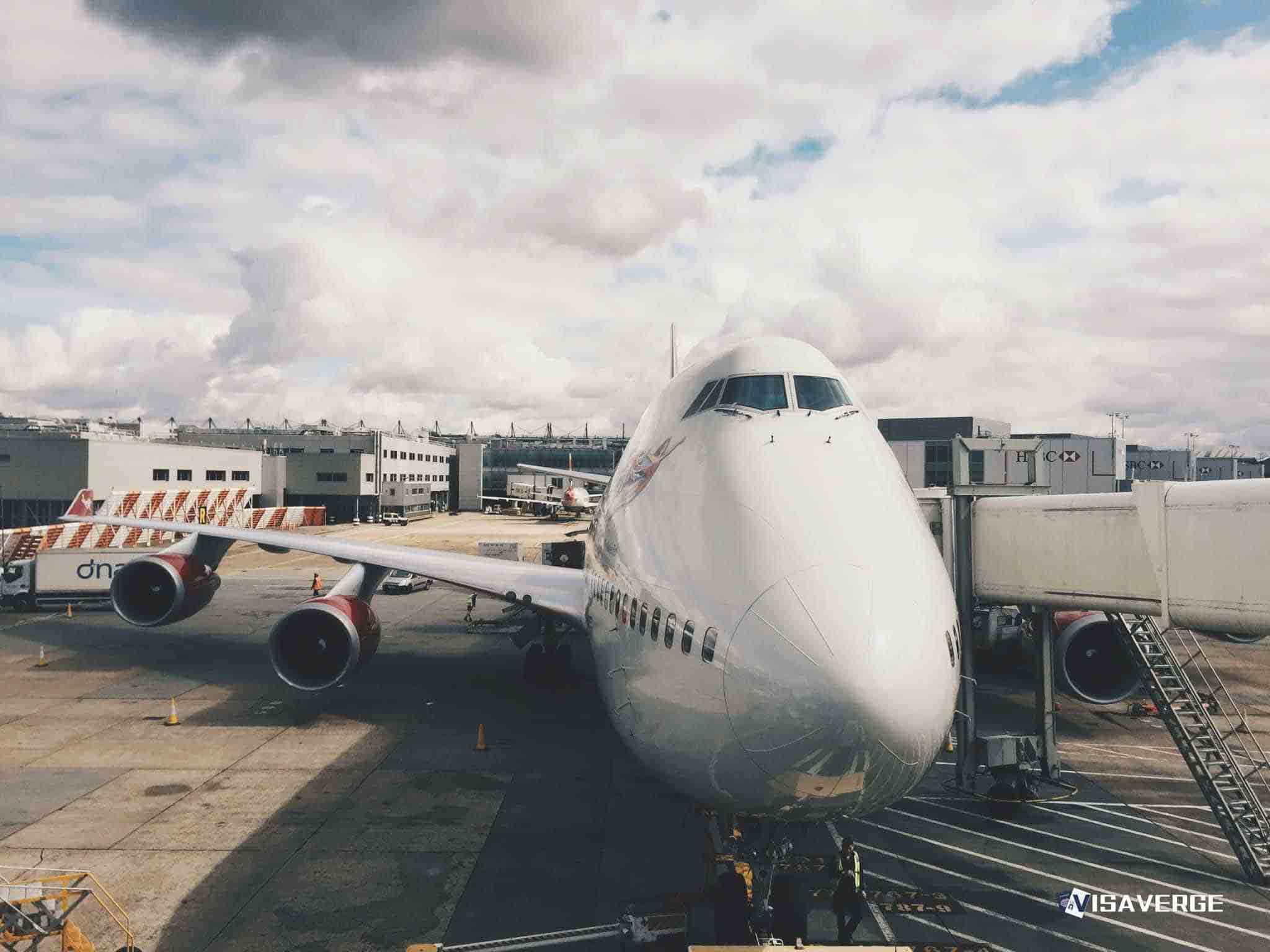
- Azul cancelled more than 80 flights on September 22, affecting more than 8,000 customers.
- About a third of Azul’s fleet was grounded the next day before E195-E2 aircraft returned to service.
- Embraer said flight safety was unaffected, while Honeywell continued investigating the GPS reception fault.
A GPS reception fault disrupted Embraer E2 operations around the world on September 22–23, 2026, with Azul cancelling more than 80 flights and reporting more than 8,000 affected customers. The airline took operational measures that could alter routes and schedules.
The disruption deepened the next day. About a third of Azul’s fleet was grounded on September 23, as E195-E2 aircraft remained out of service for hours before returning to operation later that day.
Free toolB1/B2 Tourist Visa Stay Calculator online
The company described the cause as a “global instability” in the GPS system. Its schedule changes were precautionary, while Embraer said the aircraft could continue operating and that flight safety was not affected.
Embraer said it learned of reports involving GPS reception on some aircraft, including its E2 family. The company said it was working with operators and the equipment manufacturer.
“The global E2 fleet is equipped with navigation systems and procedures that allow the aircraft to operate even under conditions of GPS system instability.”
The manufacturer also said the occurrence could affect airlines’ operational programming but had “no impact on flight safety.”
Reports placed the fault across E190-E2 and E195-E2 aircraft
The reported problem involved both the E190-E2 and E195-E2. Reports placed its onset during aircraft power-up on the ground, rather than while the aircraft was in flight.
That description points to a reception problem, not a reported loss of all navigation capability. Embraer said E2 aircraft had navigation systems and procedures for operating when GPS signals were unstable.
The global E2 fleet numbers more than 200 aircraft across roughly two dozen airlines. Azul, Porter Airlines and KLM Cityhopper rank among the larger operators, giving the issue a reach beyond a single carrier’s schedule.
Azul’s cancellations were the clearest passenger impact reported. The airline said more than 8,000 customers were affected after it cancelled more than 80 flights on September 22. Those figures reflect cancellations and affected customers, not the total number of flights disrupted across all operators.
The reset could restore reception, but the fault could return
Embraer Technical Services issued a bulletin describing a system reset as a temporary way to restore GPS reception. It warned that the condition could recur after the reset.
That guidance offered operators a workaround, not a confirmed lasting repair. The reports described E195-E2 aircraft leaving service for hours and returning later, but did not establish that the reset alone accounted for every return to operation.
Honeywell Aerospace, the equipment manufacturer, said it knew of a global aircraft GPS reception issue. Its teams were “actively assessing the matter” to identify the cause.
The investigation therefore involved both the aircraft manufacturer and the supplier associated with the GPS reception issue. Embraer said it was coordinating with operators and the equipment manufacturer; Honeywell described its effort as determining the underlying cause.
Six other named operators also reported disruption
Reports named KLM Cityhopper, Binter, Luxair, Porter Airlines, Helvetic and Mexicana among the affected operators. They did not provide comparable cancellation totals or passenger counts for those airlines.
The disruption was reported across several regions, but the reported effects varied by carrier. Azul faced cancellations and a substantial fleet grounding; the named operators were identified as experiencing impacts without equivalent figures in the material.
One report said only two E195-E2 aircraft were operating in Brazil at the end of the day. The same reports also mentioned aircraft types beyond the E2 family, although the central issue described by Embraer concerned some aircraft, including the E2.
Azul had warned customers that operational measures could bring changes to flight times and routes. Travelers with affected bookings faced a changing schedule during the disruption, while the carrier worked through the operating constraints.
Honeywell was still seeking the cause
The interruption lasted across September 22 and 23, 2026, but the reported return of aircraft to service did not establish that the technical condition had been permanently resolved. The reset guidance itself allowed for recurrence.
Embraer’s public assurance focused on continued operation and flight safety, while Honeywell’s statement focused on identifying the fault. No permanent solution had been identified in the information reported during the disruption.
Honeywell said its teams were still assessing the matter to establish the underlying cause. That investigation remained the next concrete step after aircraft began returning to service.