- President Trump unveiled a $22 billion plan to modernize Washington Dulles International Airport by 2034.
- The project adds 5 million square feet, expanding concourses and replacing the iconic but criticized mobile lounges.
- Financing relies on airport bonds and United Airlines revenue rather than direct congressional appropriations for the overhaul.
President Donald Trump unveiled a $22 billion plan Wednesday to rebuild Washington Dulles International Airport, adding new concourses, expanding underground rail and replacing the airport’s long-criticized mobile lounges.
Trump presented the proposal at a 3 p.m. EDT Oval Office event with Transportation Secretary Sean Duffy and United Airlines CEO Scott Kirby. The administration aims to finish the work by 2034.
Free toolB1/B2 Tourist Visa Stay Calculator online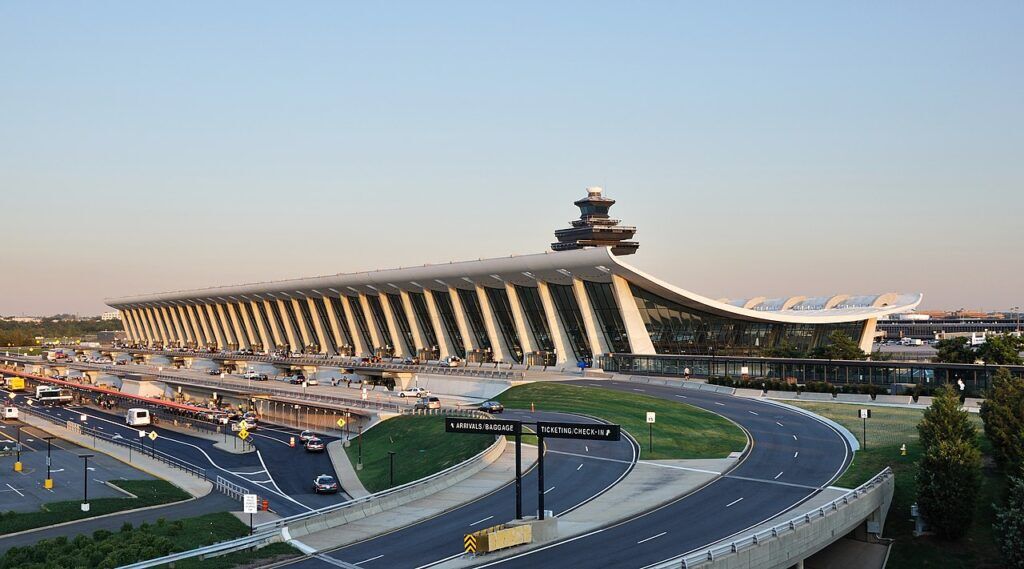
The project would expand the airport by 5 million square feet and add four to five linear concourses. One planned United facility would cover 435,000 square feet and include 14 gates.
The price remains described as roughly $22 billion, although some estimates put it at $22.5 billion. Duffy confirmed the federal government’s $22 billion commitment in May.
The airport handled a record 29 million passengers in 2025. The redesign would preserve its Eero Saarinen-designed main terminal while changing how passengers park, clear security, collect bags and reach gates.
Trump has spent months pressing for the overhaul. He personally edited design concepts and asked firms for three-dimensional models, using tabletop versions at the White House to examine parking, baggage handling and transit arrangements.
“They have a great building and a bad airport. we're going to make that into something really spectacular.”
Trump also called Dulles a “terrible airport” and criticized parking that he said was “two miles away.” He has described the existing passenger-transfer vehicles as “crazy.”
The Saarinen terminal stays, but the passenger journey changes
The main terminal would remain, protecting the structure that opened in 1962. Its interior would receive new security and baggage facilities, gold accents and gold-mirrored ceilings.
Parking would move closer to the terminal. The concept also calls for more lounge space, including “one of the largest United Polaris Lounges in the world” and additional United Club space.
The airport’s current transfer system would give way to a U-shaped underground AeroTrain network and expanded moving walkways. The goal is to retire regular use of the mobile-lounge system, which has operated since 1962.
The proposed rail arrangement would connect the new concourses and reduce the need for passengers to board vehicles between the terminal and aircraft areas. It would also change one of Dulles’ most recognizable features.
A new Concourse E is slated to open in late 2026. That facility would accommodate additional United service while the larger reconstruction moves toward construction.
United would help finance the expansion
The Metropolitan Washington Airports Authority is expected to issue tax-free bonds to cover much of the cost. United Airlines would also contribute, with the carrier positioned as the dominant airline at the airport.
United handles approximately 70% of Dulles traffic. Its chief executive joined Trump and Duffy at the White House announcement.
Jack Potter, president and CEO of the Metropolitan Washington Airports Authority, said July 15 that “the airlines have concurred” with the modernization proposal. The authority oversees the airport under a long-term lease, while the federal government owns the facility.
The structure would rely mainly on airport bonds and airline revenue rather than a direct congressional appropriation. A previous BlackRock proposal to finance and operate the airport in exchange for its revenues was rejected after opposition from United.
The administration’s proposal would also accelerate and expand a previous $7 billion master plan that the airports authority approved in mid-2025. The new design raises both the scale of the work and the federal government’s role in directing it.
Supporters see an infrastructure rebuild, critics see competing priorities
Duffy framed the project as a federal rebuilding effort. “We're going to rebuild Dulles. [at] the speed of Trump,” he said.
Virginia Rep. Suhas Subramanyam said he would “fight tooth and nail” against any attempt to rename the facility “Trump International Airport.” He also expressed support for federal investment in airport infrastructure.
Michael Turner, vice chair of the Loudoun County Board of Supervisors, questioned the proposal’s purpose and said the airport “functions just fine.” He suggested the project could distract from other political issues.
Sheldon H. Jacobson, a security and infrastructure expert, also questioned the priority. He said substantial modernization was already underway and argued that air traffic control upgrades presented a more pressing need.
Some local travelers welcomed the prospect of ending the current transfer vehicles. Others criticized the focus on gold decoration and other “vanity” elements, while raising concerns about the project’s cost.
The overhaul would reshape Dulles before the gates are built
The four planned concourses would replace current temporary gates and create more airside capacity. The United concourse would provide a dedicated 14-gate facility within the broader expansion.
The terminal overhaul would pair that capacity with larger security and baggage areas. Moving parking closer would address one of Trump’s repeated complaints about the airport’s layout.
The plan also links the architectural changes to a different operating model. Passengers would rely more heavily on underground trains and moving walkways, while the airport phased out its signature vehicles.
The airport’s financing will determine how quickly those elements move from concept to construction. Tax-free bonds issued by the airports authority and United’s contribution are expected to carry much of the cost, rather than new congressional funding.
The next visible milestone is Concourse E, expected in late 2026. The broader target remains 2034, with the Saarinen terminal retained at the center of the rebuilt airport.