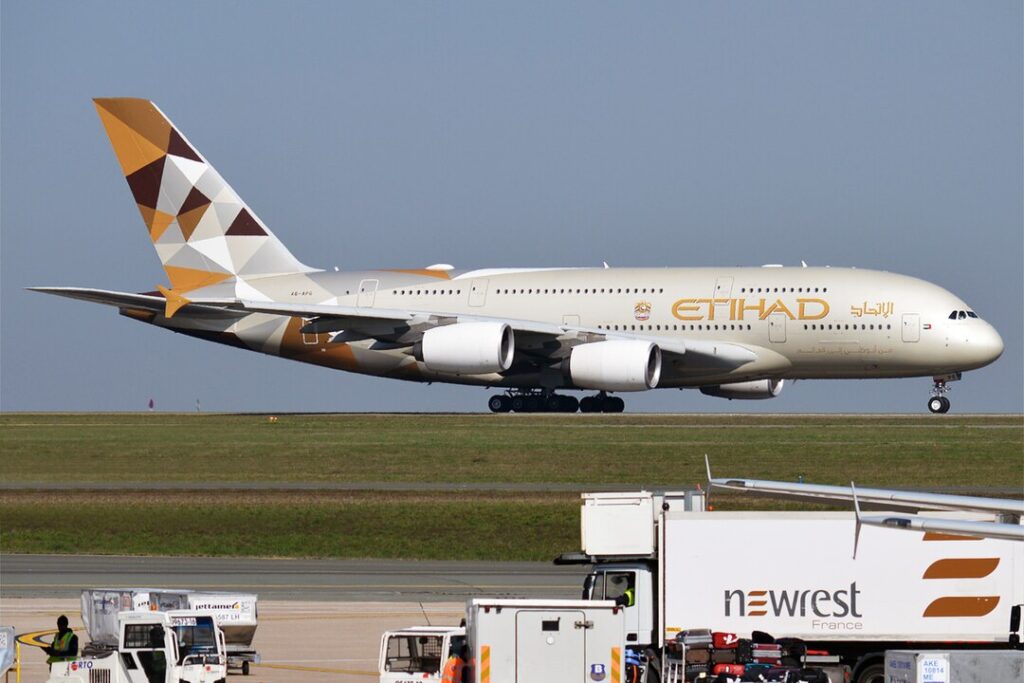
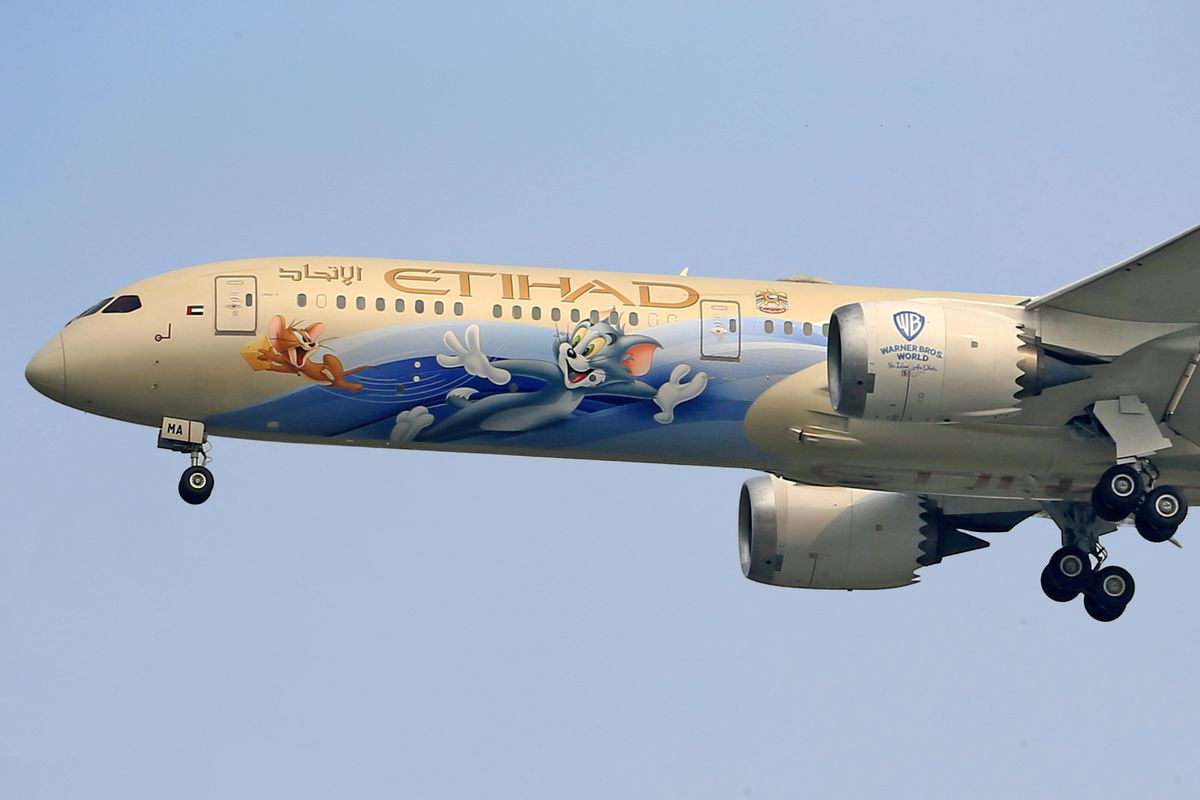
- Etihad Airways has suspended U.S. Preclearance services at Zayed International Airport due to regional security concerns.
- Passengers must now clear immigration upon arrival at their first United States airport destination.
- The shutdown follows a U.S. ordered departure of non-emergency government personnel from the United Arab Emirates.
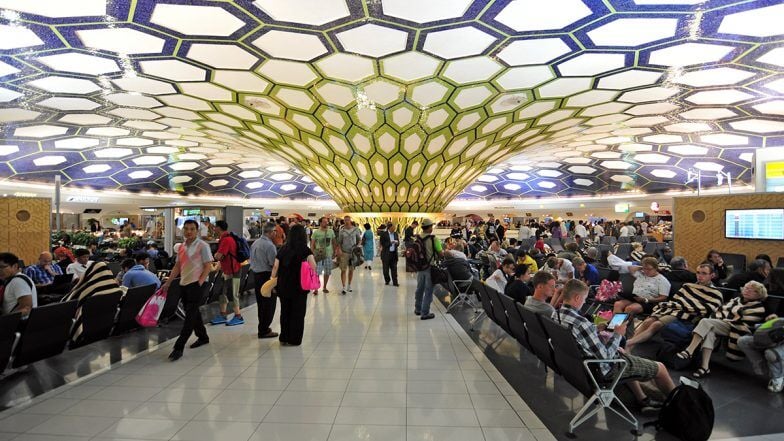
Etihad Airways has temporarily shut the Preclearance facility operated by U.S. Customs and Border Protection at Zayed International Airport. Passengers flying from Abu Dhabi to the United States will complete immigration and customs after landing.
The change ends the airport’s role as a U.S. entry checkpoint for now. Travelers will instead clear at their first U.S. airport, such as New York’s JFK, Washington’s IAD or Chicago’s ORD.
Etihad gave passengers a direct instruction: arrive earlier and plan for processing in the United States. “If you’re flying with us to the U.S, you’ll clear immigration and customs when you land.”
The facility remains closed as of July 28, 2026. The current notice connected to the UAE, issued July 24, tells travelers to check flight conditions with their airline or airport. The U.S. Embassy security alert also says the embassy in Abu Dhabi and the U.S. Consulate General in Dubai are under ordered departure status.
The shutdown followed a U.S. order affecting personnel. The facility effectively stopped operating on March 2, 2026, after the Department of State directed non-emergency U.S. government employees and family members to leave the UAE.
Passengers now clear at the first U.S. airport
Travelers who once arrived in the United States as domestic passengers must now complete immigration and customs on arrival. Tight onward connections could become harder to make.
Etihad advises U.S.-bound passengers to reach the Abu Dhabi airport at least four hours before departure. The airline cites additional security checks and document verification.
The same change affects connections after landing. Passengers are advised to allow at least 3 hours for U.S. processing when they must connect onward.
The dedicated U.S. Preclearance Lounge has also closed. First Class and Business Class travelers, along with Platinum members, are being directed to the main Etihad lounges in Terminal A.
The shutdown follows a wider U.S. security withdrawal
The regional crisis escalated on February 28, 2026, amid hostilities between the United States and Iran. Two days later, the State Department ordered the departure of non-emergency personnel from the UAE.
On March 3, the department issued a Level 3: Reconsider Travel advisory for the UAE. It said the order reflected “the threat of armed conflict.”
The embassy and consulate later canceled routine appointments from July 13 through July 15 because of security concerns. On July 22, the department issued a “Worldwide Caution” warning about “heightened tensions in the Middle East” and possible “unforeseen escalation.”
U.S. personnel were relocated outside the UAE under the departure order. That staffing change has continued to shape operations at the airport.
Rodney S. Scott, the CBP commissioner, was overseeing the agency’s 67,000+ employees during the regional transition. In the UAE, Major General Suhail Saeed Al Khaili, director general of the Federal Authority for Identity, Citizenship, Customs and Port Security, conducted operational reviews in July to manage traveler movement amid “exceptional regional conditions.”
A recently expanded checkpoint now sits idle
The Abu Dhabi facility had only recently moved into Terminal A. The transition finished on October 31, 2024.
It was the first preclearance location to use a full biometric technology platform, including facial comparison capture, for every U.S.-bound flight. The airport had presented the move as a major expansion of its U.S. travel operation.
Antonoaldo Neves, Etihad Airways’ chief executive, previously called the Terminal A transition a “milestone [that] reinforces Abu Dhabi's position as the most convenient gateway to the United States.” Elena Sorlini, managing director and chief executive of Abu Dhabi Airports, said in December 2024 that the operation “strengthens our ambition to be a leading travel hub” and offered a “unique offering” for the region.
The facility had served a broad international network. CBP precleared more than 22 million travelers worldwide in 2025, equal to approximately 14.6% of all commercial air travelers to the United States. Abu Dhabi was the only such location in the Middle East and Asia.
Additional checks have already affected some visa holders
Before the full shutdown, reports in April 2026 described increased scrutiny of H-1B holders at the Abu Dhabi checkpoint. The cases involved workers who had worked remotely abroad.
Some visas were “cancelled and withdrawn” over perceived labor condition violations. Those reports concerned the period before operations fully stopped on March 2.
The closure also has implications beyond passenger processing. On July 21, UAE customs officials met to discuss border procedures and trade and travel flows. H.E. Ahmed Abdulla Bin Lahej Al Falasi chaired the meeting.
The airport’s U.S. processing arrangement remains suspended while security conditions and staffing decisions continue. Passengers with upcoming flights are being directed to verify departure information with their airline or the airport before traveling.